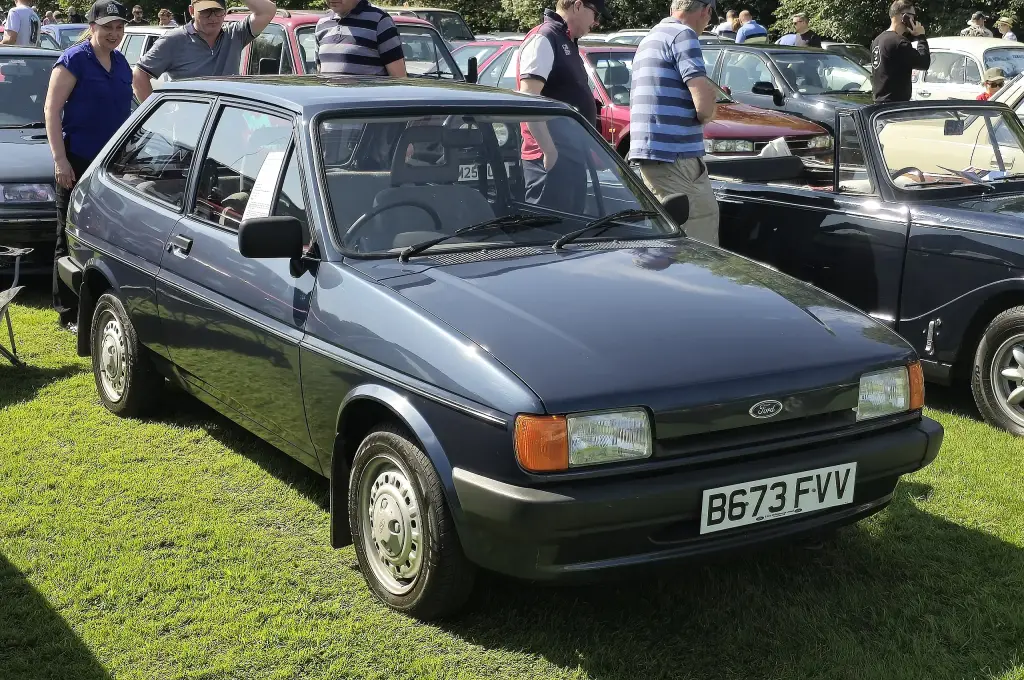
The Ford Fiesta was a supermini built by Ford from 1976 to 2023 over seven generations, mostly by Ford’s European operations and always below the Escort and later the Focus. By the time it was discontinued Ford had sold more than 22 million of them.
Ford Fiesta at a glance
| Maker | Ford of Europe |
|---|---|
| Production | 1976 – 7 July 2023 |
| Generations | seven |
| Project name | Bobcat, approved in September 1972 |
| Styling | proposal by Tom Tjaarda at Ghia, overseen by Uwe Bahnsen |
| First engines | 957 cc and 1,117 cc Valencia fours |
| First plants | Valencia (Spain), Dagenham (England), transaxles near Bordeaux |
| First markets | France and Germany, September 1976; Britain from January 1977 |
| Total sold | over 22 million |
| Name | Spanish for “party” |
This page is based on English Wikipedia only.
History of the Ford Fiesta
Project Bobcat
The Fiesta was designed by the team code-named Bobcat under Trevor Erskine and approved for development by Henry Ford II in September 1972, soon after the launch of the Fiat 127 and Renault 5. Ford had decided against a rival to the Mini a decade earlier because it would cost too much to build, but the 1973 oil crisis and the success of the two small European cars changed the calculation. The final proposal was developed by Tom Tjaarda at Ghia under Uwe Bahnsen, the target was a production cost US$100 below the Escort’s, and the car was approved for production in late 1973 with engineering split between Cologne and Dunton. Ford expected 500,000 cars a year and built a new factory near Valencia, extended Dagenham and built a plant near Bordeaux for the new transaxle, Ford’s first transverse-engined car.
On sale in 1976
After a run of deliberate press leaks from the end of 1975, a Fiesta was displayed at the Le Mans 24 Hours in June 1976 and the car went on sale in France and Germany in September 1976, with right-hand-drive versions reaching Britain only in January 1977. It came with the 957 cc Valencia engine in high and low compression forms and a 1,117 cc unit, in Base, Popular, Popular Plus, L, GL, Ghia and S trims plus a van. The US Mk I of 1978 to 1980 had a 1,596 cc engine with a catalytic converter, energy-absorbing bumpers and optional air conditioning. The 1.3-litre Supersport of 1980 tested the market for the XR2 that followed with a 1.6-litre engine and black plastic trim.
The long run and the end
The Fiesta was built in Britain, Germany, Spain, Brazil, Argentina, Venezuela, Mexico, Taiwan, China, India, Thailand and South Africa, and became one of the best-selling Ford nameplates after the Escort and the F-Series. The name came from General Motors, which owned it as an Oldsmobile trim level and gave it to Ford for free; Ford’s marketing team had wanted “Bravo”, which later appeared on a limited edition of the Mk I. The final Fiesta was built on 7 July 2023, and on 10 December 2025 Ford announced that the name would return in 2028 as an electric car developed with Renault.
Design and features
- First transverse Ford: the Fiesta introduced the layout that later reached the Escort.
- Valencia engines: 957 cc and 1,117 cc fours at launch.
- XR2 and Supersport: the sporting versions that began with the 1.3 Supersport of 1980.
- Global production: built in a dozen countries over 47 years.
Ford Fiesta versions
- Mk I (1976–1983): 957 and 1,117 cc engines, Base to Ghia trims and a van.
- Supersport (1980): 1.3-litre Kent engine with black trim.
- XR2: the 1.6-litre sporting model that followed.
- US Mk I (1978–1980): 1,596 cc engine with emission equipment.
- Later generations: seven in all, up to the 2023 model.
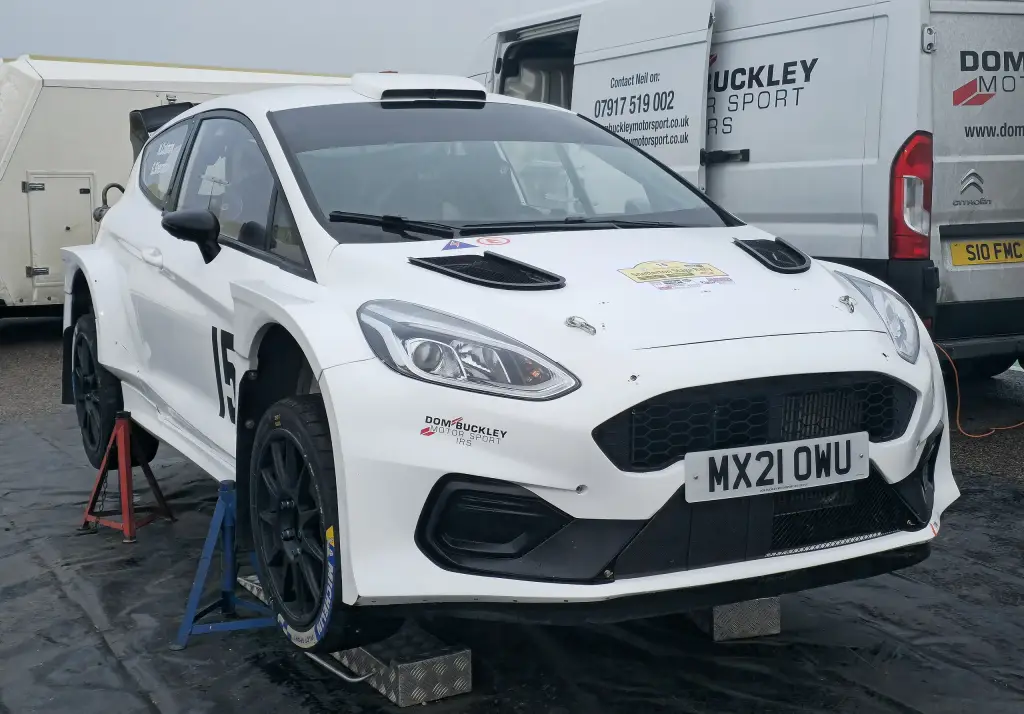
- Fiesta Rally2: the rally car built on the road model.
The Fiesta sits above the Ka and below the Focus, and its platform was used for the B-Max. More Ford vehicles are in the Ford collection.
Sources
- Ford Fiesta, English Wikipedia: model history