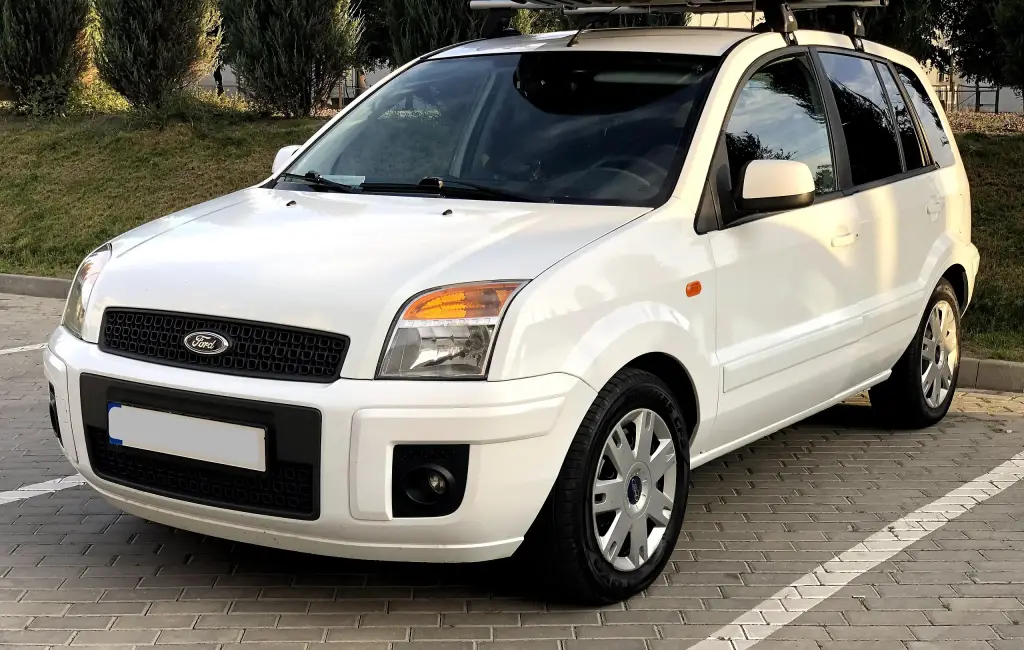
The European Ford Fusion was a high-roof, five-seat, five-door front-wheel-drive mini MPV built by Ford of Europe from 2002 to 2012 in a single generation. It shared its platform with the Mk 5 Fiesta but was longer, wider and taller.
Ford Fusion at a glance
| Maker | Ford of Europe, Cologne-Niehl |
|---|---|
| Production | 2002–2012 |
| Class | B-segment mini MPV |
| Ford’s description | “Urban Activity Vehicle” |
| Platform | Ford Fiesta Mk 5 |
| Concept shown | Geneva Motor Show 2001 |
| Production debut | Geneva Motor Show 2002 |
| Sales started | late 2002 |
| Facelift | September 2005 |
| Exported to | more than 50 countries |
| NCAP rating | four stars |
| Successor | Ford B-Max, from September 2012 |
This page is based on English Wikipedia only.
History of the Ford Fusion
An MPV the size of a hatchback
The Fusion shared its platform with the Fiesta Mk 5 but was longer, wider and taller, with high H-point seating, rear “theatre-style” seats, a 60/40 split folding rear bench, a fold-flat front passenger seat and a load floor flush with the cargo sill. Ford marketed it as an “Urban Activity Vehicle”, saying the name reflected a combination of small hatchback, MPV and SUV features: economical B-class running costs, easy manoeuvring from a four-metre footprint, and more room and better access from the tall body, but without all-wheel drive.
Sold across Europe and beyond
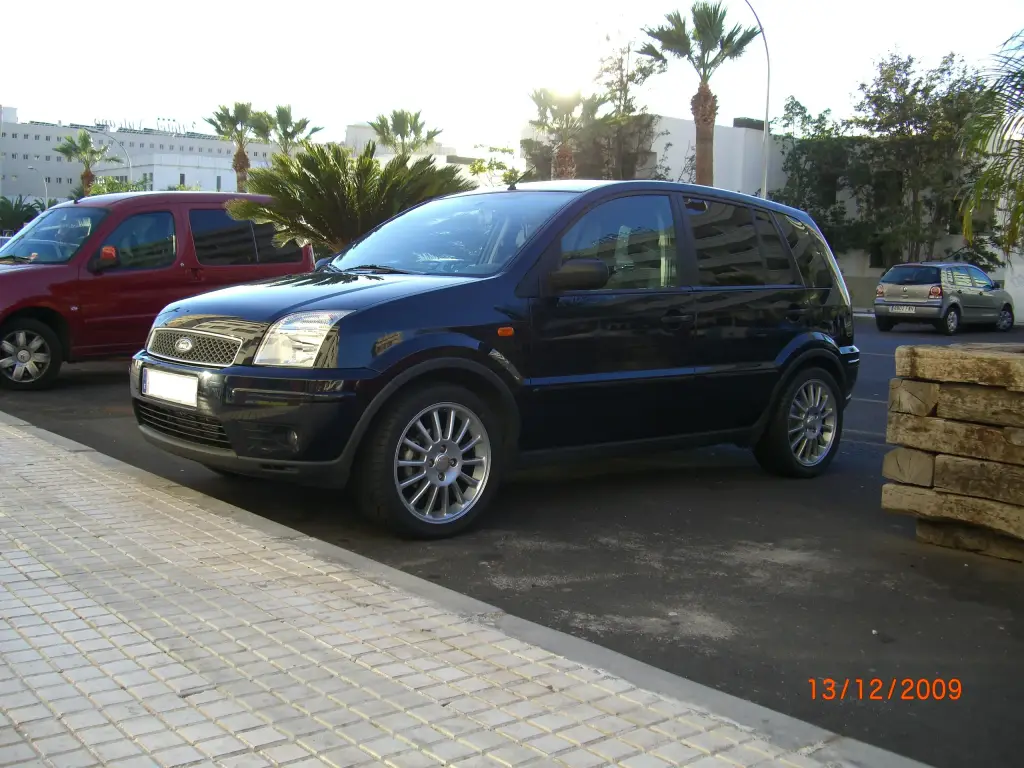
The car debuted as a concept at the 2001 Geneva Motor Show and in production form at the same show in 2002, with sales starting in late 2002. It was built at Ford’s Cologne-Niehl assembly plant and exported to more than fifty countries, including Turkey and Russia. From September 2005 Ford sold a mildly facelifted Fusion with revised front and rear lights, bumper fascias, side mouldings and door mirrors, a brighter colour palette and a revised interior with soft-touch materials and a new analogue instrument display. Ford of Brazil and several Latin American markets sold a crossover SUV version of the same idea as the Ford EcoSport, with revised styling and more ground clearance.
Equipment and the end
Options included power-folding mirrors, automatic and “home safe” headlights, automatic wipers, Bluetooth with voice control, a trip computer, MP3 connectivity and electronic stability control. British trims were Style+, Zetec and Titanium, while the original range used 1, 2, 3 and + levels: the entry 1 had central locking and two airbags, the 2 added heated electric mirrors, front electric windows, a CD player and air conditioning, the 3 added alloy wheels, front fog lights and an alarm, and the + of June 2003 brought larger alloys and privacy glass. The Fusion received a four-star Euro NCAP rating and was succeeded in September 2012 by the B-Max.
Design and features
- High-roof packaging: MPV space in a four-metre hatchback footprint.
- Flexible interior: theatre-style rear seats and a fold-flat front passenger seat.
- Fiesta mechanicals: economical B-segment running gear without all-wheel drive.
- Four-star safety: the Euro NCAP rating of the time.
Ford Fusion versions
- Fusion 1, 2 and 3: the original British trim levels.
- Fusion + (2003): larger alloy wheels and privacy glass.
- Style+, Zetec and Titanium: the facelifted trims.
- Ford EcoSport: the Latin American crossover version of the same concept.
The Fusion was based on the Fiesta and was replaced by the B-Max. More Ford vehicles are in the Ford collection.
Sources
- Ford Fusion (Europe), English Wikipedia: design, launch, facelift, equipment