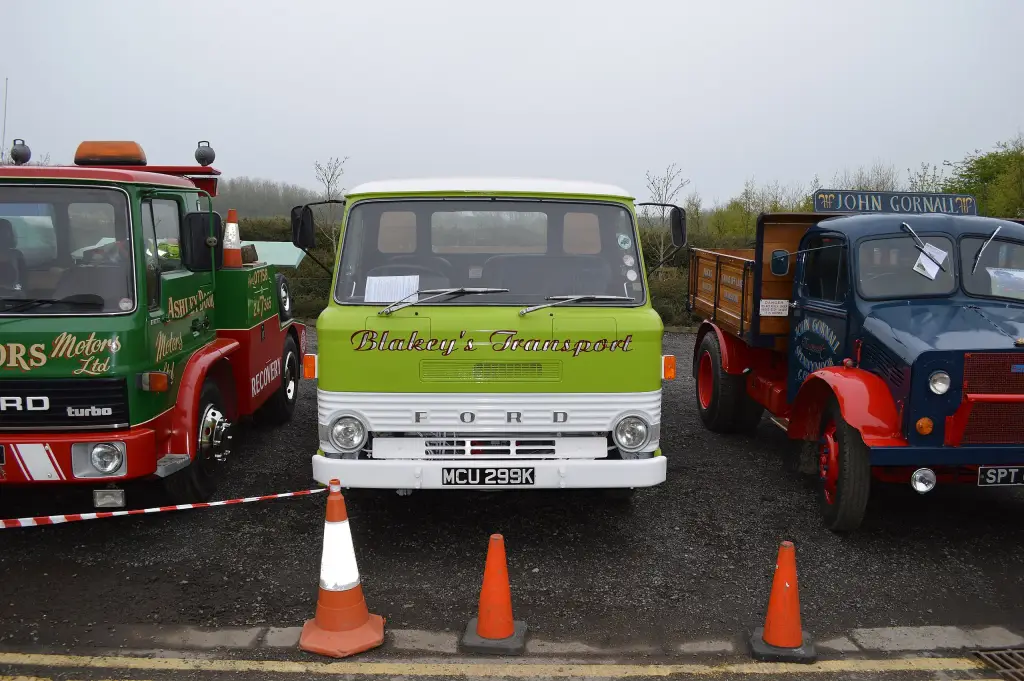
The Ford D series was a range of middle-weight trucks introduced by Ford UK in 1965 as a replacement for the Thames Trader. It was designed as a more modern rival to the Bedford TK, and it was built in Britain until the Ford Cargo took over in 1981.
Ford D series at a glance
| Maker | Ford UK |
|---|---|
| Introduced | 1965 |
| Replaced | Thames Trader |
| Main rival | Bedford TK |
| 1965 range | rigid trucks from 5.2 to 12.75 tons gross |
| Tippers | 10.8 to 12.75 tons |
| Diesel engines | 3.97 L four, 5.42 L six, 5.95 L six |
| Power | 82.5 to 128 bhp |
| Petrol engines | 129 and 149 bhp |
| Cab | forward control, tilting, torsion-bar counterbalanced |
| D1000 (1967) | up to 28 tons gross, Cummins 7.7 L V8 diesel |
| Facelift | 1978, square headlamps and Aeroflow grille |
This page is based on English Wikipedia only.
History of the Ford D series
A modern replacement for the Trader
The D series arrived in 1965 to replace the Thames Trader, and it was clearly intended as a more modern competitor to the Bedford TK. In its first year the range covered rigid trucks with gross weights from 5.2 to 12.75 British tons, plus tippers from 10.8 to 12.75 tons; twin rear axles and articulated versions were added soon afterwards. Three new diesels were developed for the trucks, of 3.97, 5.42 and 5.95 litres, the smallest a four and the other two sixes, with claimed power from 82.5 to 128 bhp. Petrol engines of 129 and 149 bhp were also offered, probably with export markets in mind.
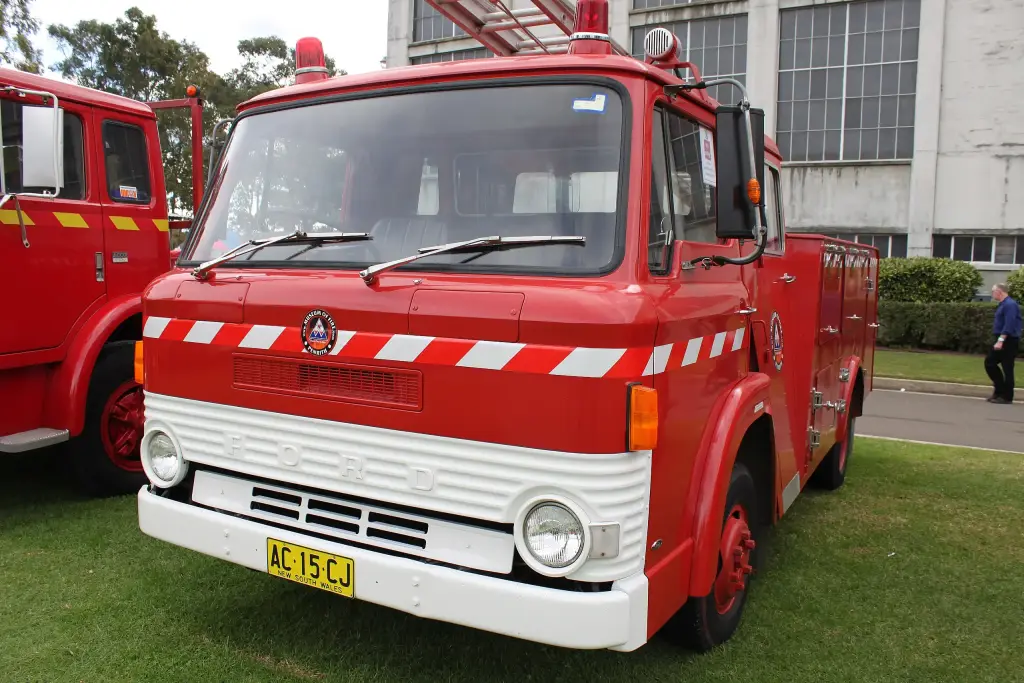
A tilting cab
Like the Bedford TK and the American heavy trucks of the time, the D series had a flat-fronted forward-control cab mounted above the engine. Access came by tilting the whole cab forward on a front hinge with a torsion-bar counterbalance, which commentators said made lifting it “almost a one-hand job”. The engines were installed at an angle of 45 degrees from the vertical, which allowed a virtually flat floor in the cab without making it too tall.
The D1000 and the end
In April 1967 the range was extended upwards with the Phase II D1000 series, designed to operate at up to 28 tons gross and at that time the largest trucks Ford of Britain had ever built, powered by Cummins 7.7-litre V8 diesels. For the 1978 model year the cab was facelifted with the corporate nose of Ford of Europe’s passenger cars, square headlamps and the black plastic louvred Aeroflow grille, changes shared with the Transit of the period. In 1981 the range was replaced in Europe by the Ford Cargo and in Australasia by the Ford N series, a rebadged Hino Ranger. Hyundai built the D-750 and D-800 under licence from 1969 to 1972, its first commercial vehicle.
Design and features
- Tilting cab: a torsion-bar counterbalance made engine access easy.
- Three new diesels: 3.97, 5.42 and 5.95 litres, from 82.5 to 128 bhp.
- Wide weight range: from 5.2 to 28 tons gross by 1967.
- 45-degree engines: a flat cab floor without an excessively tall cab.
Ford D series versions
- Rigid trucks (1965): 5.2 to 12.75 tons gross.
- Tippers: 10.8 to 12.75 tons.
- D1000 (1967): up to 28 tons with Cummins V8 power.
- Facelift (1978): square headlamps and Aeroflow grille.
- Hyundai D-750 and D-800: licence-built in Korea from 1969.
The D series replaced the Thames Trader and sat above the A series in Ford’s British truck range. More Ford vehicles are in the Ford collection.
Sources
- Ford D series, English Wikipedia: engines, cab, D1000, facelift, successors