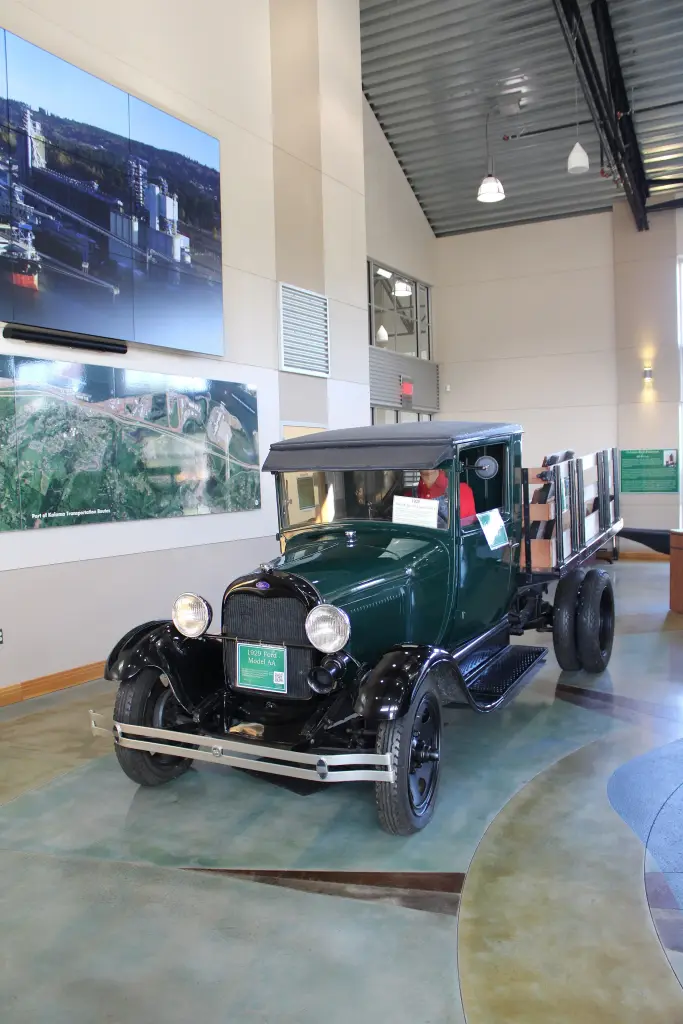
The Ford Model AA was the truck built by Ford alongside the Model A, designed from 1926 as the Model T and TT became obsolete. It shared the Model A’s body, engine and interior but sat on a much larger and heavier chassis, and it carried simpler trim than the cars.
Ford Model AA at a glance
| Maker | Ford Motor Company |
|---|---|
| Design started | 1926 |
| Bodies by | Briggs, Murray and other outside makers |
| Engine | 201 cu in (3.3 L) four, 40 hp at 2,200 rpm |
| Gearbox | four-speed manual with creeper first gear |
| Reverse lock | thumb-operated lever on the gear knob |
| Brakes | mechanical drums, biased towards the rear |
| Rear axle | worm gear at first, then ring and pinion |
| Wheels | spoked from 1928, then 20-inch six-slot and five-slot discs |
| Cab heater | available from the Model A option list |
This page is based on English Wikipedia only.
History of the Ford Model AA
The same car, made stronger
As the Model T and TT became obsolete, Henry Ford began work on the Model A and Model AA in 1926. The chassis layout was settled quickly and engineering moved fast, while body design was outsourced to makers such as Briggs and Murray. The Model A and the AA shared parts and materials, notably the body, engine and interior, though the truck usually had plainer trim, and the AA followed the car’s changes with a delay of three to nine months.
Built to work
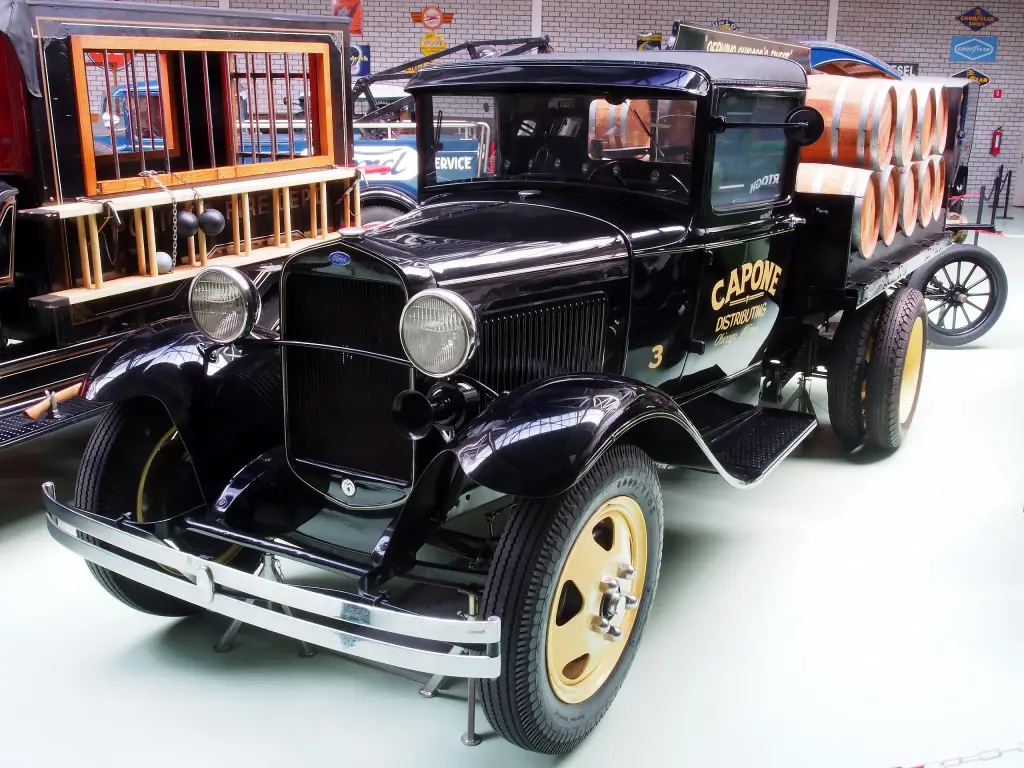
The Model AA used the same 201 cubic inch four as the Model A, giving a maximum of 40 hp at 2,200 rpm with an updraught carburettor, six-volt generator, mechanical water and oil pumps, an electric starter and a hand crank through the radiator shell. The differences were underneath: the chassis was substantially larger and heavier, and the gearbox had four speeds, the extra low “granny” gear giving enough torque to move a loaded truck, with second to fourth matching the Model A’s first to third. A lock-out on the gear knob, worked by a thumb lever, prevented reverse being engaged by accident while moving. Early trucks had a worm-gear rear axle that limited top speed, replaced later by a ring-and-pinion differential with high and low speed options, and later cars gained braces on the rear axle casing.
Details that changed along the way
The front suspension matched the Model A with a leaf spring over the axle, but the rear used leaf springs mounted to the chassis and shackled to the axle, without shock absorbers. Controls were entirely mechanical apart from the later vacuum windscreen wipers, and the brakes were four oversized mechanical drums worked by rods and biased towards the rear. Wheels changed during production: heavy spoked wheels in 1928, 20-inch six-slot discs from Budd in 1929, a five-slot disc for 1930 and part of 1931, and a final version with a raised centre that allowed dual rear wheels for dump trucks, tow trucks, tankers, fire engines and flatbeds.
Design and features
- Model A engine: the same 40 hp 201 cu in four, with its own radiator.
- Creeper gear: a four-speed box with an extra-low first for loaded starts.
- Heavy chassis: larger and stronger than the Model A’s frame.
- Dual rear wheels: available on the last wheel design for heavy bodies.
Ford Model AA versions
- 1928 truck: spoked wheels and worm-gear rear axle.
- 1929 model: 20-inch six-slot disc wheels from Budd.
- 1930–1931 model: five-slot disc wheels and ring-and-pinion axle.
- Dual-wheel chassis: for dump trucks, tankers and fire engines.
- Bodied trucks: flatbed, stake, tow and tanker bodies by outside makers.
The Model AA was the truck member of the Model A family and replaced the Model T based trucks. More Ford vehicles are in the Ford collection.
Sources
- Ford Model AA, English Wikipedia: engine, gearbox, chassis, wheels