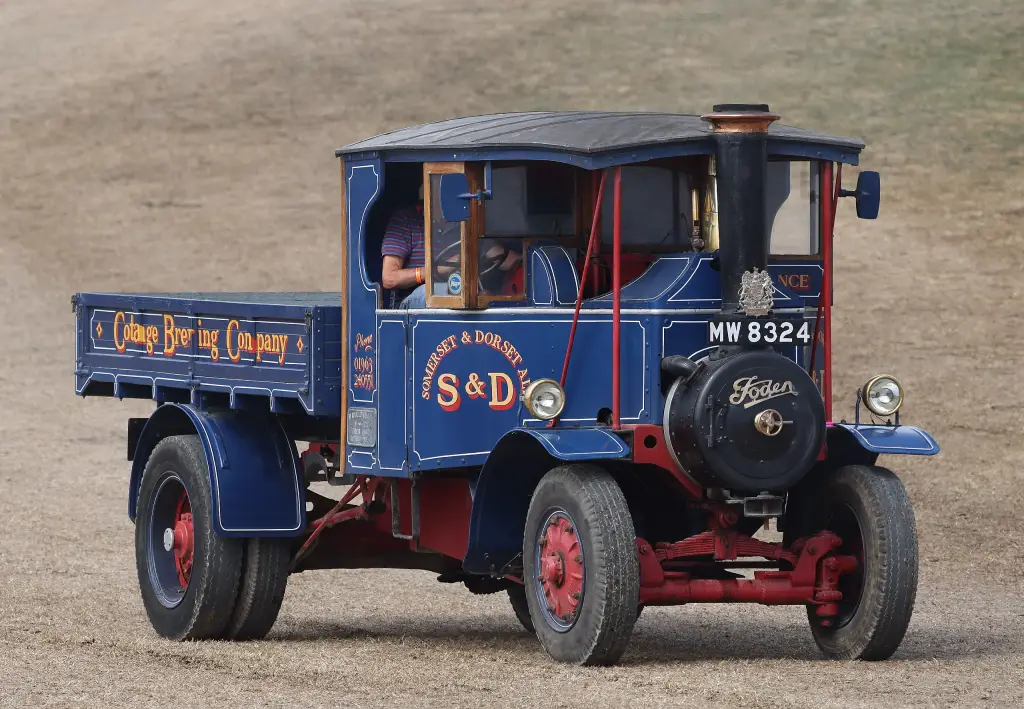
The Foden steam wagon was the vehicle on which the company’s reputation was built. After the road restrictions were eased in 1896 Foden built a series of four prototype wagons, entered a three-ton lorry in the War Office trials of 1901 and put a five-ton wagon into production in 1902; the line lasted until the last steam wagon was supplied in 1934.
Foden wagon at a glance
| Vehicle | Foden steam wagon |
|---|---|
| Maker | Foden, Elworth near Sandbach, Cheshire, England |
| Road rules eased | 1896, allowing vehicles under 3 tons up to 12 mph (19 km/h) without a red flag |
| Prototypes | a series of four wagons after 1896 |
| War Office trial | 1901, 3-ton self-propelled lorry, second behind Thornycroft |
| Production wagon | 5 tons, from 1902 |
| Main layout | overtype, with the engine over the boiler |
| Undertypes | from the late 1920s: E-type, O-type Speed-6 and Speed-12 |
| Final steam wagon | 1934 |
| Steam road vehicles built | more than 6,500 |
There is no dedicated page for the steam wagon; the article is built on the Foden company history, which covers the wagons in detail.
History of the Foden wagon
From traction engines to road wagons
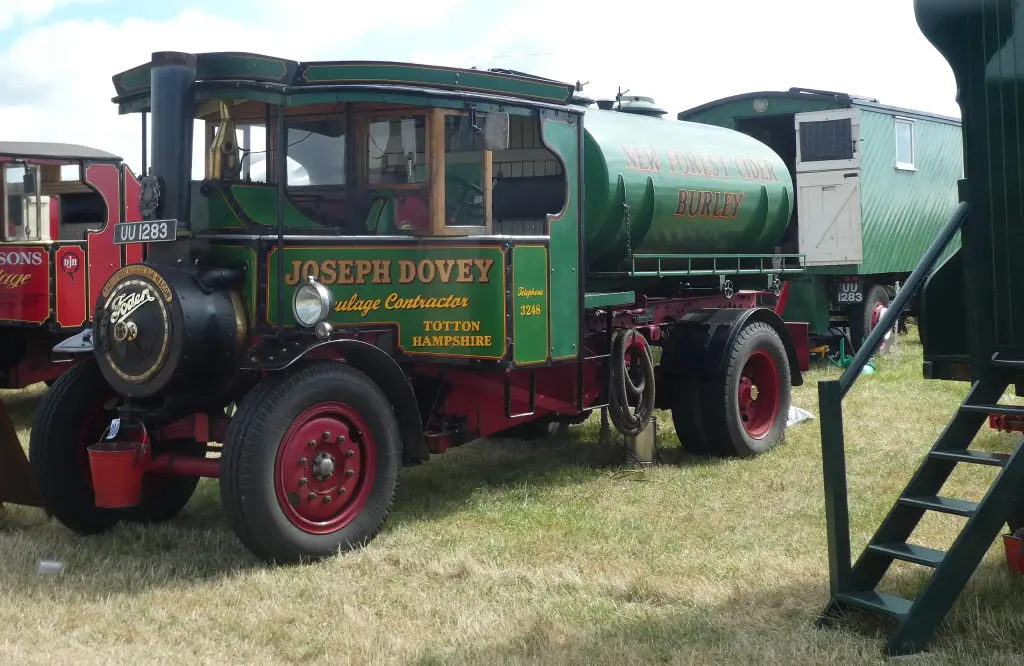
Edwin Foden’s firm made industrial engines, small stationary steam engines and, from 1880, agricultural traction engines. The perfecting of the compound traction engine in 1887 gave the company a significant marketing advantage and proved invaluable in developing the steam lorry.
In 1896 the restrictions on road transport were eased, permitting vehicles under three tons to travel at up to 12 mph (19 km/h) without a red flag. Foden produced a series of four prototype wagons, and the experience gained led to a three-ton wagon for the War Office self-propelled lorry trial of 1901.
Second at the trial, winner in the market
The Foden was consistently faster and more economical than the Thornycroft entry over the arduous road trials, but was placed second because Thornycroft was judged to have better off-road performance. Most commentators regarded the Foden as the clear winner and the result was questioned in Parliament by Crewe’s MP. The design became the basis for a highly successful line of vehicles built over the next 30 years, and the five-ton lorry derived from the trial vehicle went into production in 1902.
Overtype, undertype and the end
The great majority of Foden steam lorries were overtype, with the engine mounted over the boiler, but undertypes were also produced from the late 1920s. These included the unsuccessful E-type and the O-type “Speed-6” and “Speed-12”, a much more modern vehicle. Foden supplied its final steam wagon in 1934; in all more than 6,500 steam road vehicles were built, and the company had already turned to diesel with the F1 of 1931.
Design and features
- Compound engine: the compound traction engine perfected in 1887 made the steam lorry possible.
- Overtype layout: the engine sat over the boiler, the arrangement used for most Foden steam lorries.
- Trial-proven design: the 1901 War Office wagon led directly to the five-ton production model.
- Long life: the line ran from the 1896 prototypes to the last wagon in 1934.
Foden wagon versions
- Prototype wagons (1896): four built after the road rules were eased.
- War Office trial lorry (1901): three tons, second in the official trial.
- Five-ton wagon (1902): the production model derived from the trial lorry.
- E-type undertype: an unsuccessful design of the late 1920s.
- O-type Speed-6 and Speed-12: much more modern undertype wagons.
The company that built them is described in the Foden collection, whose later lorries include the S10 and the S20.
Video: Foden C Type 5 ton steam wagon climbing the road from Porthtowan
Video on YouTube.
Sources
- Foden Trucks, English Wikipedia: 1896 prototypes, 1901 trial, overtype and undertype, 1934
- Foden, German Wikipedia: 5-ton wagon of 1902, over 6,500 steam vehicles