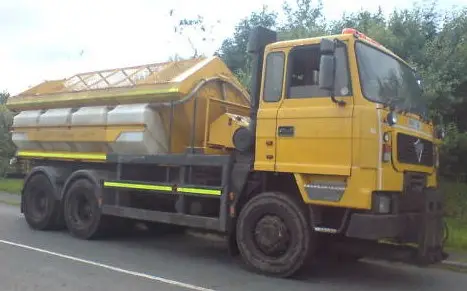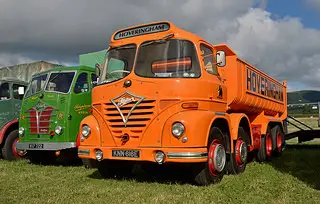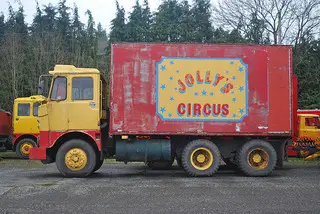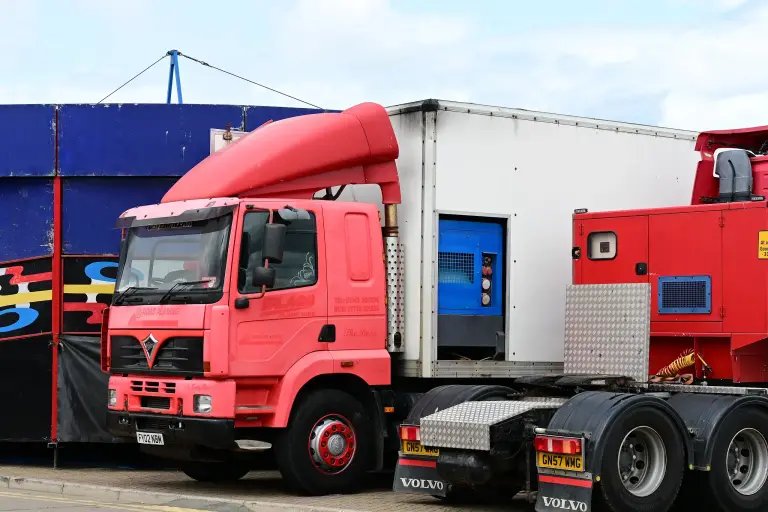
The Foden S36 was one of the lorries sold at the time Foden changed the way it built cabs. Glass-reinforced plastic came into cab production in 1958 with the S21, a shape the trade press nicknamed the “Spaceship”, the “Sputnik” and, most durably, the “Mickey Mouse”.
Foden S36 at a glance
| Model | Foden S36 lorry |
|---|---|
| Maker | Foden, Elworth near Sandbach, Cheshire, England |
| Cab production change | glass-reinforced plastic introduced in 1958 |
| First GRP cab | S21, the “Mickey Mouse” cab |
| Press nicknames for S21 | “Spaceship” and “Sputnik” |
| S21 production | until 1969 |
| Tilting cab | S24, 1962, the first British-built mass-produced tilt cab |
| Earlier metal-and-wood cab | S20 of 1956, still on special vehicles until 1968 |
| Road rules that reshaped the market | 1964 Construction and Use Regulations favoured articulated lorries |
| Marque | Foden, founded 1856; name dropped in 2006 |
based on one source: no dedicated page for the S36 exists; the article covers the cab generation it belongs to from the Foden company history.
History of the Foden S36
Plastic instead of metal and wood
Foden brought glass-reinforced plastic into cab production in 1958. The first GRP cab was the distinctively styled S21. The commercial vehicle press called it the “Spaceship” and the “Sputnik”, but the nickname that stuck was the “Mickey Mouse” cab. It was built until 1969, overlapping for years with the older metal-and-wood S20 cab, which was still supplied for special vehicles until 1968.
The first mass-produced British tilt cab
The GRP tilt cab introduced by Foden in 1962 was designated S24 and was the first British-built, mass-produced tilting cab. Tilting the cab forward gave access to the engine, a layout that became universal on heavy lorries.
A market that turned to tractors
In 1964 a change in the Construction and Use Regulations favoured articulated vehicles over the older rigid designs, and Foden introduced a new model to compete in the 32-ton market. More than 75 per cent of heavy chassis sold in Britain in the following years were tractor units.
Foden itself had begun at Elworth near Sandbach in 1856, moved from steam to diesel with the F1 of 1931, and after the Second World War launched the FE and FG lorries with its own FD6 two-stroke diesel. Paccar bought the company in 1980; the name disappeared in 2006.
Design and features
- Glass-reinforced plastic: Foden moved from metal-and-wood cabs to GRP in 1958.
- Distinctive shape: the S21 was nicknamed “Spaceship”, “Sputnik” and “Mickey Mouse”.
- Tilting cab: the S24 of 1962 was the first British mass-produced tilting cab.
- Tractor units: the 1964 rule change pushed the market towards articulated lorries.
Foden S36 versions
- S21 cab (1958): the first Foden GRP cab, built until 1969.
- S24 cab (1962): the first British mass-produced tilting cab.
- S20 cab (1956): the traditional metal-and-wood cab still used on special vehicles.
- 32-ton tractor unit: the new model Foden added after the 1964 regulations.
The traditional cab it overlapped is described in the Foden S20 article, and the heavy eight-wheeler tradition in Foden S39. More Foden lorries are in the Foden collection.
Video: Foden S36 Road scenes, and noise testing at MIRA. 1997/98.
Video on YouTube.
Sources
- Foden Trucks, English Wikipedia: GRP cabs, S21 nicknames, S24, 1964 regulations
- Foden, German Wikipedia: company history