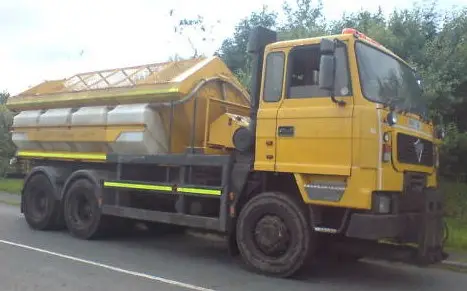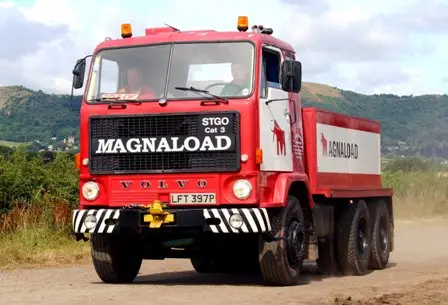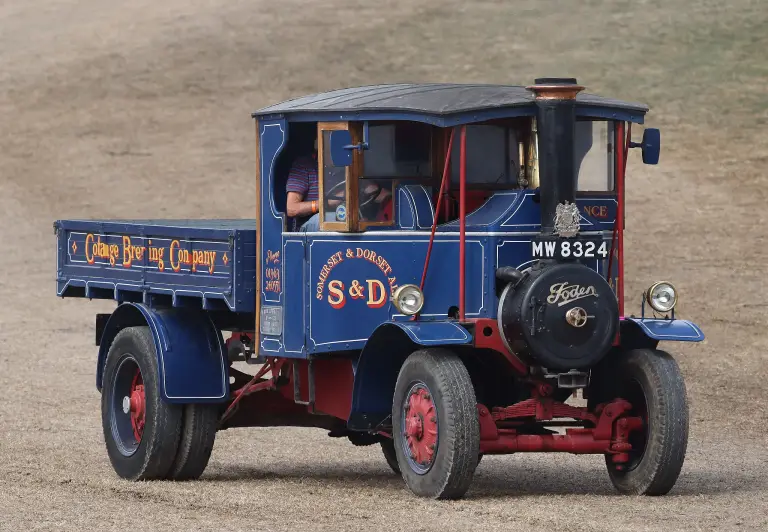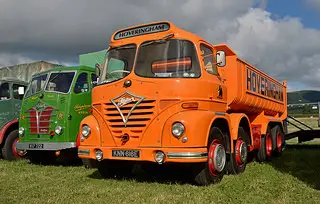
The Foden S39 belongs to the period when the British heavy lorry market swung from rigid eight-wheelers to articulated tractor units. Foden had built rigid eight-wheelers since the S18 FE6/15 of 1948, but a 1964 change in the Construction and Use Regulations favoured articulated vehicles, and within a few years three quarters of heavy chassis sold in Britain were tractors.
Foden S39 at a glance
| Model | Foden S39 lorry |
|---|---|
| Maker | Foden, Elworth near Sandbach, Cheshire, England |
| Rigid eight-wheeler example | S18 FE6/15 of 1948 |
| Its Gardner-engined alternative | S18 FG6/15 with the Gardner 6LW |
| Engine of the period | Foden FD6 two-stroke diesel, standard in certain heavy models until 1977 |
| 1964 rule change | Construction and Use Regulations favoured articulated vehicles |
| New model for 1964 | introduced to compete in the 32-ton market |
| Market share of tractors | more than 75 per cent of heavy chassis sold in Britain afterwards |
| Export oddity | from 1969 Fodens sold in Portugal were badged Podens |
| Marque | Foden, founded 1856; name dropped in 2006 |
based on one source: no dedicated page for the S39 exists; the article describes the rigid and articulated heavy lorries of its period from the Foden company history.
History of the Foden S39
Rigid eight-wheelers first
Foden’s post-war heavy lorry was built around the new S18 cab of 1948. The S18 FE6/15 was a rigid eight-wheeler using the company’s own FD6 two-stroke diesel, with the Gardner 6LW offered as an alternative in the S18 FG6/15. The FD6 remained the standard engine for certain Foden heavy lorries until 1977.
1964: the tractors take over
In 1964 a change in the Construction and Use Regulations favoured articulated vehicles over the older rigid designs. Foden introduced a new model to compete in the 32-ton market. More than 75 per cent of heavy chassis sold in Britain in the following years were tractor units, which changed the mix of the range a rigid eight-wheeler had once led.
Selling abroad
Foden made its first sales in Portugal in 1969. Because the company name resembled a profanity in Portuguese, the lorries were badged as Podens there. Paccar acquired Foden in 1980 and the marque was dropped in 2006.
Design and features
- Rigid eight-wheeler layout: the S18 FE6/15 carried Foden’s heavy-lorry tradition into the post-war years.
- Two-stroke diesel: the FD6 of 1948 remained standard in certain heavy models until 1977.
- Engine choice: Gardner’s 6LW was available as an alternative to Foden’s own engine.
- The 32-ton market: the 1964 regulations created a new class of articulated lorry, and Foden followed it.
Foden S39 versions
- S18 FE6/15: rigid eight-wheeler with the Foden FD6.
- S18 FG6/15: the Gardner 6LW-engined version.
- 32-ton tractor unit: the model introduced after the 1964 regulations.
- Podens: the badge used for Fodens sold in Portugal from 1969.
The cab generation of these years is described in Foden S36, and the earlier cab numbering in Foden S10. More Foden lorries are in the Foden collection.
Video: Foden s39 at old warden
Video on YouTube.
Sources
- Foden Trucks, English Wikipedia: S18 eight-wheelers, 1964 regulations, Podens
- Foden, German Wikipedia: FD6 engine, company history