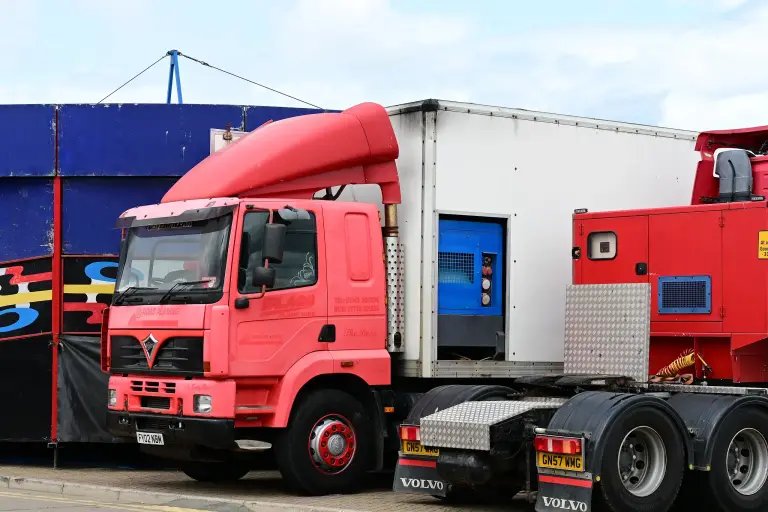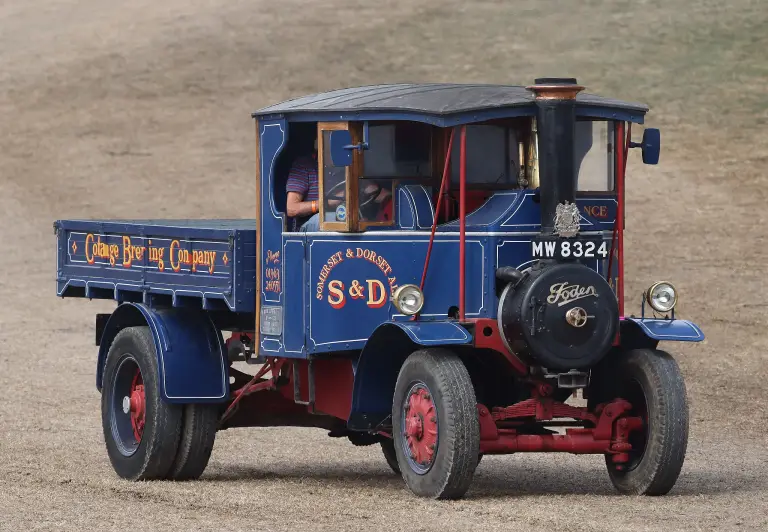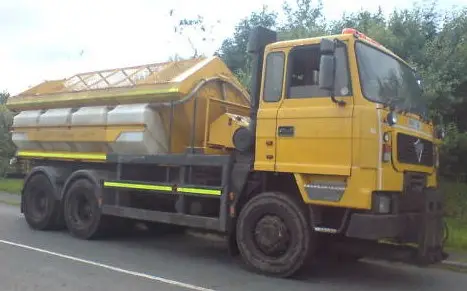
The Foden S10 was one of the company’s lorries whose model number came from its cab. Foden used the S prefix for cabs rather than for engines or weights: when the completely new FE and FG lorry ranges arrived in 1948, the S18 designation referred to the new cab built for them.
Foden S10 at a glance
| Model | Foden S10 lorry |
|---|---|
| Maker | Foden, Elworth near Sandbach, Cheshire, England |
| Naming | the S number denotes the cab |
| Example of the system | S18, the cab of the 1948 FE and FG ranges |
| FE and FG lorries | introduced in 1948 |
| Example model | S18 FE6/15 rigid eight-wheeler |
| Gardner-engined version | S18 FG6/15 with the Gardner 6LW |
| Own engine from 1948 | Foden FD6 two-stroke diesel, 4.1 litres, 126 bhp |
| FD6 in service | standard in certain Foden heavy lorries until 1977 |
| Marque | Foden, founded 1856; name dropped in 2006 |
based on one source: there is no dedicated page for the S10, so the article describes the cab-numbering system and the 1948 generation from the Foden company history.
History of the Foden S10
The cab is the model
Foden named many of its lorries after the cab they carried. The practice is clearest in the 1948 ranges: the FE and FG were completely new, and the S18 in the model designation referred to the new cab produced for them. The same cab could therefore appear under several model numbers, because the letters and figures around the S described the engine, the weight and the chassis layout.
1948: new lorries and a new engine
The FE and FG ranges arrived in 1948 together with the Foden FD6, the company’s own two-stroke diesel. In the S18 FE6/15 rigid eight-wheeler the FD6 was standard; the optional Gardner 6LW-engined version was the S18 FG6/15. The FD6 remained the standard engine for certain Foden heavy lorries until production of the two-stroke stopped in 1977, and it was also fitted in Foden motorcoaches and buses.
The marque around it
Foden began at Elworth near Sandbach in 1856, built steam wagons from the 1890s and moved to diesel with the F1 of 1931 — regarded as the first commercially successful diesel lorry. Buses and coaches were built after 1946 and dropped in 1956. Paccar acquired the company in 1980, and the Foden name was retired in 2006.
Design and features
- Cab-based model numbers: the S prefix told buyers which cab the lorry carried.
- The 1948 generation: the FE and FG ranges brought both a new cab and a new engine.
- Foden’s own diesel: the FD6 two-stroke of 1948, 4.1 litres and 126 bhp.
- Eight-wheelers: the S18 FE6/15 was a rigid eight-wheeler, with a Gardner-engined alternative.
Foden S10 versions
- S18 FE6/15: rigid eight-wheeler with the Foden FD6 two-stroke.
- S18 FG6/15: the same lorry with the optional Gardner 6LW diesel.
- FE range (1948): the new Foden heavy lorry range.
- FG range (1948): its sister range, sharing the S18 cab.
The cab numbering continued with the S20 cab of 1956 and the GRP cabs of the 1960s. More Foden lorries are in the Foden collection.
Sources
- Foden Trucks, English Wikipedia: the S18 cab, the FE and FG ranges, the FD6
- Foden, German Wikipedia: FD6 output, company history