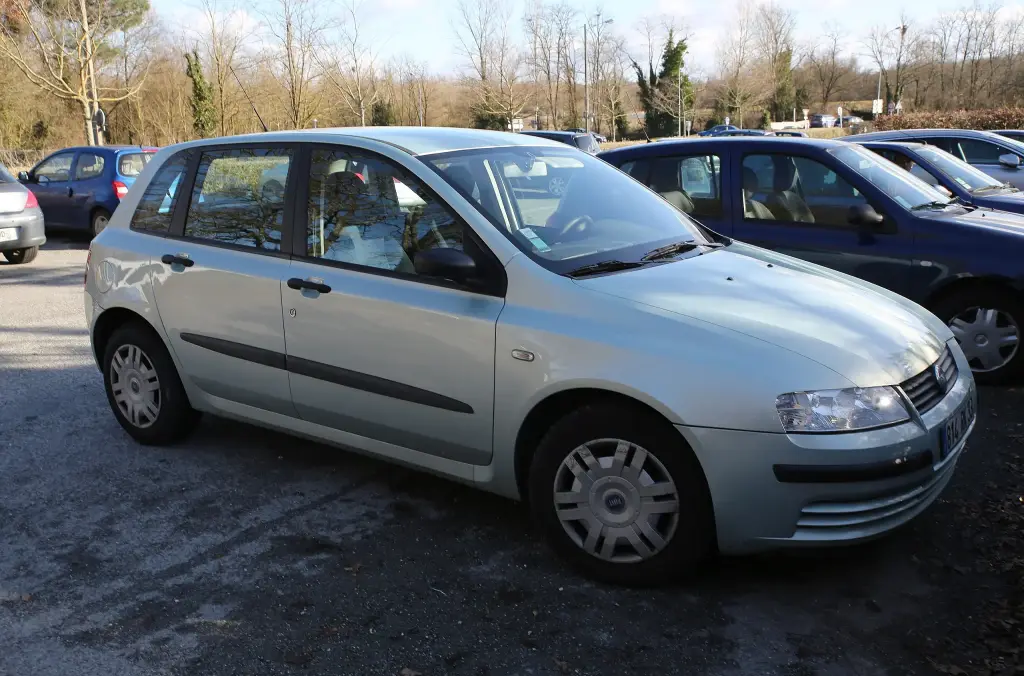
The Fiat Stilo, the Type 192, is a small family car available as a three- and a five-door hatchback and as an estate called the Fiat Stilo Multi Wagon. The hatchbacks were presented in March 2001 at the Bologna Motor Show and launched on the European market in October 2001 to replace the Fiat Bravo and Brava, with the Multi Wagon following in January 2003. The Stilo came third in the European Car of the Year awards for 2002, behind the Peugeot 307 and Renault Laguna.
Fiat Stilo at a glance
| Production | 2001–2010 |
|---|---|
| Internal code | Type 192 |
| Bodies | 3- and 5-door hatchback, Multi Wagon estate |
| Replaced | Fiat Bravo and Brava |
| Replaced by | Fiat Bravo |
| Petrol engines | 1.2, 1.6, 1.8 and 2.4 |
| Diesel engines | 1.9 JTD and 1.9 MultiJet |
| Power range | 80 to 170 PS |
| Award | third in European Car of the Year 2002 |
| Built in Brazil | five-door until October 2010 |
based on one source
History of the Fiat Stilo
Launch and reception
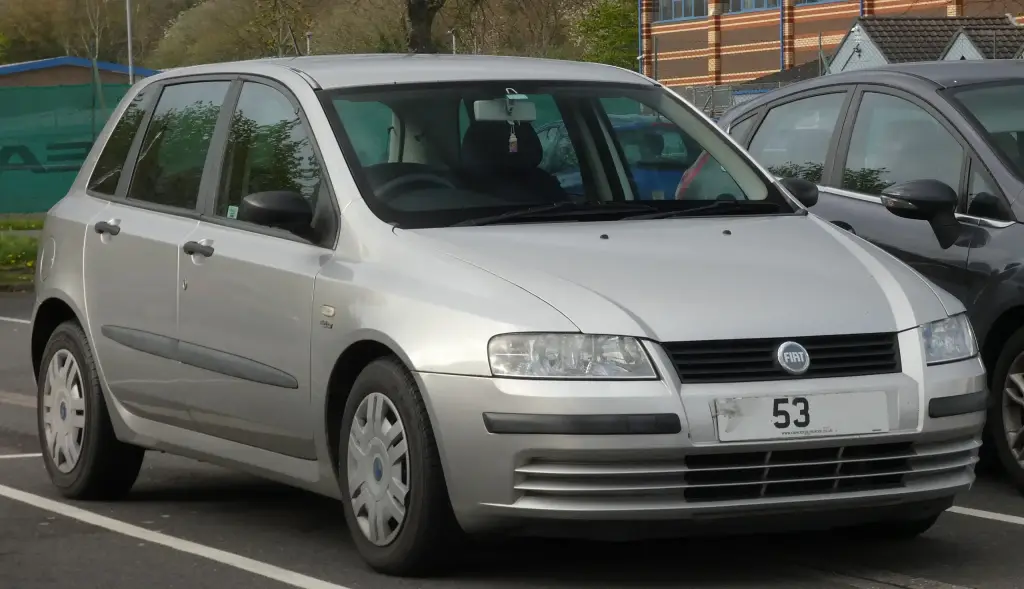
The Stilo replaced the Bravo and Brava in October 2001, with the estate following in January 2003. In most markets the Fiat Bravo was its successor, but the five-door Stilo continued to be manufactured in Brazil until October 2010, when it too was replaced by the Bravo. The car came third in the European Car of the Year awards for 2002, behind the Peugeot 307 and Renault Laguna.
Styling received mixed reviews, with many journalists and enthusiasts calling it too bland and too German-looking, after the styling of the Bravo and Brava had been criticised for being too Italian. The five-door was less sporty than the coupé-like three-door, with a higher roofline and a more upright appearance. Critics attacked the car’s excessive weight and its semi-independent twist-beam rear suspension, although this was the same system used by the market-leading Volkswagen Golf of the time; some saw the torsion beam as a step backwards from the fully independent rear suspension of the Bravo and Brava and the Fiat Coupé.
Engineering
The Stilo was the second car in the world to use TRW Column-Drive electric power-assisted steering, after the second-generation Fiat Punto, and the technology later appeared on the 2003 Nissan Micra and Renault Mégane. As the model aged, the range of available options was reduced. When pushed the Stilo resists understeer, although soft spring and damper rates dull the experience; the 1.2-litre petrol engine was generally criticised as underpowered, while the 1.6 was the last iteration of the old Fiat 128 single-overhead-cam engine and gave strong performance. Fuel economy was poor for the class as a result of the car’s weight, and the Selespeed gearbox of the Abarth version was seen as too slow for a high-powered model. The car won praise for high grip, helped by unusually wide tyres, and for its brakes.
Equipment
The Stilo was originally offered in some markets with radar-assisted cruise control, using sensors in the front and rear bumpers to adjust speed to other vehicles; it was soon dropped because interference produced undesired results. Keyless entry with push-button start, named Easy Go, was also an option. In the United Kingdom the trim levels were Active, Active Aircon, Blue, Dynamic, Sporting, Abarth, GT, Prestigio, an Xbox limited edition, Michael Schumacher and Schumacher GP, the last with general modifications by the British specialists Prodrive.
Engines
The original combinations started with a 1,242 cc double-overhead-cam sixteen-valve engine of 80 PS shared with the Punto and Lancia Ypsilon and mated to a six-speed manual, followed by a 103 PS 1.6-litre with a five-speed manual, also offered with six speeds, and a 133 PS 1.8-litre with five speeds. The top petrol was a 170 PS 2.4-litre five-cylinder with Fiat’s Selespeed five-speed automated manual. Diesels were the 1.9 JTD with 80 or 115 PS, the eight-valve 1.9 MultiJet with 101 or 120 PS and the sixteen-valve 1.9 MultiJet with 140 or 150 PS.
Facelift and sales
For the 2006 model year, in September 2005, the Stilo received a new front grille, different seat fabric and the electric mirror controls moved from the window console to a position behind the gear lever; entry models lost the centre armrest and the rear air vent. In 2004 the car had already received a light facelift: the 1,242 cc engine was dropped in favour of the Punto’s 1.4-litre unit, raising power to 95 PS and again combined with the six-speed gearbox, the tail lights were altered, and the Abarth gained a traditional manual gearbox instead of the Selespeed.
The Stilo was ultimately a sales disappointment. An extensive advertising campaign with the Formula 1 drivers Michael Schumacher and Rubens Barrichello did little to help, and in October 2013 The Economist placed the Stilo in its report on Europe’s biggest loss-making cars.
Motorsport
A Group N version was developed by Abarth for the single-make Trofeo Stilo Abarth, held in Italy from 2002 to 2005 and revealed at the Bologna Motor Show in November 2001. It was derived from the Stilo 1.8 16-valve, with power raised from 133 to 157 bhp and, from the 2003 season, to 180 bhp. A similar Fiat Stilo Rally Cup ran in the United Kingdom from 2004 to 2005. In September 2004 a junior team backed by Fiat UK competed in the Wales Rally GB with Group A cars, and the following year two other cars took part; Stilo cars have also appeared in the Andros Trophy.
Design and features
- Three bodies: three- and five-door hatchbacks and the Multi Wagon estate.
- Electric steering: second car in the world with TRW Column-Drive EPS after the Punto.
- Wide engine range: 1.2 to 2.4 petrol and 1.9 JTD or MultiJet diesels.
- Equipment: radar cruise control and Easy Go keyless start were offered early on.
- Abarth racing: a Group N car ran in the Trofeo Stilo Abarth from 2002 to 2005.
Fiat Stilo versions
- Stilo three-door: the sportier, coupé-like hatchback.
- Stilo five-door: higher roofline, built in Brazil until 2010.
- Stilo Multi Wagon: the estate added in January 2003.
- Stilo Abarth: 2.4-litre five-cylinder with Selespeed, later a manual.
- Schumacher and Schumacher GP: British special editions, the latter modified by Prodrive.
The Stilo replaced the Fiat Bravo and Brava, and its own successor is covered in the same entry. The Fiat Marea was the saloon and estate version of the earlier pair. More cars are in the Fiat collection.
Sources
- Fiat Stilo, English Wikipedia: launch, engineering, engines, equipment, facelift, sales, motorsport