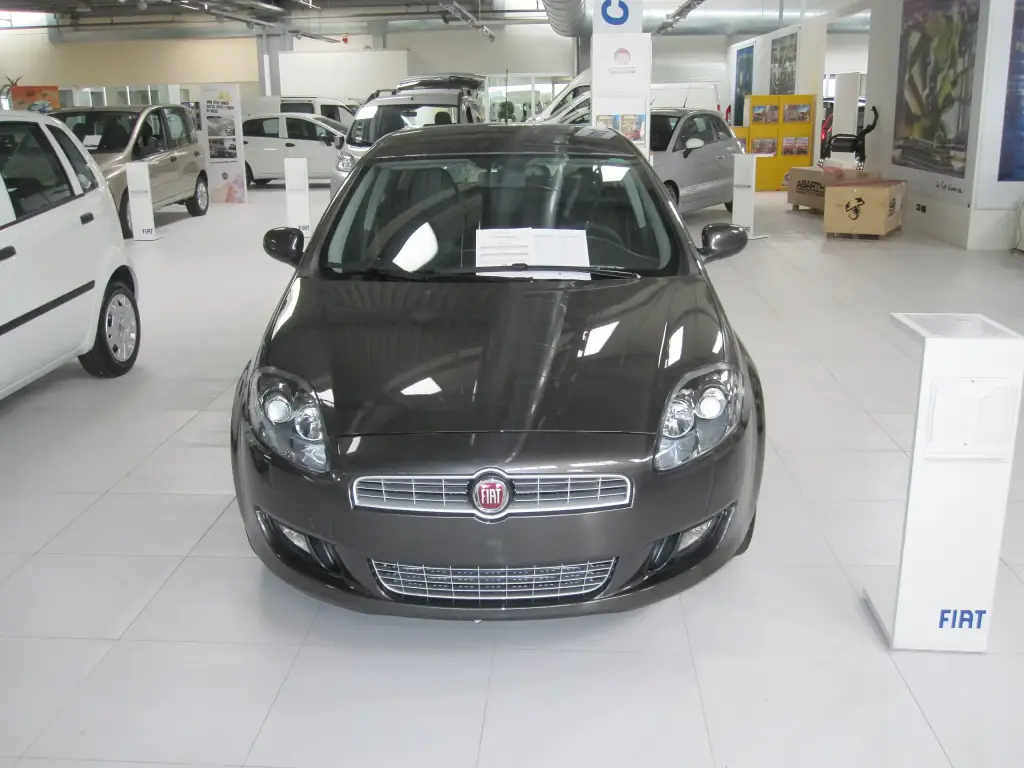
The Fiat Bravo and Fiat Brava are small family cars that Fiat produced from 1995 to 2003, and to 2001 in Europe. They were effectively two versions of the same car: the Bravo, a three-door hatchback, and the Brava, a five-door fastback. The Bravo name was revived in January 2007 with an all-new model, a replacement for the Stilo, available only with five doors.
Fiat Bravo at a glance
| Bravo and Brava | 1995–2003 |
|---|---|
| Internal code | Type 182 |
| Bodies | 3-door hatchback (Bravo), 5-door fastback (Brava) |
| Replaced | Fiat Tipo |
| Replaced by | Fiat Stilo in 2001 |
| Base engine | 1.4 litre 12-valve, 80 PS |
| Top engine | 2.0 litre 20-valve five, 147 PS |
| HGT | 147 PS, later 155 PS |
| Diesels | 1.9 litre, 75 or 100 PS |
| Award | European Car of the Year on launch |
| New Bravo | from January 2007, five doors only |
based on one source
History of the Fiat Bravo
Bravo and Brava, 1995–2003
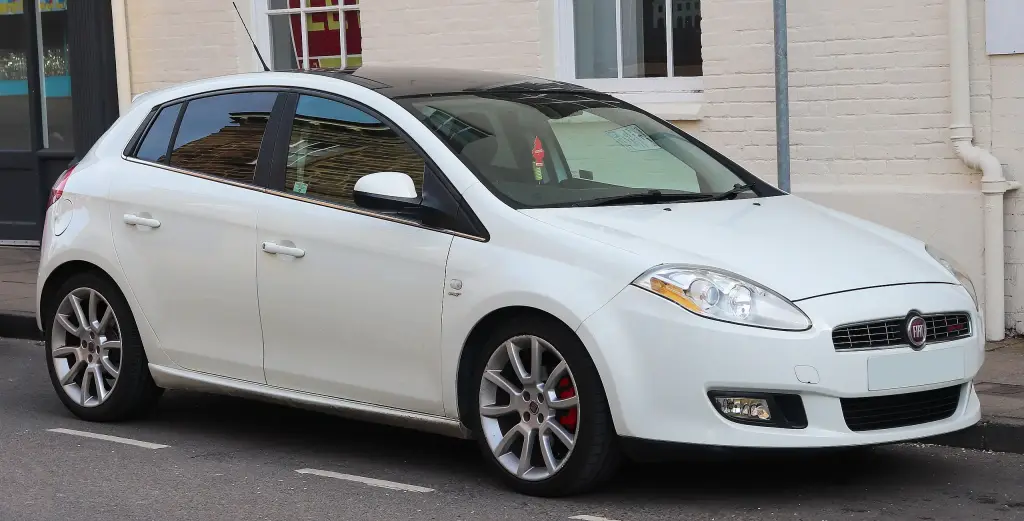
The Bravo and Brava replaced Fiat’s successful but ageing Tipo. Although they were versions of one car, they were very different in styling detail and driving experience: the Bravo chassis was tuned for more precise handling while the Brava was tuned for comfort. Interior trim and many body colours were unique to one version or the other, and both cars had a two-star safety rating on Euro NCAP.
The cars came with all-new engines. The base model used a 1.4 litre 12-valve unit producing 80 PS. Three other petrol engines were available: a 103 PS 1.6 litre 16-valve, a 113 PS 1.8 litre 16-valve and the top-of-the-range 2.0 litre 20-valve inline five used in the HGT, which produced 147 PS and took the car to 213 km/h. In 1999 the 155 HGT replaced the older model with 155 PS. Two turbodiesel engines were also offered, both 1.9 litre four-cylinders, one with 75 PS and the other with 100 PS. The Bravo and Brava were voted European Car of the Year on launch.
The chassis also produced saloon and estate versions in 1996, badged as the Fiat Marea and aimed at buyers of the Ford Mondeo and Opel Vectra, and the Fiat Multipla, a six-seater compact MPV, arrived in 1998 on the same underpinnings. The Bravo and Brava were advertised as silent, futuristic and economical under the slogan The Choice, which pointed to two very similar cars offered as a sporty three-door or a practical five-door.
Peter Davis, Fiat’s Styling Center director at the time, said work on the Bravo and Brava began immediately after the Coupé and the Barchetta. He said the team wanted to push design to the limit, break the rules and discover every angle of the car to distinguish it from competitors. Jeremy Clarkson reviewed the pair on Top Gear in 1995, describing the three-door as a good-looking car that was nice to drive and cheap to run, and noting that it felt rigid, with no squeaks or rattles and switches that felt of quality.
The 1999 facelift
A mild facelift arrived in 1999. The 1.4 litre 12-valve engine was dropped in favour of the 1.2 16-valve unit from the Punto, and the HGT’s 2.0 litre 20-valve gained variable valve timing and variable intake systems, raising power from 147 to 155 PS. The dashboard was redesigned across all trims, the grilles were restyled, the air conditioning was swapped for the automatic unit from the Fiat Coupé, and other details changed through the range. The 1.9 turbodiesel gave way to 1.9 JTD units of 105 PS. In Greece, later Bravas came with a rear deck spoiler as standard.
Special editions
Fiat marked its Car of the Year 1996 win with the Anniversaire of 1997, 1,100 cars for Western Europe based on the 1.6 16-valve SX with metallic paint, heated electric mirrors, fog lights, a passenger airbag, ABS and a CD player. The Evening Vale of March 2000 was a Brava for Western Europe with special 14-inch wheel trims and automatic air conditioning. The Formula of 2001 was a British Bravo 1.2 16-valve SX with GT wheels and spoiler, heated mirrors, fog lights, a CD player and remote central locking. A Limited Edition served the Hungarian market from 2000, and the Steel of October 2001 closed the run for Western Europe with GT alloy wheels, darkened rear lights, leather steering wheel and a two-tone interior. A Suite edition was offered in Switzerland on the Bravo GT.
The Bravo of 2007
The Bravo name returned in January 2007 on an all-new car that replaced the Stilo, sold only with five doors.
Design and features
- One car, two characters: the three-door Bravo for handling and the five-door Brava for comfort.
- All-new engines: from the 80 PS 1.4 to the 147 PS 2.0 five in the HGT.
- Car of the Year: the pair won the European title on launch.
- Platform family: the Marea saloon and estate and the Multipla used the same underpinnings.
- 1999 facelift: new dashboard, 1.2 16-valve engine and 155 PS HGT.
Fiat Bravo versions
- Bravo: the three-door hatchback with firmer chassis tuning.
- Brava: the five-door fastback tuned for comfort.
- Bravo HGT: 2.0 litre 20-valve five of 147 PS, then 155 PS.
- Anniversaire and Steel: special editions of 1997 and 2001.
- Bravo (2007): the five-door replacement for the Stilo.
The Bravo and Brava replaced the Fiat Tipo and were themselves replaced by the Fiat Stilo. Their saloon and estate relatives are covered under the Fiat Marea. More cars are in the Fiat collection.
Sources
- Fiat Bravo and Brava, English Wikipedia: models, engines, facelift, special editions, 2007 Bravo