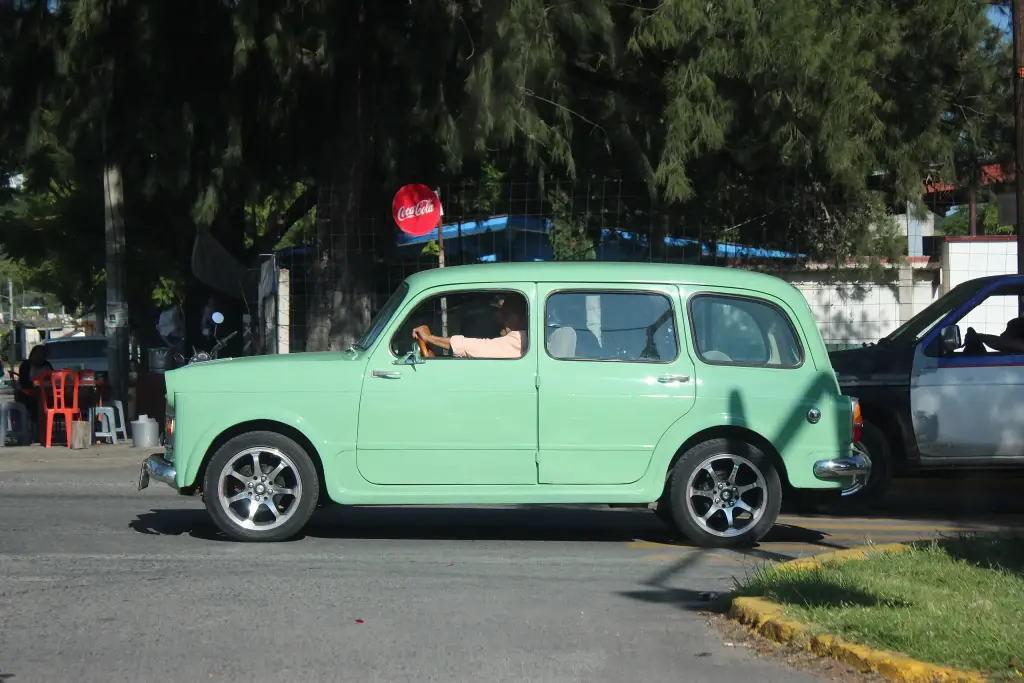
The Fiat 1100 was a small family car built from 1953 until 1969. Known internally as the Tipo 103, it replaced the 1100 E and was the second Fiat, after the 1400, to use unitary construction. The car was sold in several forms, including the sporting 1100 TV and the Familiare estate, and the 1100 D was built in India until 2000.
Fiat 1100 at a glance
| Production | 1953–1969 |
|---|---|
| Also called | Fiat 1100/103, Millecento |
| Replaced | Fiat 1100 E |
| Replaced by | Fiat 128 |
| Body | four-door saloon, five-door estate |
| Engine | 1,089 cc overhead-valve four-cylinder |
| Power | 36 PS in the standard car, 48 PS in the 1100 TV |
| Top speed | 116 km/h standard, 135 km/h 1100 TV |
| Transmission | four-speed manual, column shifter |
| Construction | unitary body |
| Versions | Tipo A, Tipo B, 1100 TV, Familiare |
| Built in India | as the Premier Padmini until 2000 |
History of the Fiat 1100
The 1100 was introduced at the Geneva Motor Show in April 1953. Its body was entirely new, a pontoon-shaped four-door saloon on a unitary chassis, but the engine came from the pre-war 508 C Balilla 1100. Updated as type 103.000, the 1,089 cc overhead-valve four produced 36 PS at 4,400 rpm and drove through a four-speed gearbox with synchromesh on the top three ratios. The car could reach 116 km/h.
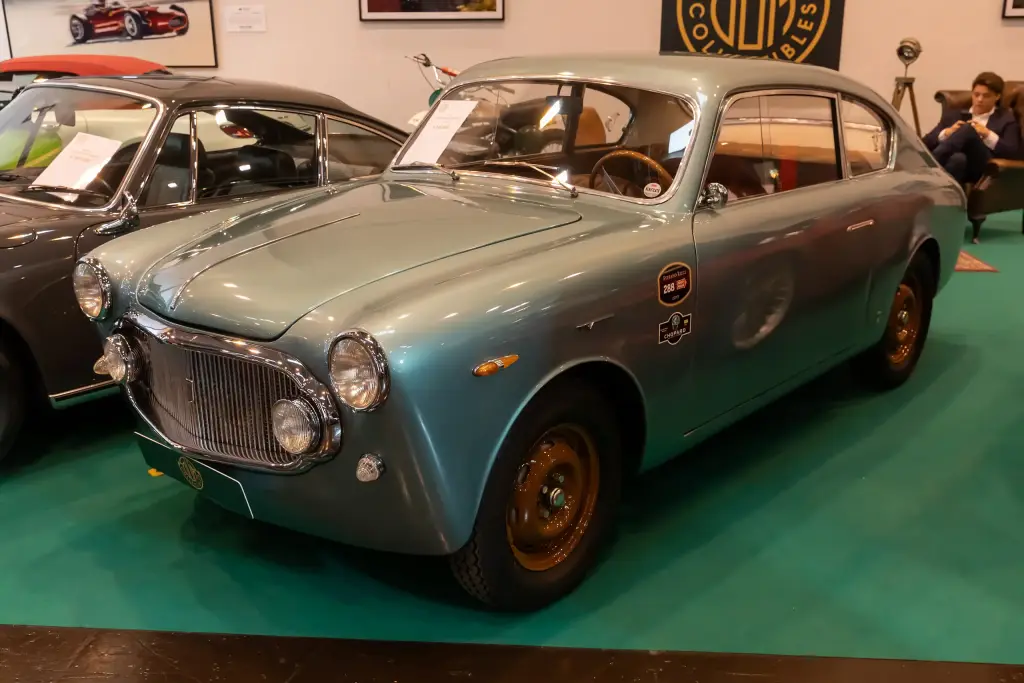
Two trim levels were offered at first. The Tipo A was the spartan version, available only in grey-brown, with separate front seats, less chrome, no heater and no ventilation. The Tipo B had a wider choice of paint and interior fabrics, and could be ordered with whitewall tyres and a radio. All early 103s had doors hinged on the centre pillar; this changed in 1960, when the 1100 adopted the body shell of the Fiat 1200 Granluce saloon.
At the Paris Motor Show in October 1953 Fiat added the 1100 TV, for Turismo Veloce. A twin-choke Weber carburettor and a higher compression ratio raised output to 48 PS, later 50 PS, and top speed to 135 km/h. The TV had a larger curved rear window, prominent rear wings, a single fog lamp in the grille and two-tone paint. It won its class in the 1954 and 1955 Mille Miglia.
A five-door estate, the 1100 Familiare, joined the range at Geneva in 1954. Its side-hinged rear door and folding rear bench gave a flat load area able to carry 300 kg, and two forward-facing jump seats made a third row. The 1100 was replaced by the Fiat 128 in 1969, but the 1100 D continued in India, where Premier Automobiles built it as the Premier Padmini until the end of 2000.
Design and features
- Unitary construction: a modern body shell shared in concept with the 1950 Fiat 1400.
- Proven engine: the 1,089 cc four was carried over from the 508 C Balilla 1100.
- Centre-hinged doors: a distinguishing feature of 1950s 103s until the 1960 body change.
- 1100 TV: a tuned 48–50 PS engine, two-tone paint and a 135 km/h top speed.
- Familiare estate: a 300 kg load area and optional third-row jump seats.
Fiat 1100 versions
- 1100/103 Tipo A: spartan trim, grey-brown paint, no heater.
- 1100/103 Tipo B: richer trim, wider colour choice, optional radio and whitewalls.
- 1100 TV: sporting saloon with 48–50 PS and 135 km/h.
- 1100 Familiare: five-door estate with a folding rear bench.
- 1100 D: later development, also built in India as the Premier Padmini.
The 1100 sat between the Fiat 1400 and the Fiat 500 in the range, and was replaced by the Fiat 128. More cars are in the Fiat collection.
Sources
- Fiat 1100, English Wikipedia: production, engines, versions, Indian production