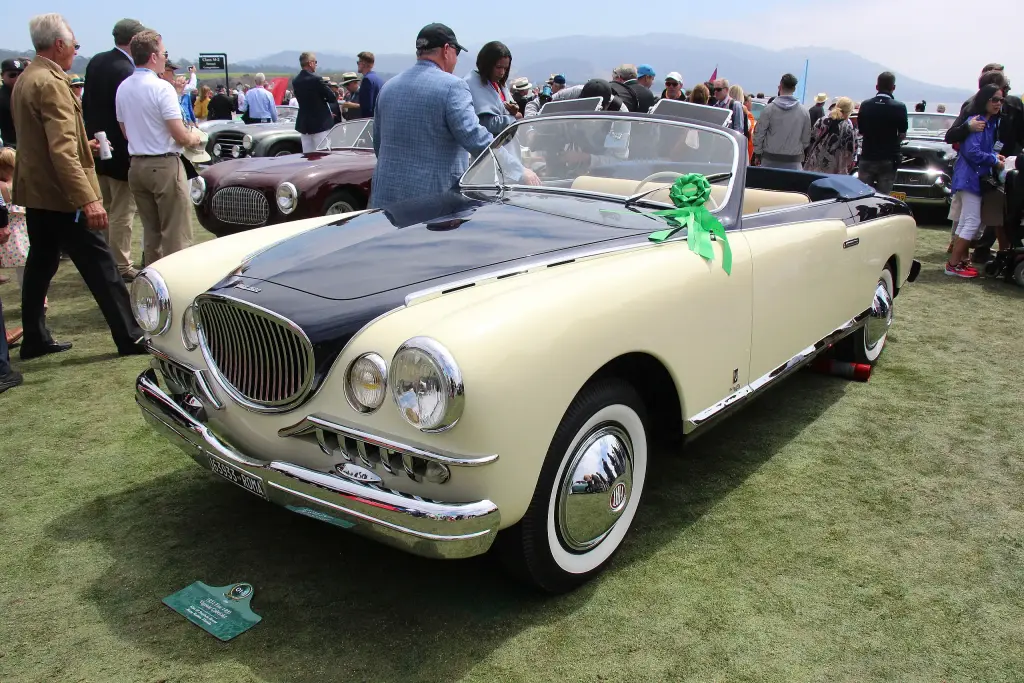
The Fiat 1400 and Fiat 1900 are passenger cars that Fiat produced from 1950 to 1958 and from 1952 to 1959 respectively. The two shared a body and platform, but the 1400 was Fiat’s intermediate model while the 1900 used a larger engine and richer equipment as the flagship of the range. The 1400 was Fiat’s first all-new postwar design, its first car with unitary construction and its first passenger car offered with a diesel engine.
Fiat 1400 and 1900 at a glance
| Production | 1400: 1950–1958; 1900: 1952–1959 |
|---|---|
| Introduced | Geneva Motor Show, 1950 |
| Body | four-door saloon with integral body |
| Engine | 1.4-litre four, 1.9-litre four |
| Power | 44 hp at 4,400 rpm; 70 CV in the 1900 |
| Top speed | 120 km/h in the 1400 |
| Transmission | four-speed manual; five-speed column shift in the 1900 A |
| Diesel | 1,901 cc from 1953, sold as the 1400 Diesel |
| Weight | 1,120 kg |
| Units built | about 179,000 1400s and 19,000 1900s |
| Also built as | SEAT 1400, Zastava 1400 BJ, Steyr 2000 |
Based on one source, the English Wikipedia article.
History of the Fiat 1400 and 1900
The Fiat 1400 was introduced at the 1950 Geneva Motor Show and was the first Fiat with unitary construction. Its 1.4-litre engine produced 44 hp at 4,400 rpm and gave a maximum speed of 120 km/h. The car weighed 1,120 kg. A test by the British magazine The Motor in 1950 recorded a top speed of 74.4 mph, acceleration from 0 to 60 mph in 35.7 seconds and fuel consumption of 24.2 miles per imperial gallon, praising the silence, smoothness and comfort and the extensive use of rubber and sound-proofing compound in the integral structure.
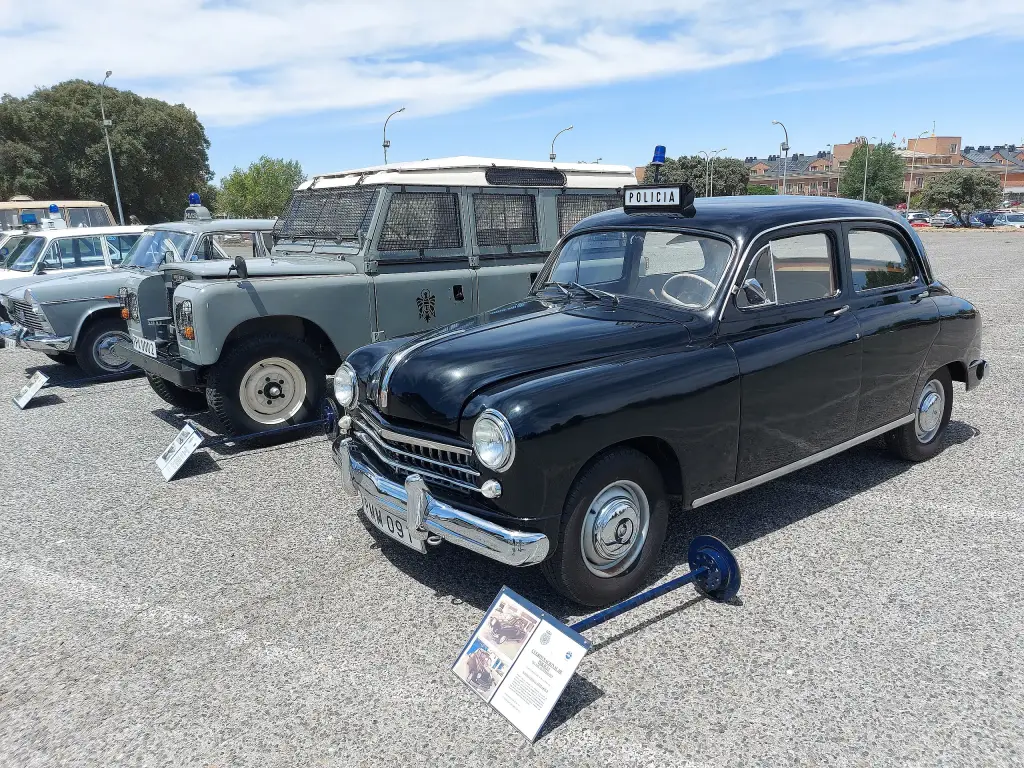
In 1953 Fiat added a diesel version with a 1,901 cc engine, another first for the company, although the model was known as the 1400 Diesel. A 1954 test of that car recorded a top speed of 63.8 mph and acceleration to 60 mph in 45.2 seconds, with fuel consumption of 33.9 miles per imperial gallon; the Italian price of 1,545,000 lire was quoted as equivalent to £909. The 1400 also went into production abroad: in Spain in 1953 as the SEAT 1400, the first model built by SEAT, and in 1954 in Yugoslavia as the Zastava 1400 BJ, the first passenger car produced by Crvena Zastava. In Austria, Steyr-Daimler-Puch built it with a 2.0-litre Steyr engine as the Steyr 2000 from 1953.
The Fiat 1900 was introduced in 1952 as an upmarket model on the same body, with a 1.9-litre engine of 70 CV at 4,400 rpm and more standard equipment. The petrol-engined 1900 A of 1954 offered a claimed 70 bhp, an unusually five-speed column-shifted manual gearbox and a hydraulic joint, Fiat’s first tentative step towards an automatic transmission. The 1900 came with a radio and a rudimentary trip computer that showed average speed.
The engine and transmission of the 1400 and 1900 were also used in the Fiat 615 truck and the Fiat Campagnola off-roader. Practical details of the 1400 included a handbrake handle under the instrument panel, retaining loops for front seat passengers at the roof and backrests, armrests in the doors, and a fuel filler reached through a trap door in the floor of the boot so that the fuel stayed safe once the car was locked. A cabriolet version was designed by Giovanni Michelotti and bodied by Vignale for the 1952 Turin Motor Show; it was later driven by Kirk Douglas in the 1955 film The Racers, was registered in 1964 and disappeared for many years before being bought in 2015 and returned to Italy for restoration.
Design and features
- Unitary construction: the first Fiat passenger car with an integral body, introduced in 1950.
- First Fiat diesel: a 1,901 cc oil-burner offered from 1953.
- Quiet structure: rubber mountings and sound-proofing compound were used liberally.
- Safe fuel filler: reached through a trap door in the boot floor.
- 1900 equipment: radio and a trip computer showing average speed as standard.
Fiat 1400 and 1900 versions
- Fiat 1400: 1.4-litre saloon of 1950, 44 hp and 120 km/h.
- 1400 Diesel: 1,901 cc diesel from 1953.
- Fiat 1900: upmarket 1.9-litre version from 1952.
- 1900 A: 1954 model with 70 bhp and a five-speed column gearbox.
- 1400 Cabriolet Vignale: Michelotti-bodied show car of 1952.
- SEAT 1400, Zastava 1400 BJ, Steyr 2000: licence-built versions in Spain, Yugoslavia and Austria.
The 1400 was the larger stablemate of the Fiat 1100 and was followed at the top of the range by the Fiat 1800 and 2100. More cars are in the Fiat collection.
Sources
- Fiat 1400 and 1900, English Wikipedia: production, engines, dimensions, licence production, coachbuilt cabriolet