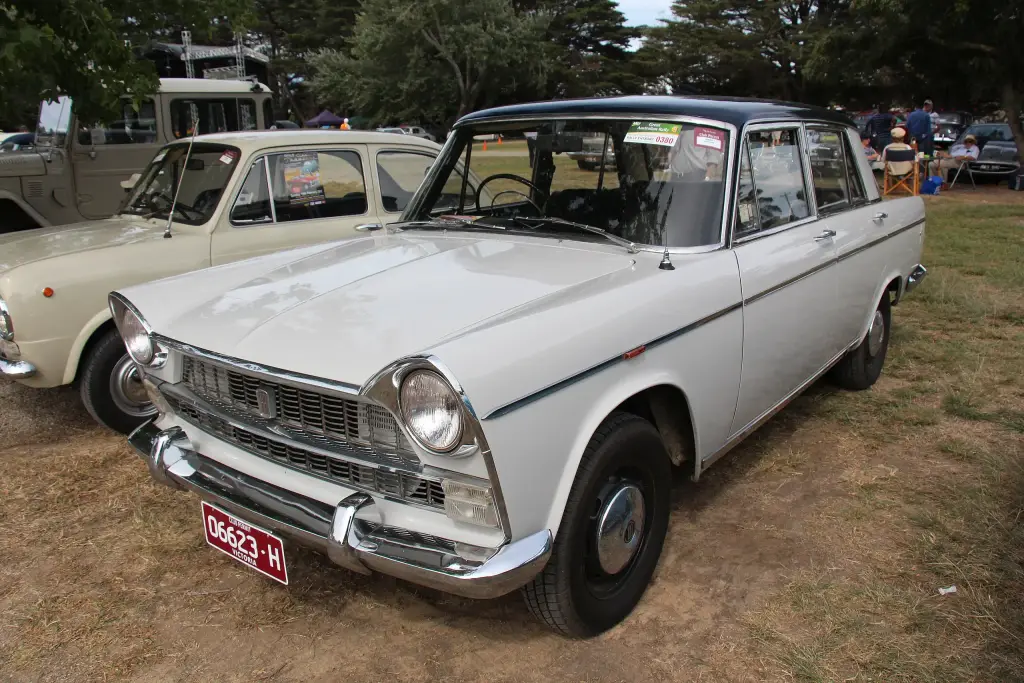
The Fiat 1800 and 2100 were six-cylinder cars produced by Fiat between 1959 and 1968. Both were introduced in 1959 and designed by Fiat’s own Dante Giacosa. A four-cylinder 1,500 cc version, the 1500L, joined the range in 1963, in the year the 2100 was replaced by the larger-engined 2300.
Fiat 1800 at a glance
| Production | 1959–1968 |
|---|---|
| Designer | Dante Giacosa |
| Bodies | four-door saloon, five-door Familiare estate |
| 1800 engine | 1,795 cc six-cylinder, 75 hp |
| 1800 B engine | 1,795 cc six-cylinder, 86 hp |
| 2100 engine | 2,054 cc six-cylinder, 77.0 × 73.5 mm |
| 1500L engine | 1,481 cc four-cylinder, 72 PS |
| Gearbox | four-speed manual |
| Top speed | 137–146 km/h depending on version |
| Brakes | drums, discs on all four wheels from the 1800 B |
| Italian production | estimated 150,000 for the whole range |
| Built in Spain | as the SEAT 1500, nearly 200,000 until 1972 |
History of the Fiat 1800
The 1800
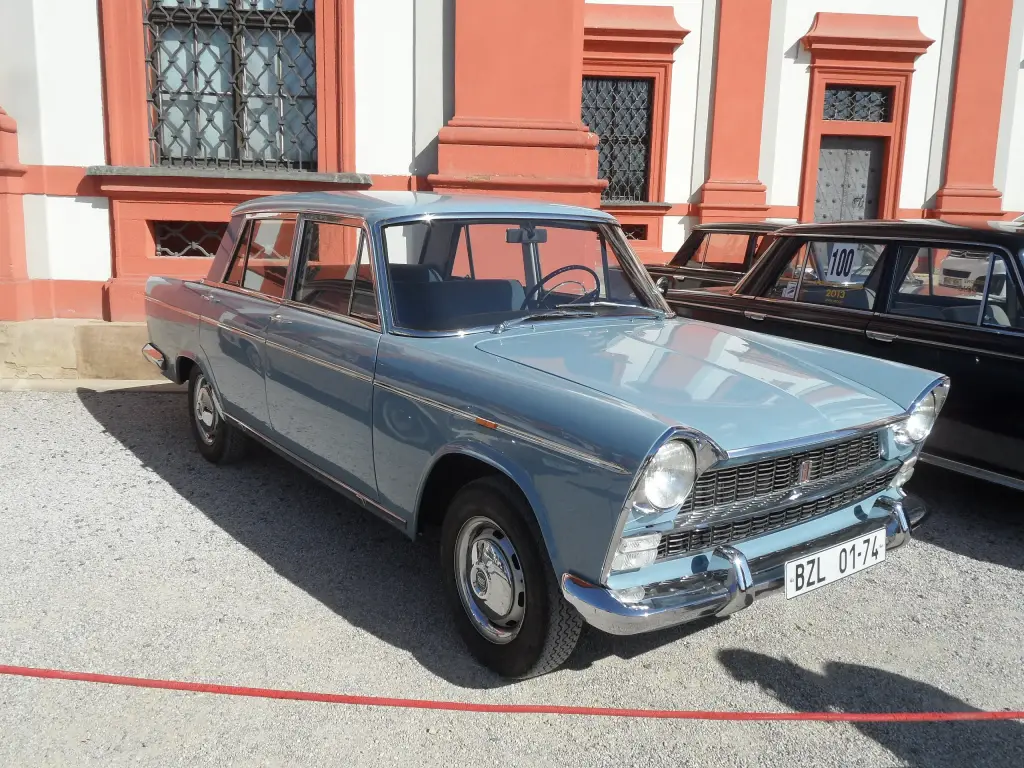
The Fiat 1800 was introduced as a four-door sedan at the 1959 Geneva Salon. A few months later the five-door Familiare estate was added to the line-up, one of a very limited number of factory offerings in this class in Europe at the time. The 1800 had a six-cylinder in-line engine of 1,795 cc producing 75 hp, delivered through a four-speed manual transmission, and reached 137 to 142 km/h depending on the version.
In 1961 the 1800 was replaced by the 1800 B. Engine output rose to 86 hp and top speed to 143 or 146 km/h. The 1800 B also benefited from disc brakes on all four wheels in place of the four drums, and an automatic clutch became available.
The 2100
The 2100 used a bigger 2,054 cc six-cylinder engine with a bore and stroke of 77.0 by 73.5 mm. In autumn 1959 the 2100 Speciale was introduced with an overall length 16 cm greater and a different front grille with horizontal crossbars and twin headlights. It was typically used by diplomats and for other representational purposes, received the slightly shorter gearing of the 2100 Familiare and was also meant to get a more powerful engine.
Not many were built, but Carrozzeria Francis Lombardi ended up building a longer stretched version that could seat seven, mainly intended for taxi use, and a limousine version called the President, mainly purchased by the Italian and Vatican states. The 2100 was Fiat’s first large luxury car with a displacement of over two litres since the Fiat 2800 of the 1940s. It was discontinued in Italy during 1961, when the Fiat 2300 became available.
The 1500L and the taxi version
In 1963 Fiat used the body of the 1800 and 2100 to create a less expensive model, the Fiat 1500L, the L standing for Lunga, long, to distinguish it from the 1300 and 1500. It shared the 1,481 cc four-cylinder engine of its more compact sibling, producing 72 PS, raised to 75 PS in 1964 for the second series, and its interior was simplified compared with the six-cylinder cars. A reduced-performance version had already been on offer since 1962, aimed at taxi drivers and sold only in Italy: the 1500 Taxi used a 1,481 cc engine of just 60 PS, which allowed comfortable transport at urban speeds without using too much fuel.
The 1500L was also produced by SEAT in Spain, where no other petrol version of the 1800 or 2100 was ever offered. It was badged simply SEAT 1500, since SEAT built no equivalent of the smaller Fiat 1500, and nearly 200,000 were built until 1972. Total Italian production of the 1800 and 2100 range is estimated at 150,000.
The Abarth 2200
Abarth proposed a sportier 2+2 car based on the 2100. He discussed the plan with Fiat’s vice president Gaudenzio Bono in 1959 and it was arranged that Abarth would receive bare 2100 chassis and drive trains. The chassis was strengthened and shortened to a 2,450 mm wheelbase and fitted with a bored-out and tuned engine, an Abarth exhaust system and Dunlop disc brakes on all four wheels. The bodywork was designed by Giovanni Michelotti and built by Allemano.
The Abarth 2200 was offered as a two-door coupé or convertible and was introduced at the Turin Auto Show in October and November 1959. The bore grew to 79.0 mm for a displacement of 2,162 cc, and with a higher compression ratio, triple Weber 40 DCOE carburettors and higher engine speeds, maximum power rose to 135 hp at 6,000 rpm, giving top speeds of 197 km/h for the coupé and 186 km/h for the spider. Fully handbuilt and always expensive, the 2200 was built only to order in very small numbers, probably 28 examples, three of them right-hand drive and delivered in the United Kingdom.
Design and features
- Six-cylinder engines: 1,795 cc in the 1800 and 2,054 cc in the 2100.
- Factory estate: the five-door Familiare was a rare offering in its European class.
- Disc brakes: fitted to all four wheels from the 1800 B of 1961.
- Automatic clutch: available on the 1800 B.
- Coachbuilt derivatives: Lombardi stretched and limousine versions and the Abarth 2200.
Fiat 1800 versions
- 1800: 75 hp saloon from 1959, with the Familiare estate added the same year.
- 1800 B: 86 hp and four-wheel disc brakes from 1961.
- 2100: 2,054 cc six-cylinder saloon of 1959–1961.
- 2100 Speciale: longer body, twin headlights and shorter gearing.
- 1500L: four-cylinder 72–75 PS version on the same body from 1963.
- 1500 Taxi: 60 PS version for Italian taxi drivers, from 1962.
The 1800 and 2100 sat above the Fiat 1300 and Fiat 1500 in the range and were followed by the Fiat 2300. More cars are in the Fiat collection.
Sources
- Fiat 1800 and 2100, English Wikipedia: production, engines, 1800 B, 2100 Speciale, 1500L and Abarth 2200