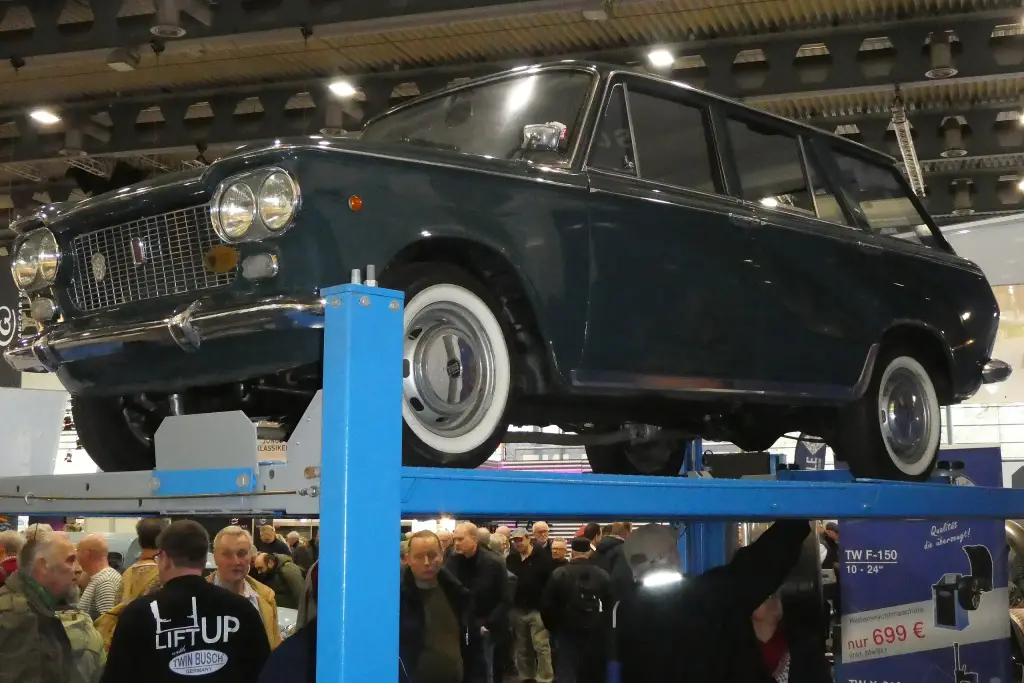
The Fiat 1300 and Fiat 1500 were a family of front-engined, rear-drive cars built by Fiat from 1961 to 1972. The two models were almost identical apart from engine capacity, and were sold as saloons, estates, coupés and convertibles. Zastava in Yugoslavia, Neckar in Germany, SEAT in Spain and Fiat Concord in Argentina all built them as well.
Fiat 1300 and 1500 at a glance
| Production | 1961–1972 |
|---|---|
| Also built by | Zastava, Neckar, SEAT, Fiat Concord |
| Body | saloon, estate, coupé, convertible |
| Engine | 1,295 cc or 1,481 cc overhead-valve four |
| Power | 60 hp (1300), 73 hp (1500), 75 hp (1500 C) |
| Transmission | four-speed manual, column change |
| Brakes | front discs, rear drums |
| Wheelbase | 2,425 mm; 2,505 mm for the 1500 C |
| Total production | about 1,900,000 worldwide |
| Replaced by | Fiat 124 (1300) and Fiat 125 (1500) |
History of the Fiat 1300 and 1500
Two capacities, one design
The 1300 and 1500 were conventional cars with a longitudinally mounted front engine driving the rear axle through a four-speed manual gearbox with the lever on the steering column. Their engines were two versions of the same design, differing mainly in bore: 1,295 cc with a 72 mm bore and 60 hp at 5,000 rpm, and 1,481 cc with a 77 mm bore and 73 hp at 5,400 rpm, both with a 79.5 mm stroke. Both had alloy cylinder heads with twin rocker shafts and inlet valves angled at 45 degrees, and were derived from the six-cylinder engines of the Fiat 1800 and 2100 with two cylinders fewer, which saved Fiat a great deal of money and development time. Front disc brakes were an innovation in this class in 1961.
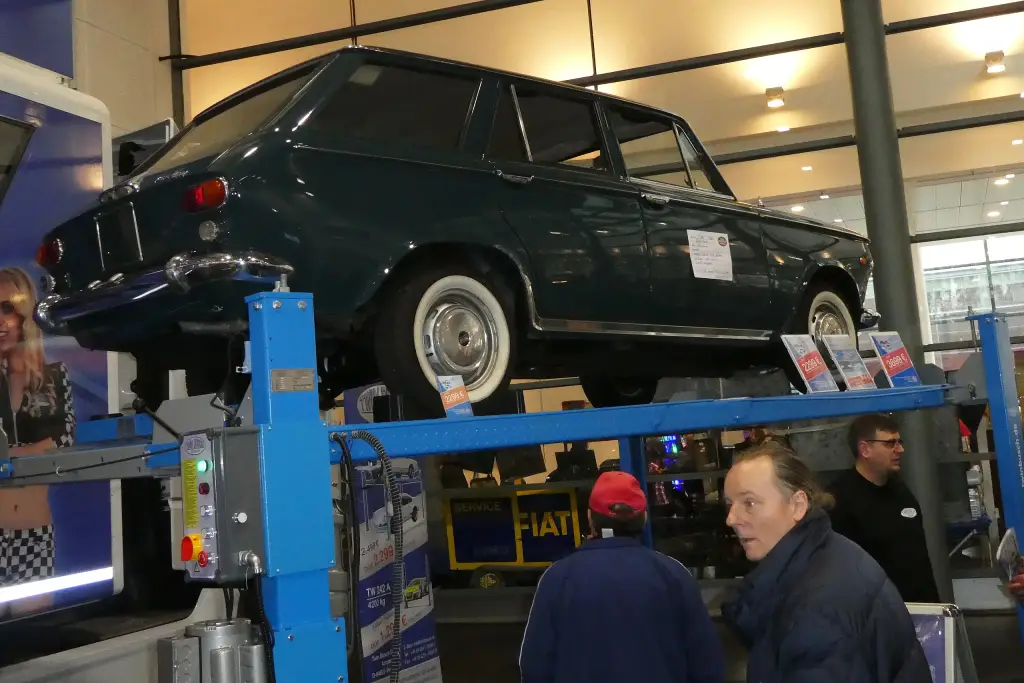
The 1500 C
The two cars started with a wheelbase of 2,425 mm. From 1964 the 1500 grew to 2,505 mm and became the 1500 C, which also gained three more horsepower for a total of 75, power brakes and larger tail lamps with built-in reversing lamps.
Coupés, cabriolets and derivatives
The Pininfarina-designed coupé and cabriolet of the preceding 1200 continued with largely unchanged bodywork and the larger 1.5-litre engine, and the O.S.C.A.-engined 1600 S coupé and cabriolet stayed available until the coupés and spiders of the 124 replaced them in 1966. Siata built the 1500 TS with as much as 94 bhp and, with Michelotti, a 1500 TS Coupé; both were also made by Neckar in Heilbronn. The New Zealand importer Torino Motors sold the 1500 as the Crusader, and South African dealers offered the 1500 OTS, a local conversion with 96 or 108 bhp in two stages together with lowered suspension and a floor gear change.
The 1500 L and Taxi
The 1500 L was in essence a Fiat 1800 fitted with the 1500 engine, the L standing for Lunga, long, to separate it from the more compact model. It began with 72 PS and was upgraded to 75 PS in 1964 with the 1500 C. A Taxi version appeared in 1962 with the engine detuned to 60 hp. In Barcelona the same car was built as the SEAT 1500, 183,652 of them between 1963 and 1975.
Licensed production
Zastava assembled the 1300 and 1500 and kept making the 1300 after Fiat stopped in 1967, adding DeLuxe and 1300E equipment in the 1970s; production ended in December 1979 after 201,160 cars since 1961. The Yugoslav version was nicknamed Tristac, was quoted with disc brakes all round, up to 72 hp and 155 km/h, and was also assembled in Bogotá from 1969. Fiat Concord in Buenos Aires made the 1500 from 1963 in Berlina, Familiar and three-seat Multicarga pick-up forms, 123,059 examples in all. In Italy the 1300 was replaced by the 124 in 1966 and the 1500 by the 125 a year later. The floorpan of the 1500 C served as the basis of the 125, and the Polski Fiat 125p mated the 125 body with 1300/1500 mechanicals.
Design and features
- Shared engine family: the 1,295 and 1,481 cc fours came from the six-cylinder 1800 with two cylinders removed.
- Front disc brakes: an innovation in the class when the cars appeared in 1961.
- Column gearchange: a four-speed gearbox operated from the steering column.
- Four body styles: saloon, estate, coupé and convertible, the last two sharing little with the saloons beyond the 1500 engine.
- Long-wheelbase 1500 C: 80 mm more wheelbase, 75 hp and power brakes from 1964.
Fiat 1300 and 1500 versions
- Fiat 1300: 1,295 cc and 60 hp.
- Fiat 1500: 1,481 cc and 73 hp.
- Fiat 1500 C: longer wheelbase, 75 hp, power brakes and larger tail lamps.
- Fiat 1500 L and Taxi: the 1800 body with the 1500 engine; the Taxi was detuned to 60 hp.
- Siata 1500 TS: tuned to 94 bhp, with a Michelotti coupé, also built by Neckar.
- Zastava 1300 and 1500: Yugoslav assembly and later production until 1979.
The 1300 was replaced by the Fiat 124 and the 1500 by the Fiat 125, whose Polish derivative used the mechanicals of these cars. More cars are in the Fiat collection.
Sources
- Fiat 1300 and 1500, English Wikipedia: engines, body styles, the 1500 C, the 1500 L and licensed production