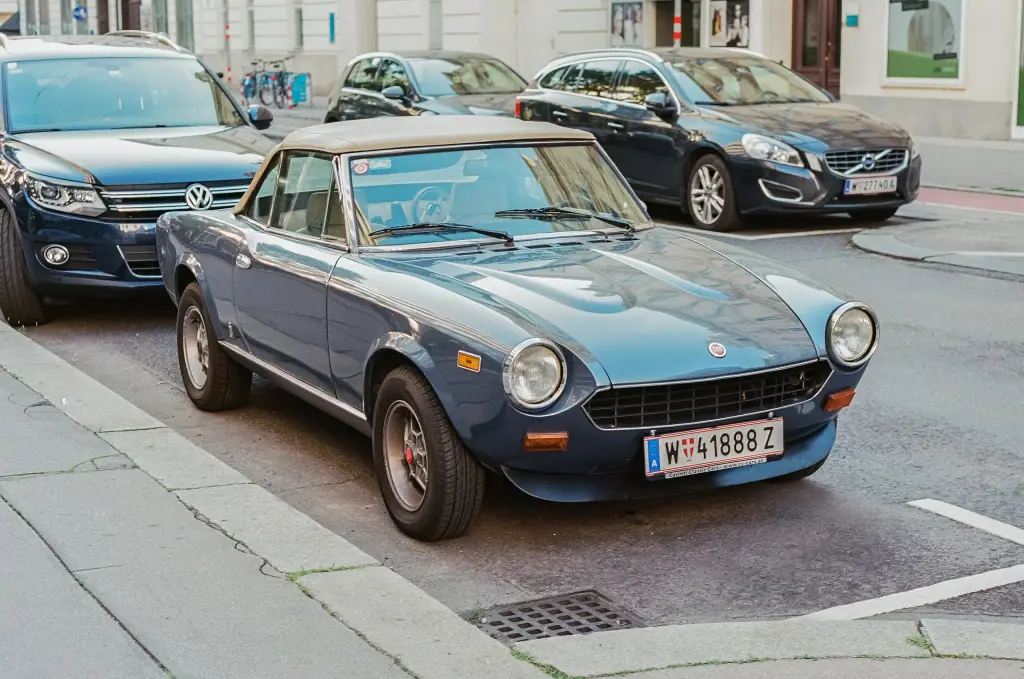
The Fiat 124 was a small family car built by Fiat between 1966 and 1974. A clean-sheet design by Oscar Montabone, it brought disc brakes on all wheels, coil-spring rear suspension and a roomy body to the middle of the Italian maker’s range, and it took the 1967 European Car of the Year award. The saloon was joined by an estate, a four-seater coupé and a two-seater spider, and the design was licensed around the world, most famously as the VAZ-2101 Zhiguli, sold abroad as the Lada.
Fiat 124 at a glance
| Production | 1966–1974 |
|---|---|
| Replaced | Fiat 1300 |
| Replaced by | Fiat 131 |
| Bodies | saloon, Familiare estate, Sport Coupé, Sport Spider |
| Engine | 1.2-litre overhead-valve four-cylinder |
| Special engine | 1,438 cc overhead-valve four, 70 PS |
| Special T engine | 1,438 cc twin-cam four, 80 PS |
| Top speed | about 150 km/h Special, 160 km/h Special T |
| Gearbox | four-speed, all-synchromesh |
| Chassis | coil-spring rear axle, three-link then five-link |
| Brakes | discs on all four wheels |
| Licensed production | VAZ-2101 Zhiguli, the Lada |
History of the Fiat 124
A clean-sheet design
The 124 was designed from scratch under Oscar Montabone, the chief engineer responsible for its development. Of the earlier Fiat 1500 only the all-synchromesh gearbox was carried over. Everything else was new: a spacious body, coil-spring rear suspension, disc brakes on all four wheels and a lightweight structure. The saloon was launched in 1966 with a publicity stunt in which a 124 was dropped by parachute from an aeroplane, and it won the 1967 European Car of the Year award.
Estate, coupé and spider
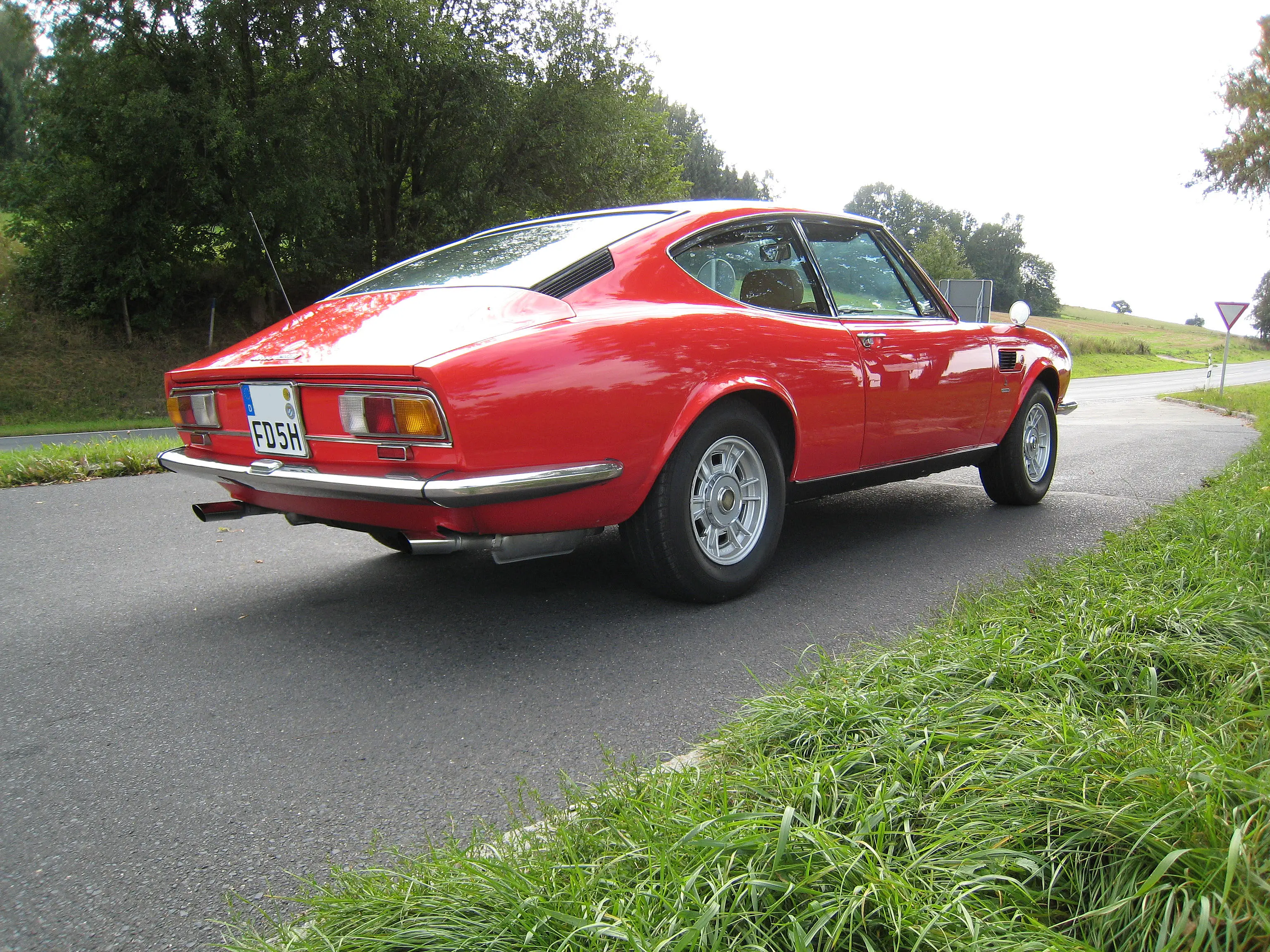
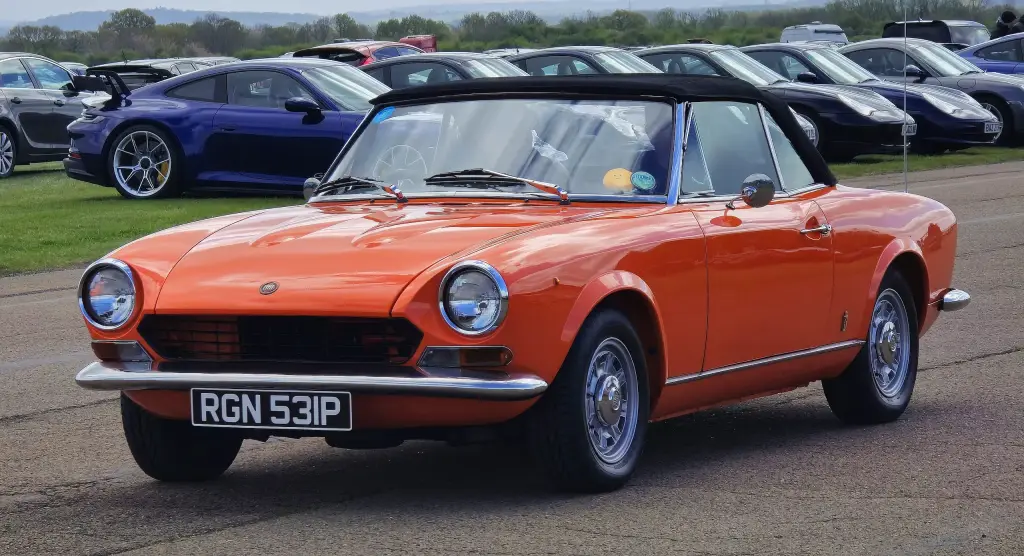
A five-door station wagon, the 124 Familiare on its home market, and the 124 Sport Spider appeared together at the 48th Turin Motor Show in November 1966. The 124 Sport Coupé completed the range a few months later at the March 1967 Geneva Motor Show. Both Sport models used an all-new 1.4-litre twin-cam engine producing 90 DIN-rated PS at 6,500 rpm.
The 124 Special
In October 1968 Fiat added the 124 Special, an upmarket and better appointed version of the saloon, shown at the 50th Turin Motor Show alongside the new 125 Special. Its 1,438 cc type 124 A2 engine kept the 80 × 71.5 mm bore and stroke of the Sport engines but used an overhead-valve head, a twin-choke Weber 32 DHS or Solex C32 EIES carburettor and a 9.0:1 compression ratio for 70 PS at 5,400 rpm and 110 N·m at 3,300 rpm. Fiat quoted a top speed of over 150 km/h.
The Special introduced a new five-link solid rear axle, four longitudinal links and one transverse, in place of the original three-link design; from late 1968 the Sport models adopted the same axle. It also gained an alternator in place of the dynamo, an uprated clutch, radial tyres as standard and a vacuum servo for the all-disc brakes. Outside, a rectangular grille with four inset round headlamps set it apart from the standard car, and the interior had a padded dashboard with an oval binnacle, a steering wheel without horn ring and more supportive seats.
1970 revisions and the Special T
At the November 1970 Turin Motor Show the whole saloon and estate range was updated. All cars received air outlets in the C-pillar and a split brake circuit, while servo brakes, a back-up light and an alternator, previously reserved for the Special, became standard. The Special was given a completely redesigned front with a black square-mesh grille crossed by a bright bar and four round lamps in square housings, bumpers without over-riders and a new tail panel.
The same show brought the 124 Special T, whose T stood for twin cam. Its 1,438 cc 124 AC.300 engine, derived from the Sport units in a milder state of tune, produced 80 PS at 5,800 rpm and 112 N·m at 4,000 rpm for a claimed 160 km/h. Apart from the badging at the rear it looked identical to the Special.
Third series and the end
In 1972 Fiat revised the saloon and estate again. The standard 1.2-litre engine gained five horsepower, reaching 65 PS and a 150 km/h top speed, and could be recognised by a new matte black grille and the flush door handles already used on the Special. The 124 was superseded at home by the Fiat 131 in 1974. Fiat licensed the design widely, and the Russian-built VAZ-2101 Zhiguli and its derivatives, known outside the Soviet Union as the Lada, made up the vast majority of production based on the car, which is counted as the fifth best-selling automotive platform in history.
Design and features
- All-disc brakes: unusual in a small family car of the mid-1960s.
- Coil-spring rear suspension: replaced by a five-link axle on the 1968 Special and later Sport models.
- Roomy body: a spacious interior and a lightweight structure were central to the design brief.
- Twin-cam engines: the 1.4-litre unit of the Sport models and the milder Special T version.
- Worldwide licensing: the basis of the VAZ-2101 Zhiguli, better known as the Lada.
Fiat 124 versions
- 124 saloon: the standard four-door with a 1.2-litre overhead-valve engine.
- 124 Familiare: five-door estate shown at Turin in November 1966.
- 124 Sport Coupé: four-seater with the 90 PS twin-cam engine, from 1967.
- 124 Sport Spider: two-seater convertible from the same Turin show.
- 124 Special: 70 PS 1.4-litre saloon with five-link rear axle and four headlamps.
- 124 Special T: twin-cam 80 PS version introduced in November 1970.
The 124 replaced the Fiat 1300 and was itself replaced by the Fiat 131. Its drive train later served, rearranged as a mid-engine layout, in the Fiat X1/9. More cars are in the Fiat collection.
Sources
- Fiat 124, English Wikipedia: design, launch, Special and Special T, revisions, licensed production