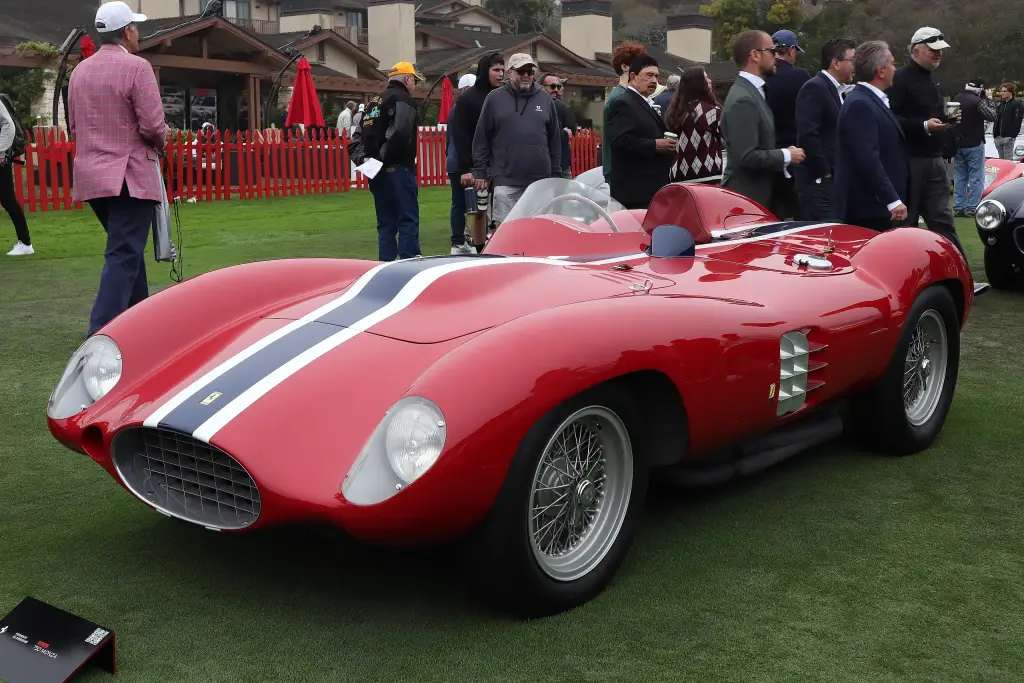
The Ferrari 750 Monza is a four-cylinder sports racing car introduced in 1954, part of the Monza line that also included the 500 Mondial. It was light, powerful and one of the cars that defined Ferrari’s four-cylinder era.
Ferrari 750 Monza at a glance
| Introduced | 1954 |
|---|---|
| Engine | three-litre four-cylinder, from the 500 Mondial |
| Power | 260 PS (191 kW) |
| Weight | 760 kg (1,675 lb) |
| Bodies | Pinin Farina and Scaglietti |
| Family | Ferrari Monza series, with the 500 Mondial |
| Wheelbase | 2,250 mm (except 250 and 860 Monza) |
| Notable event | Alberto Ascari’s death at Monza, 1955 |
based on one source (English Wikipedia).
History of the Ferrari 750 Monza
Ferrari’s Monza line grew out of a change of approach. For the 1952 and 1953 Formula One seasons, run to Formula Two rules with a 2,000 cc limit, Scuderia Ferrari moved from the compact Colombo V12 in its smallest sports racers to a line of four-cylinder engines designed by Aurelio Lampredi. That produced the Tipo 500, with 500 cc per cylinder; the 1953 version kept the same cylinder size and was called the 553. For 1954, when new Formula One rules allowed 2,500 cc, Ferrari bored the engine to 625 cc per cylinder. Inspired by the success of the light and reliable 2.5-litre 553 Formula One car, the four-cylinder sports racers competed successfully through the late 1950s, culminating in the 500 Mondial and the 750 Monza.
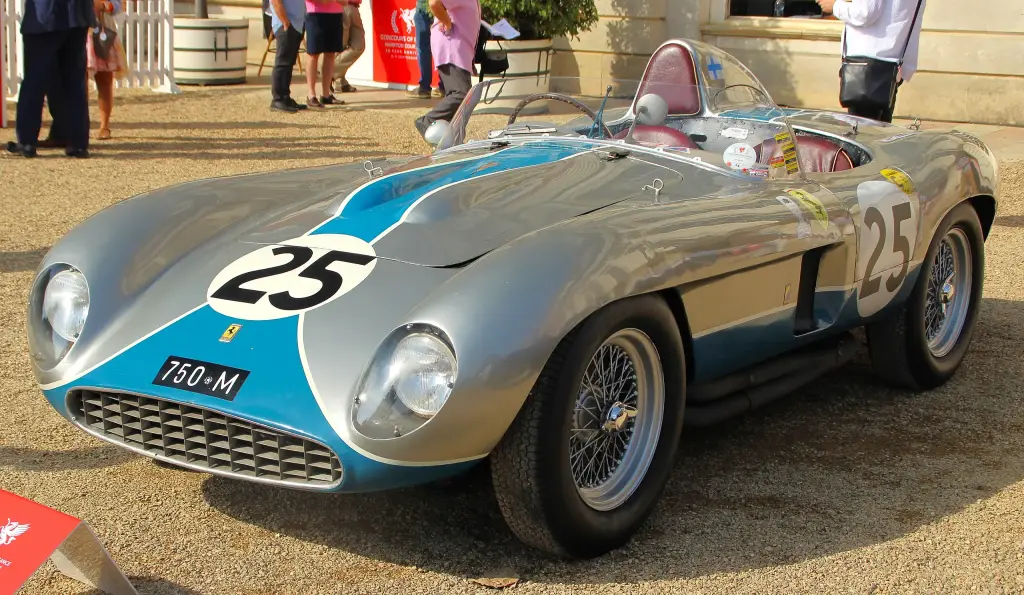
Engineering
Where Ferrari’s V12 models used downdraft carburettors mounted centrally in the valley of the engine, the inline fours used side-draft units and so did not need bonnet scoops. Almost all Monzas had a 2,250 mm wheelbase, except the 250 and 860 Monza.
The 750 Monza
The 750 Monza arrived in 1954 with a three-litre version of the 500 Mondial’s engine. It was much more powerful at 260 PS but barely heavier, at 760 kg. The new body style was penned by Pinin Farina and foreshadowed the droop-nose look later made famous by the 250 GTO, while Scaglietti’s version, with its faired-in headrest, pointed towards the flowing lines of the Testa Rossa.
Alberto Ascari
In 1955 Alberto Ascari was killed in a 750 Monza during an impromptu testing session at Monza. The accident remains one of the darkest moments in Ferrari’s racing history and is inseparable from the story of this model.
Design and features
- Four-cylinder engine: a three-litre Lampredi four with side-draft carburettors, so no bonnet scoop.
- Light and strong: 260 PS in a car weighing just 760 kg.
- Two body styles: a Pinin Farina droop-nose and a Scaglietti with a faired-in headrest.
- Monza family: part of the same line as the 500 Mondial and other four-cylinder racers.
Ferrari 750 Monza versions
- 750 Monza (1954–1955): the three-litre four-cylinder car.
- Pinin Farina body: the droop-nose shape that anticipated the 250 GTO.
- Scaglietti body: faired-in headrest and flowing lines.
- 500 Mondial: the smaller sibling in the same Monza line.
The 750 Monza belongs to the same four-cylinder family as the Ferrari Tipo 500 and shares its era with the 250 series.
Video: Ferrari 750 Monza
Video by John Pratt on YouTube.
Sources
- Ferrari Monza, English Wikipedia: four-cylinder line, 750 Monza, Ascari accident