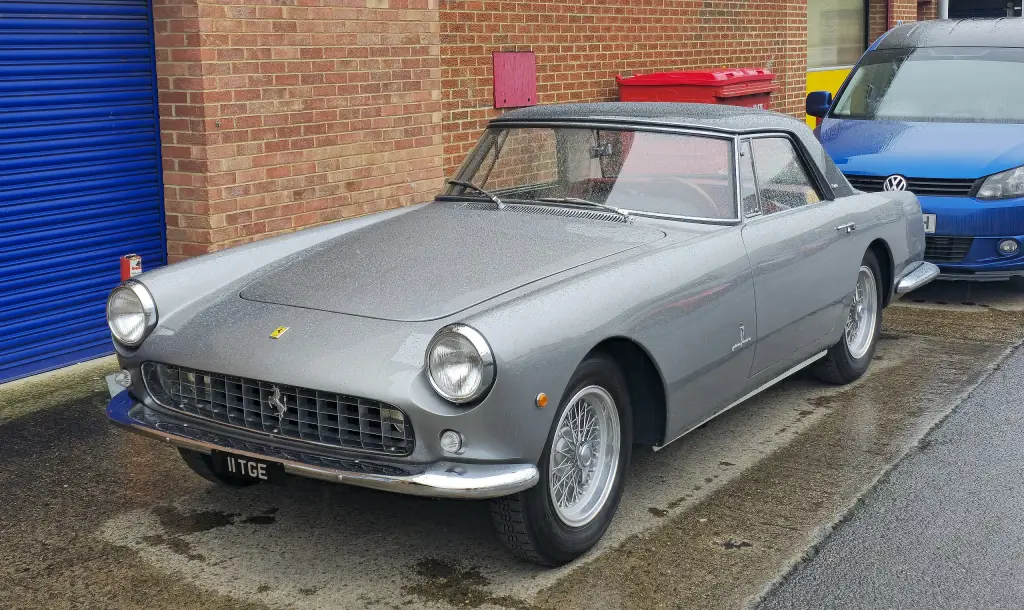
The Ferrari 250 is a series of sports cars and grand tourers built from 1952 to 1964 and the company’s most successful early line. Every car in it used a 3.0-litre Colombo V12, and the name refers to the displacement of a single cylinder.
Ferrari 250 at a glance
| Production | 1952–1964 |
|---|---|
| Engine | 3.0 L (2,953 cc) Colombo V12 |
| Model designation | displacement of one cylinder, about 250 cc |
| Maximum output | up to 300 PS (221 kW) in Testa Rossa and GTO |
| Wheelbases | 2,400 mm short, 2,600 mm long |
| Convertibles | mostly on the short wheelbase |
| First racing model | 250 S, 1952 Mille Miglia winner |
| Road and race variants | 250 MM, Monza, Testa Rossa, GTO, P, LM |
| Replaced by | 275 and 330 series |
based on one source (English Wikipedia); the article covers the series as a whole, and the individual racing models have separate pages.
History of the Ferrari 250
The 250 series ran from 1952 to 1964 and included many variants for road use or sports car racing. All were characterised by the 3.0-litre Colombo V12, a light and compact engine that in its strongest form produced up to 300 PS in the Testa Rossa and GTO. Ferrari named the series after the displacement of a single cylinder, roughly 250 cc. Most road cars shared one of two wheelbases, 2,400 mm for the short-wheelbase cars and 2,600 mm for the long-wheelbase ones, and most convertibles used the short chassis. The series was replaced by the 275 and 330 ranges.
Racing came first
As usual with Ferrari, the Colombo V12 went racing before it went on sale, and the racing 250s preceded the road cars by three years. The 250 S of 1952 used a 2,250 mm wheelbase and a “Tuboscocca” tubular trellis frame, with double wishbones in front and semi-elliptic springs locating the live axle at the rear. Its dry-sump 3.0-litre engine ran three Weber 36DCF carburettors through a five-speed gearbox. An experimental 250 S berlinetta was entered in the 1952 Mille Miglia for Giovanni Bracco and Alfonso Rolfo and won, finishing some four minutes ahead of the Mercedes-Benz 300 SL of Karl Kling and Hans Klenk.
The 250 MM and 250 Monza
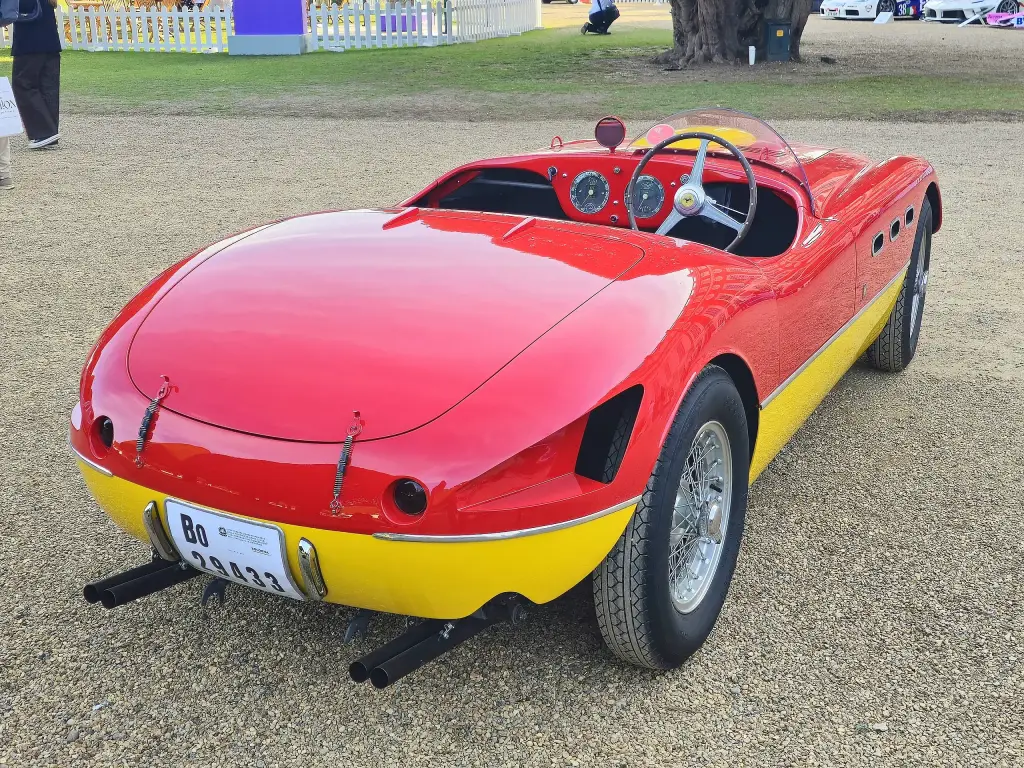
After that success Ferrari showed a more conventional chassis for the new engine at the 1952 Paris Motor Show; Pinin Farina created coupé bodywork with a small grille, compact tail and panoramic rear window, and the car was launched as the 250 MM at the 1953 Geneva Motor Show. Vignale’s open barchetta version introduced recessed headlights and side vents that became Ferrari staples of the 1950s. The MM’s wheelbase grew to 2,400 mm, the coupé weighed 50 kg more than the 850 kg barchetta, the dry sump was dropped and power rose to 240 PS. It raced first at the 1953 Giro di Sicilia with Paolo Marzotto. The 1954 250 Monza was a hybrid: the 250 MM engine in the short-wheelbase chassis of the four-cylinder 500 Mondial, with three Pinin Farina barchettas and one Scaglietti body.
Testa Rossa, GTO and P
The racing 250 Testa Rossa was one of the most successful cars in Ferrari’s history, with three wins at Le Mans, four at Sebring and two at Buenos Aires; one sold at auction for a then record $16.39 million. The 250 GTO was built from 1962 to 1964 for Group 3 GT homologation and became the most valuable Ferrari of all, with examples changing hands for tens of millions. The 250 P was a 1963 prototype racer that won the 12 Hours of Sebring, the 1000 km Nürburgring and the 24 Hours of Le Mans in the same year. From these racing cars came the road-going 250 GT family that made the series famous with private customers.
Design and features
- One engine, many cars: the 3.0-litre Colombo V12 powered everything from a Le Mans winner to a comfortable coupé.
- Racing before road: the competition 250s arrived three years before the road cars.
- Two wheelbases: 2,400 mm short and 2,600 mm long, with convertibles usually on the short one.
- Light V12: the Colombo engine weighed far less than rivals such as the Jaguar XK straight-six.
- Design classics: Pinin Farina coupés and Vignale barchettas set the look of 1950s Ferraris.
Ferrari 250 versions
- 250 S (1952): the first racing 250, winner of the 1952 Mille Miglia.
- 250 MM (1953): 2,400 mm chassis, 240 PS, coupé by Pinin Farina and barchetta by Vignale.
- 250 Monza (1954): 250 MM engine in the short 500 Mondial chassis, four built.
- 250 Testa Rossa: the sports racer with three Le Mans wins.
- 250 GTO (1962–1964): the homologation special, 36 cars.
- 250 P (1963): prototype that won Sebring, the Nürburgring and Le Mans.
The 250 GTO, 250 Testa Rossa and 250 LM have their own pages. More cars are in the Ferrari collection.
Sources
- Ferrari 250, English Wikipedia: engine, wheelbases, racing models, GTO and P