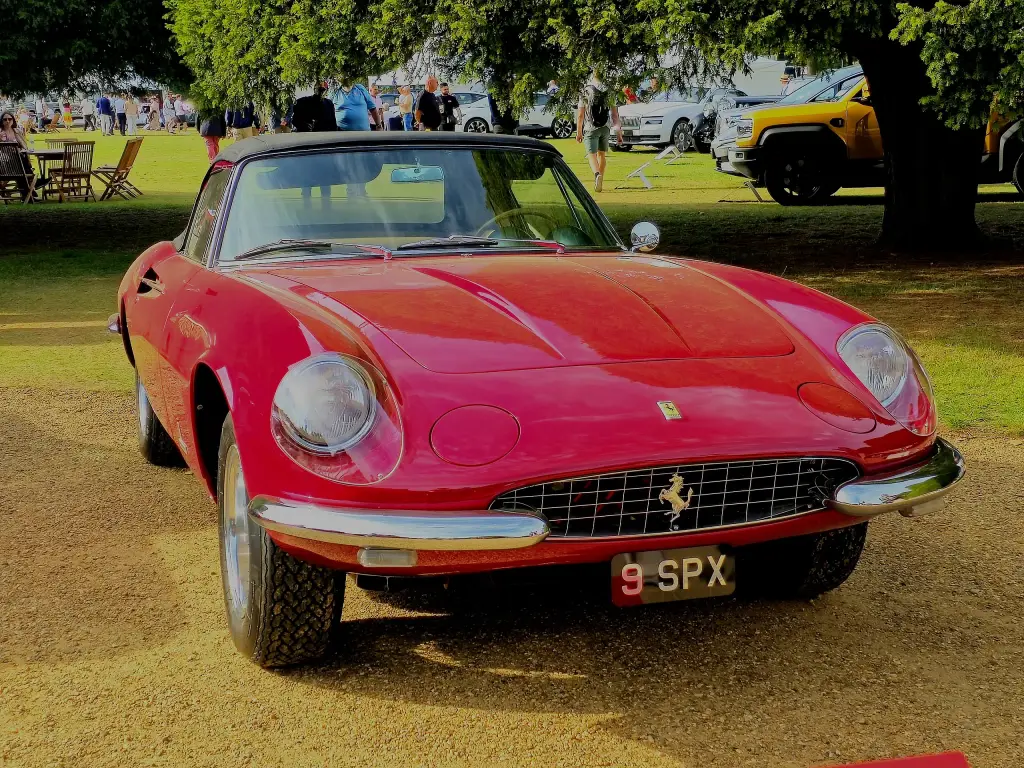
The Ferrari 365 is a front-engined, rear-wheel-drive grand tourer introduced at the 1966 Geneva Motor Show, in two- and 2+2-seat forms. It replaced the 330 and the 500 Superfast.
Ferrari 365 at a glance
| Introduced | Geneva Motor Show, 1966 |
|---|---|
| Engine | 4,390 cc (4.4 L) Colombo V12 |
| Bore | 81 mm |
| Power | 320 PS (235 kW) |
| Carburettors | three Webers (GTC/GTS: three Weber 40 DFI) |
| Replaced | Ferrari 330, Ferrari 500 Superfast |
| Models | 365 California, 365 GT 2+2, 365 GTC, 365 GTS |
| 365 California built | 14 (two right-hand drive) |
| 365 GT 2+2 built | about 800 in four years (52 right-hand drive) |
| 365 GTC built | 168 (22 right-hand drive) |
| 365 GTS built | 20 |
based on one source (English Wikipedia); the only video attached to the old records shows a 365 GT4 2+2, which belongs to the 400 series article, so this page has none.
History of the Ferrari 365
The 365 replaced the 330 and the 500 Superfast and was the first of a family that carried Ferrari’s 4.4-litre Colombo V12. That engine was derived from the 330’s four-litre unit but bored to 81 mm for 4,390 cc, and in street tune with three Weber carburettors it produced 320 PS.
365 California
The 365 California replaced the 500 Superfast for 1966 and was the first 365 model. It used the same chassis as the 500 Superfast with an evolutionary Pininfarina cabriolet body, and only 14 were built before production ended in 1967, two of them right-hand drive. The prototype sat on a 330 GT 2+2 type 571 chassis, while production cars used type 598. Chassis went to Pininfarina’s Grugliasco plant to be bodied and trimmed and then back to Ferrari for their mechanical components. A pristine example sold for €736,000 at auction in June 2005.
365 GT 2+2
The most popular 365 was the 1967 GT 2+2, which replaced the 330 GT 2+2 and, unlike it, had independent rear suspension instead of a live axle on leaf springs. It was a luxurious car with leather seats, power steering and brakes, electric windows and optional air conditioning, and it quickly became Ferrari’s top-selling model: about 800 were built in four years, 52 of them right-hand drive.
365 GTC and GTS
The 330 GTC and GTS were replaced in 1968 by the 365 GTC and GTS, essentially a re-engining of the same cars: capacity rose from 4.0 to 4.4 litres and power from 300 to 320 hp. The styling was almost unchanged, the only visible differences being vents moved from behind the front wheels to the bonnet. Like all 365s they used the 4,390 cc Colombo V12, here in Tipo 245/C form with three twin-choke Weber 40 DFI carburettors, producing 320 PS at 6,600 rpm. Integrating the gearbox with the final drive gave a balanced 50:50 weight distribution, and the cars kept the independent rear suspension with coil springs and wishbones of their predecessors. Brakes were servo-assisted discs all round with a split circuit. Ferrari built 168 coupés between 1968 and 1970, 22 of them right-hand drive, and just 20 spiders before the Daytona Spider took over; the coupé itself was replaced by the 365 GTC/4.
Design and features
- 4.4-litre Colombo V12: the 330 engine bored to 81 mm, 320 PS with three carburettors.
- Four body styles: a convertible California, a 2+2 coupé, a two-seat coupé and a spider.
- Independent rear suspension: standard on the 365 GT 2+2, unlike the 330 it replaced.
- Balanced layout: the GTC and GTS had a 50:50 weight distribution thanks to their integrated gearbox and final drive.
Ferrari 365 versions
- 365 California (1966–1967): Pininfarina cabriolet, 14 built.
- 365 GT 2+2 (1967–1970): the best seller, about 800 built.
- 365 GTC (1968–1970): two-seat coupé, 168 built.
- 365 GTS (1968–1969): spider, 20 built.
- 365 GTB/4 Daytona: the separate four-cam line, covered in its own article.
The 365 replaced the Ferrari 330 and sat above the Ferrari 275; the four-cam Daytona has its own page at Ferrari Daytona.
Sources
- Ferrari 365, English Wikipedia: engine, California, GT 2+2, GTC and GTS