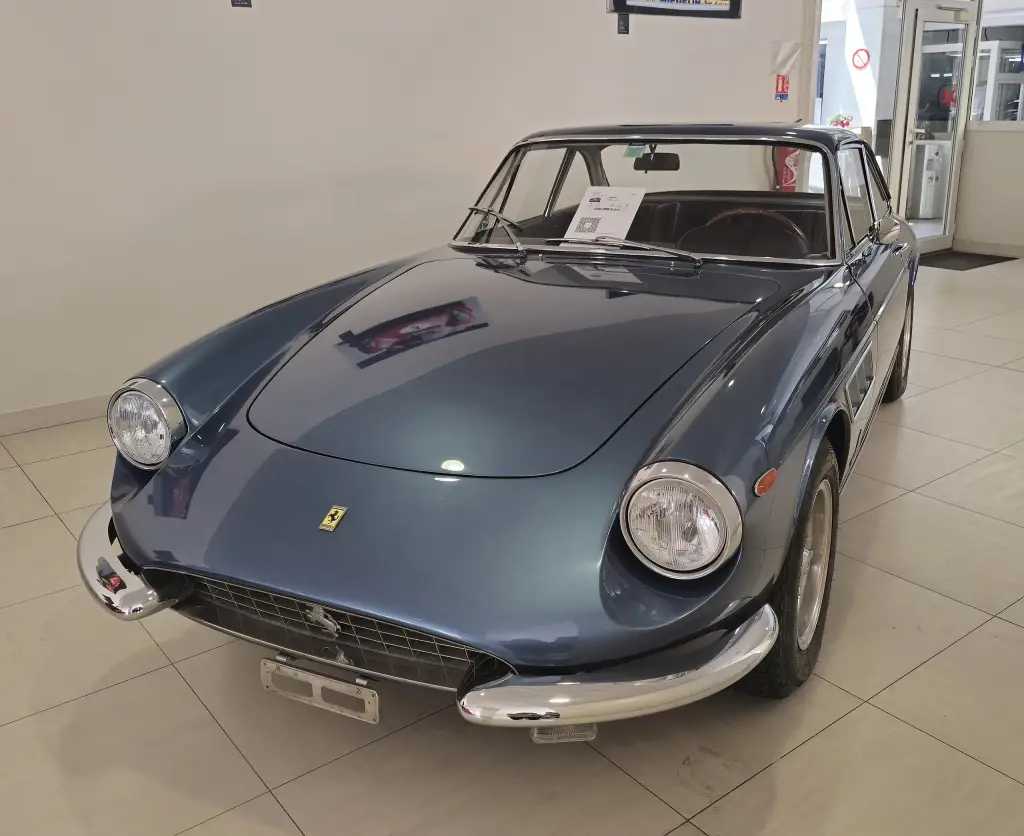
The Ferrari 330 was a series of V12-powered cars built between 1963 and 1968 in 2+2 coupé, two-seat berlinetta, spider and racing forms. The name refers to the approximate displacement of each cylinder, and production ended with the arrival of the 365 series.
Ferrari 330 at a glance
| Production | 1963–1968 |
|---|---|
| Models | 330 America, 330 GT 2+2, 330 GTC, 330 GTS, 330 P |
| Engine | 4.0 L Colombo V12, evolution of the 400 Superamerica unit |
| Bore × stroke | 77 × 71 mm |
| Power | 300 PS (220 kW) at 6,600 rpm |
| 330 America built | 50 |
| 330 GT 2+2 built | 625 Series I, 455 Series II |
| 330 GTC / GTS built | about 600 coupés, 100 spiders |
| Replaced by | Ferrari 365 series |
based on one source (English Wikipedia).
History of the Ferrari 330
Every 330 used an evolution of the 4.0-litre Colombo V12 from the 400 Superamerica, with an unusual 77 mm bore and 71 mm stroke, wider bore spacing and an alternator in place of a generator. The first model, the 330 America of 1963, was a 250 GT/E with the larger engine: it shared the outgoing car’s chassis but used the new Tipo 209 V12 of 300 PS, and looked almost identical to the Series III 250 GT/E apart from an optional “America” badge. Fifty were built in late 1963 before the larger 330 GT 2+2 replaced it.
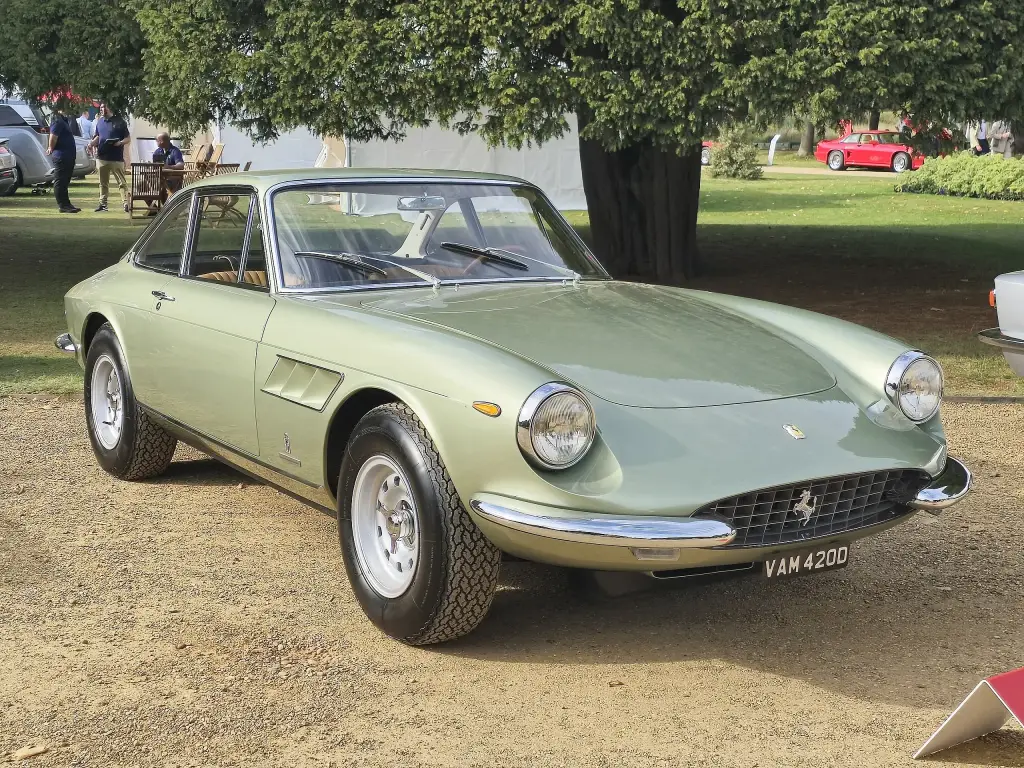
330 GT 2+2
The 330 GT 2+2 arrived in January 1964, first shown at the Brussels Show. It was much more than a re-engined 250, with a sharper nose and tail, quad headlights and a wide grille, while power stayed at 300 PS. The wheelbase grew by 50 mm and Koni adjustable shock absorbers improved the handling; the dual-circuit Dunlop braking system used discs all round but split the circuits front to rear rather than diagonally as on modern cars. The 1965 Series II brought a five-speed gearbox in place of the overdrive four-speed, a return to twin headlights, alloy wheels and optional air conditioning and power steering. Before the Series II, 125 “interim” cars were built with the quad-headlight body but the five-speed gearbox and suspended pedals. In all, 625 Series I cars including the interim batch and 455 Series II cars were made before the 365 GT 2+2 replaced it in 1967.
330 GTC and 330 GTS
The 330 GTC and GTS were closer to the 275 than to the 330 GT 2+2, sharing the 275’s short wheelbase, independent rear suspension and 205VR14 Michelin XWX tyres. They were more refined than earlier Ferraris, quieter and easier to drive; it has been said that the GTC was probably the first Ferrari in which you could actually enjoy a radio. The GTC berlinetta, a two-seater coupé with a Pininfarina body, was introduced at the Geneva Motor Show in March 1966, and the GTS spider followed at the Paris Motor Show in October 1966 on the same chassis and drivetrain. About 600 coupés and 100 spiders were built before the 365 GTC and GTS arrived in 1968, both with 300 PS from their four-litre engines.
Special bodies
A 1967 330 GTC was given one-off targa-topped bodywork by Zagato in 1974 at the request of the American importer Luigi Chinetti, and became known as the Zagato Convertible after being shown at the 1974 Geneva show. Pininfarina built four 330 GTC Speciale coupés in 1966 on the GTC chassis and drivetrain with unique bodywork borrowing from the 365 California; customers included Princess Liliane de Réthy of Belgium and the wife of Pietro Barilla. In the early 1970s Ferrari allowed the Swiss specialist Felber to use the Ferrari name on a retro roadster based on 330 GTC underpinnings, the Felber FF, of which six or seven were built between 1974 and 1977 with aluminium bodies by Panther Westwinds.
Design and features
- Four-litre Colombo V12: an enlarged 400 Superamerica engine with a 77 by 71 mm bore and stroke.
- Three characters: a 2+2 grand tourer, a short-wheelbase two-seat coupé and spider, and a mid-engined racer.
- Refinement: the GTC and GTS were quieter and easier to drive than earlier Ferraris.
- Coachbuilt one-offs: Zagato, Pininfarina Speciale and the Swiss Felber FF.
Ferrari 330 versions
- 330 America (1963): 250 GT/E chassis with the 4.0-litre Tipo 209 engine, 50 built.
- 330 GT 2+2 (1964–1967): own chassis and bodywork, 625 Series I and 455 Series II.
- 330 GTC (1966–1968): short-wheelbase two-seat coupé, about 600 built.
- 330 GTS (1966–1968): the spider version, about 100 built.
- 330 P: mid-engined racing car of the Ferrari P series, built in four models.
The 330 succeeded the 250 series and shared its short chassis with the Ferrari 275; it was replaced by the Ferrari 365.
Video: The Ferrari 330 P4 is One Sexy Beast
Video by Petrolicious on YouTube.
Sources
- Ferrari 330, English Wikipedia: engine, model history, production numbers, special bodies