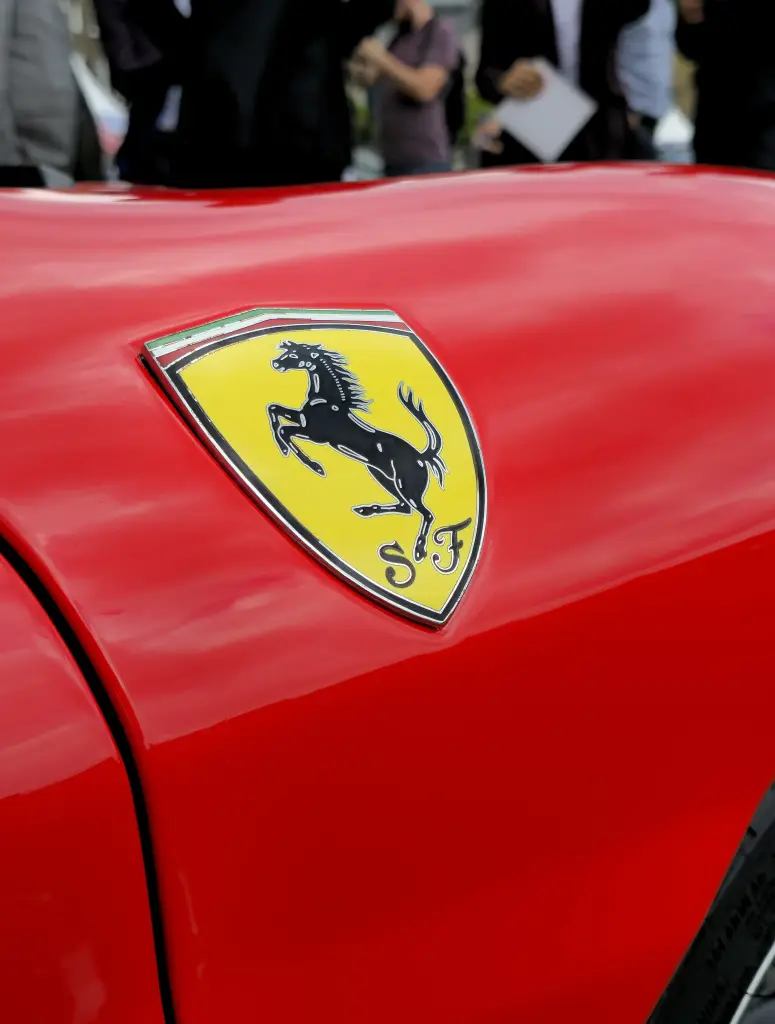
The Ferrari 360 is a two-seater sports car built from 1999 to 2004 with a rear mid-mounted V8 and rear-wheel drive. It succeeded the F355 and was replaced by the F430 in 2004.
Ferrari 360 at a glance
| Production | 1999–2004 |
|---|---|
| Type | F131 |
| Layout | mid-mounted longitudinal V8, rear-wheel drive |
| Engine | 3,586 cc V8, flat-plane crankshaft |
| Connecting rods | titanium |
| Power | 400 PS (294 kW; 395 hp) |
| Chassis | all-aluminium space frame, developed with Alcoa |
| Weight saving | 60 kg (132 lb) |
| 0–100 km/h | 4.5 s (from 4.7 s) |
| 360 Modena built | 8,800 |
| 360 Spider built | 7,565 |
| Challenge Stradale built | 1,288 |
based on one source (English Wikipedia); the video that was attached to the old record is no longer available, so the article has none.
History of the Ferrari 360
For the 360, Ferrari partnered with Alcoa to produce an entirely new all-aluminium space-frame chassis that was 40 per cent stiffer than the steel frames of its predecessors and 28 per cent lighter despite a ten per cent increase in overall dimensions. The Pininfarina bodywork deliberately departed from the sharp angles and pop-up headlights of the previous decade. The 3.6-litre V8 had a flat-plane crankshaft and titanium connecting rods and produced 400 PS; according to Ferrari the new car was 60 kg lighter than the F355 and cut the 0–100 km/h time from 4.7 to 4.5 seconds.
The range
The first model was the 360 Modena coupé, followed by the 360 Spider roadster and the Challenge Stradale, a high-performance road-legal version built by the factory. The Challenge Stradale took carbon ceramic brakes from the Enzo, track-tuned suspension, aerodynamic changes, weight reduction, more power and revised gearbox software. Worldwide production was 8,800 Modenas, 7,565 Spiders and 1,288 Challenge Stradales; 4,199 cars went to the United States, made up of 1,810 coupés and 2,389 Spiders. Of those American cars only 469 Modenas and 670 Spiders were ordered with the gated six-speed manual gearbox rather than the “F1” single-clutch automated manual.
Racing versions
Beyond the road cars there were low-volume factory racers and a one-off Barchetta based on the Spider. The race cars were all derived from the 360 Modena and, for the first time, were produced as separate models rather than retrofit kits. The first was the 360 Modena Challenge for a one-make series; the factory-built racing cars were prepared by the official tuner Michelotto, which also developed the 360 N-GT, an evolution of the Challenge car built for the FIA N-GT class.
Place in the range
The 360 marked a change of generation: aluminium construction, a cleaner shape without pop-up lights and a much wider spread of versions, from open Spider to track-focused Stradale. It remained in production for five years before the F430 took over in 2004.
Design and features
- Aluminium space frame: developed with Alcoa, 40 per cent stiffer and 28 per cent lighter than the steel frame it replaced.
- 3.6-litre V8: flat-plane crankshaft and titanium con-rods, 400 PS.
- New styling: Pininfarina dropped the sharp angles and pop-up headlights of the 1990s cars.
- Challenge Stradale: carbon ceramic brakes from the Enzo and a track-focused chassis.
- Michelotto racers: Challenge and N-GT competition cars built as separate models.
Ferrari 360 versions
- 360 Modena (1999–2004): the coupé, 8,800 built.
- 360 Spider: the roadster, 7,565 built.
- 360 Challenge Stradale: road-legal track version, 1,288 built.
- 360 Modena Challenge: one-make racing car.
- 360 N-GT: Michelotto-built racer for the FIA N-GT class.
- 360 Barchetta: a one-off based on the Spider.
The 360 succeeded the Ferrari F355 and was replaced by the Ferrari F430; its carbon ceramic brakes came from the Enzo.
Sources
- Ferrari 360, English Wikipedia: chassis, engine, production numbers, racing versions