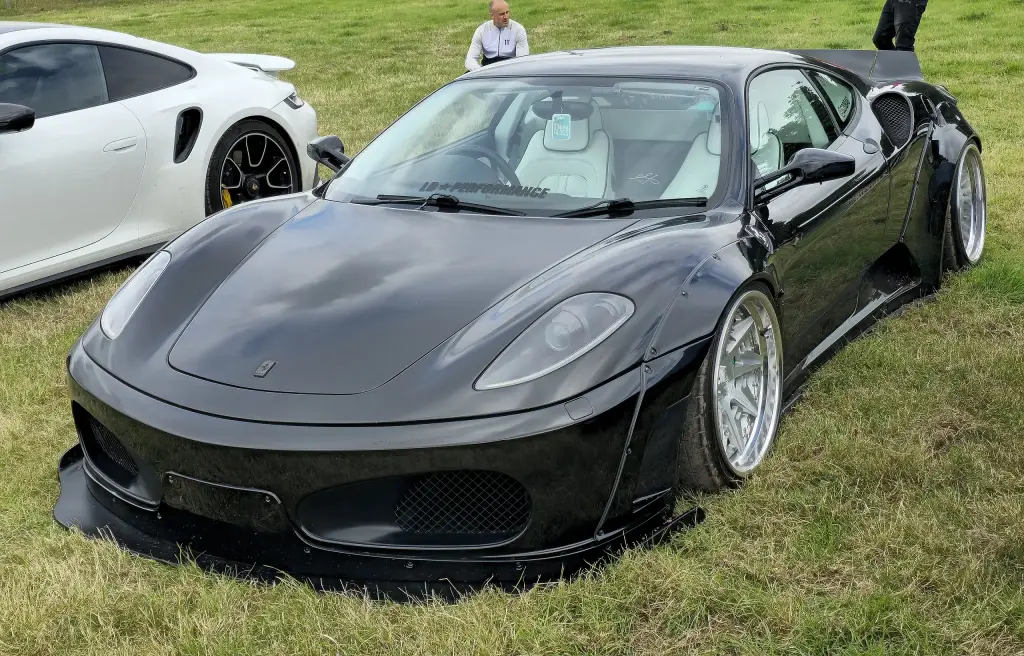
The Ferrari F430 is a sports car produced from 2004 until 2009 as the successor to the Ferrari 360, an update of that car with exterior and performance changes. It was unveiled at the 2004 Paris Motor Show and replaced by the 458 in 2009.
Ferrari F430 at a glance
| Production | 2004–2009 |
|---|---|
| Type | F131 |
| Unveiled | 2004 Paris Motor Show |
| Design | Pininfarina with Frank Stephenson |
| Engine | 4,308 cc V8 of the Ferrari-Maserati F136 family |
| Power | 490 PS (360 kW; 483 hp) at 8,500 rpm |
| Torque | 465 N·m at 5,250 rpm |
| Low-down torque | 80 per cent below 3,500 rpm |
| Chassis | Alcoa aluminium, shared with the 360 |
| Versions | F430, F430 Spider, 430 Scuderia, Scuderia Spider 16M |
| Production total | about 16,750 |
| Successor | Ferrari 458, 2009 |
based on one source (English Wikipedia); the video attached to the old record is no longer available, so the article has none. This article also covers the SP1 and F460 records that redirect here.
History of the Ferrari F430
The F430 is an update of the 360 rather than an all-new car: it shared the Alcoa aluminium chassis, roofline, doors and glass, yet looked significantly different. The body was designed by Pininfarina in collaboration with Frank Stephenson, and although the drag coefficient stayed the same, downforce was greatly enhanced. Ferrari heritage was written into the details: the tail lights and engine cover vents came from the Enzo, and the car’s name was etched on the Testarossa-styled driver’s side mirror.
A new engine family
The 4,308 cc V8 belonged to the “Ferrari-Maserati” F136 family, and it was a significant change because all previous Ferrari V8s had descended from the Dino racing programme of the 1950s. That fifty-year development cycle ended with the F430: the new architecture replaced the Dino-derived engine in most other Ferrari cars too. Output was 490 PS at 8,500 rpm and 465 N·m at 5,250 rpm, with 80 per cent of torque available below 3,500 rpm.
The range
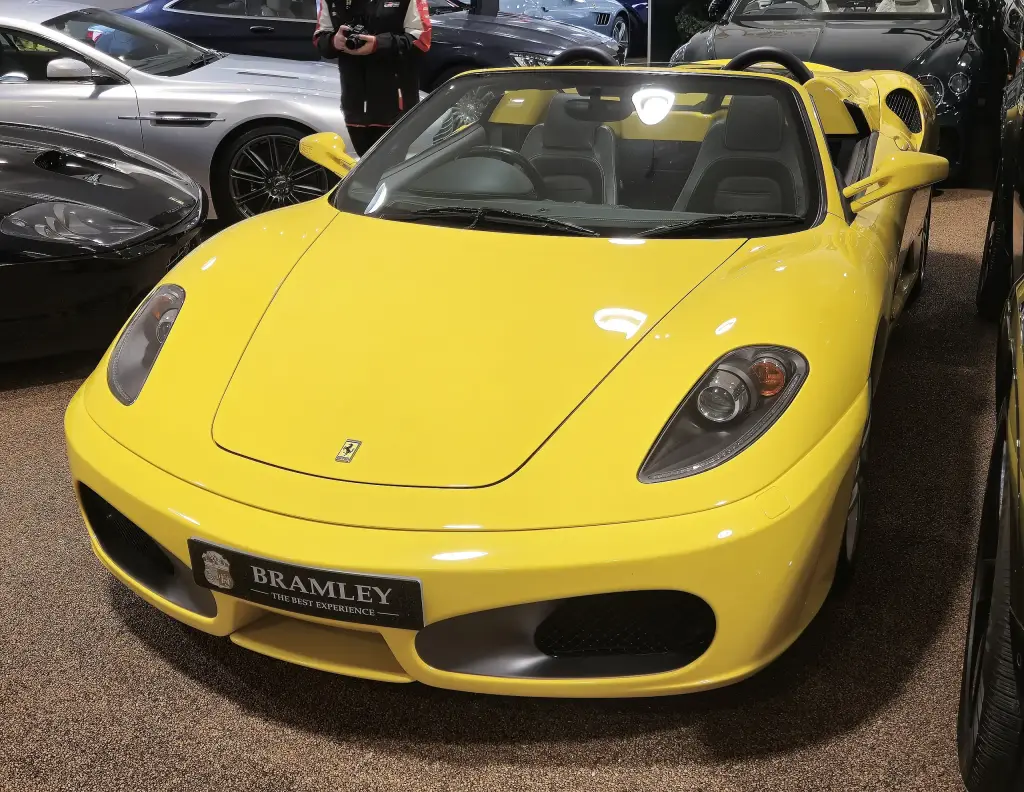
The F430 Spider was unveiled at the 2005 Geneva Motor Show as Ferrari’s 21st road-going convertible, designed by Pininfarina with aerodynamic simulation programs used for Formula One cars and with a two-stage folding roof that stowed above the engine bay; interior and performance matched the coupé, with more weight and a 5 km/h lower top speed. The 430 Scuderia, unveiled by Michael Schumacher at the 2007 Frankfurt show, was 100 kg lighter and more powerful at 510 PS, with a revised intake and exhaust and ion-sensing knock detection allowing a higher compression ratio; its weight-to-power ratio fell from 2.96 to 2.5 kg/hp, its gearbox gained faster 60-millisecond shifts and its traction control combined F1-Trac with stability control and the E-Diff. Ferrari quoted 0–60 mph in 3.1 seconds and 319 km/h. The Scuderia Spider 16M marked Ferrari’s 16th constructors’ title in 2008.
Production
An estimated 16,750 F430s were produced between 2005 and 2009, making it one of the most numerous Ferraris of its era. It was succeeded by the 458, unveiled on 28 July 2009.
Design and features
- New F136 V8: the first Ferrari V8 not descended from the Dino engine family.
- More downforce: same drag coefficient as the 360 but far greater aerodynamic grip.
- Enzo and Testarossa cues: tail lights from the Enzo, a mirror styled after the Testarossa.
- 430 Scuderia: 100 kg lighter, 510 PS and 60-millisecond shifts.
- Scuderia Spider 16M: a convertible Scuderia marking Ferrari’s 16th constructors’ title.
Ferrari F430 versions
- F430 (2004–2009): the coupé.
- F430 Spider (2005–2009): folding-roof convertible.
- 430 Scuderia (2007–2009): lighter, more powerful track-focused version.
- Scuderia Spider 16M (2008–2009): convertible version of the Scuderia.
The F430 succeeded the Ferrari 360 and was replaced by the Ferrari 458; its traction control borrowed from the 599 GTB Fiorano.
Sources
- Ferrari F430, English Wikipedia: design, engine, variants, production