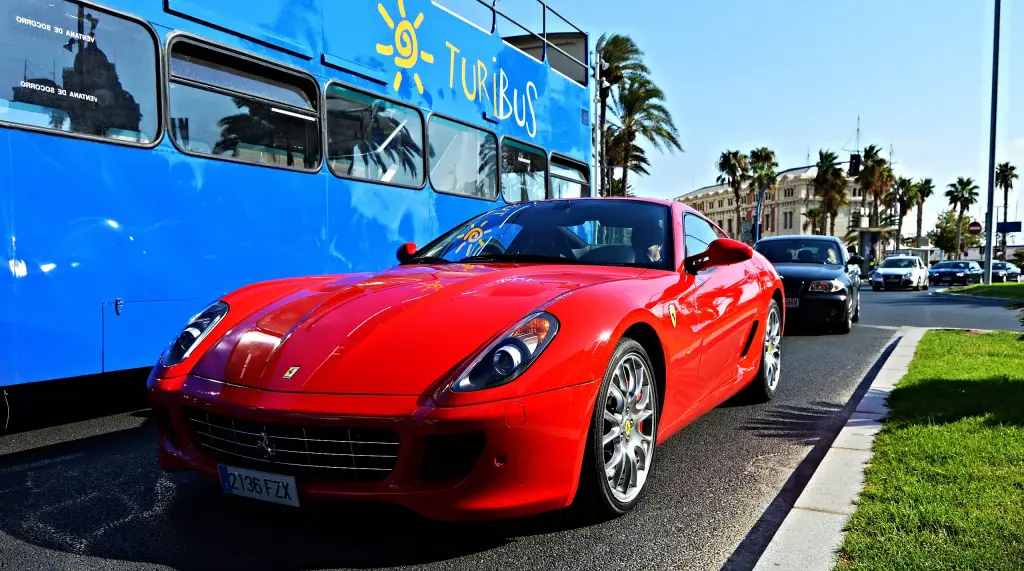
The Ferrari 599 GTB Fiorano is a grand tourer that served as Ferrari’s front-engined two-seat model, replacing the 575M Maranello in 2006 as a 2007 model. It was replaced for 2013 by the F12berlinetta.
Ferrari 599 GTB Fiorano at a glance
| Production | 2006–2012 |
|---|---|
| Type | F141 |
| Debuted | Geneva Motor Show, February 2006 |
| Styling | Pininfarina, under Jason Castriota |
| Engine | 5,999 cc Tipo F140 C V12 |
| Power | 620 PS (460 kW; 610 hp) at 7,600–8,400 rpm |
| Torque | 608 N·m at 5,600 rpm |
| Gearbox | six-speed manual or F1 SuperFast automated manual |
| Shift time | 100 milliseconds |
| 0–100 km/h | 3.7 s claimed |
| Top speed | 330 km/h claimed |
| Downforce | 160 kg at 300 km/h |
based on one source (English Wikipedia).
History of the Ferrari 599 GTB Fiorano
Styled by Pininfarina under Jason Castriota, the 599 GTB debuted at the Geneva Motor Show in February 2006. The bodywork was optimised for aerodynamics, with distinct sail panels flanking the rear window that directed air to a linear rear nolder. The name came from the total engine displacement of 5,999 cc, its Gran Turismo Berlinetta nature, and the Fiorano circuit Ferrari uses for testing.
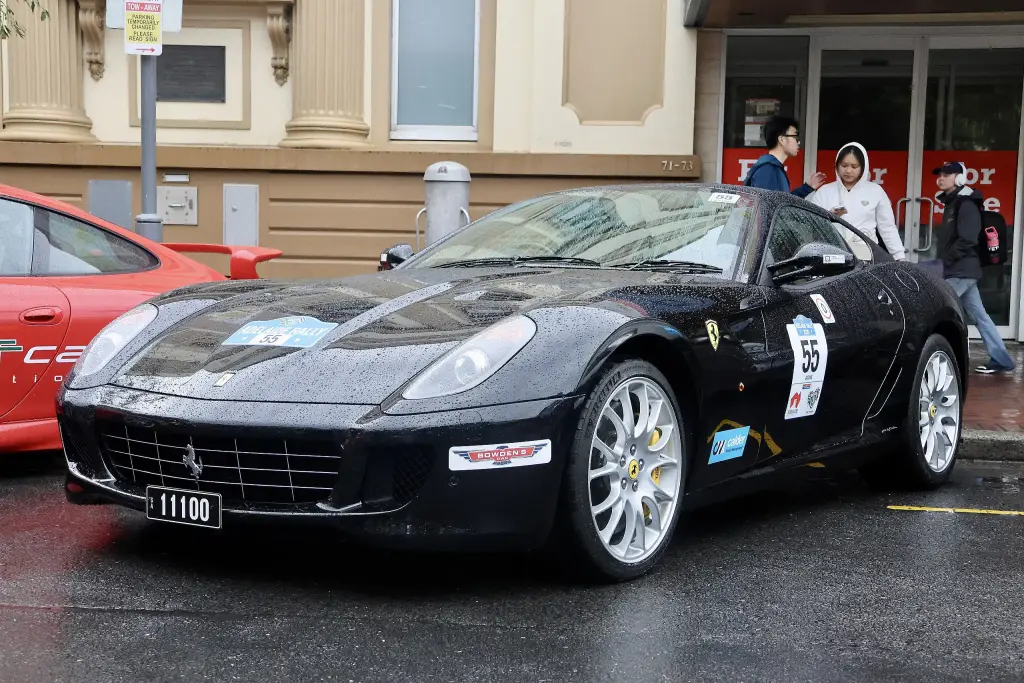
Engine and drivetrain
The 6.0-litre Tipo F140 C V12 produced 620 PS between 7,600 and 8,400 rpm, which made it the most powerful series production Ferrari road car at the time of its introduction. It was one of the few engines of its era to exceed 100 PS per litre without forced induction, and its 608 N·m of torque at 5,600 rpm was also a record for Ferrari GT cars. Most of the engine changes were made so that it would fit the 599’s bay: the version used in the mid-engined Enzo would have been taller and blocked forward vision. A traditional six-speed manual was offered alongside Ferrari’s six-speed automated manual, the F1 SuperFast, with a shift time of 100 milliseconds.
Aerodynamics and chassis
The car used an underbody spoiler and venturi tunnels to generate downforce. The arched C-pillars in a “flying buttress” style also helped by channelling air around the rear so that no rear wing was needed; the buttresses began as a styling exercise by Castriota, and their aerodynamic effect was proven in wind-tunnel testing by Ferrari aerodynamicist Luca Caldirola. Together these gave a claimed 160 kg of downforce at 300 km/h. Functional brake-cooling ducts were built into the front and rear body panels.
Performance and versions
Ferrari claimed 0–100 km/h in 3.7 seconds, 0–200 km/h in 11.1 seconds and a top speed of 330 km/h. Motor Trend tested a 599 GTB Fiorano in January 2007 and recorded 0–60 mph in 3.2 seconds and a quarter-mile in 11.3 seconds at 126.4 mph. From 2008 the HGTE package, Handling Gran Turismo Evoluzione, sharpened the car with stiffer springs and rear anti-roll bar, recalibrated MagneRide dampers, a lower ride height and more focused tyres. The 599 was replaced for the 2013 model year by the F12berlinetta.
Design and features
- 620 PS V12: 5,999 cc and more than 100 PS per litre without turbocharging or supercharging.
- Flying buttress C-pillars: a styling idea that turned out to produce real downforce.
- No rear wing: underbody venturi tunnels and a rear nolder instead.
- F1 SuperFast gearbox: 100-millisecond shifts, with a six-speed manual also available.
- HGTE package: a handling upgrade with stiffer springs and recalibrated dampers.
Ferrari 599 GTB Fiorano versions
- 599 GTB Fiorano (2006–2012): the standard car.
- 599 HGTE (2008–2012): Handling Gran Turismo Evoluzione package.
- 599XX: a track-only development of the 599, seen in the video below.
The 599 replaced the Ferrari 550 Maranello and was followed by the F12berlinetta; its engine family came from the Enzo.
Video: 2012 Ferrari 599XX Evoluzione PURE SOUND & Glowing Brakes
Video by 19Bozzy92 on YouTube.
Sources
- Ferrari 599, English Wikipedia: engine, gearbox, aerodynamics, performance, HGTE