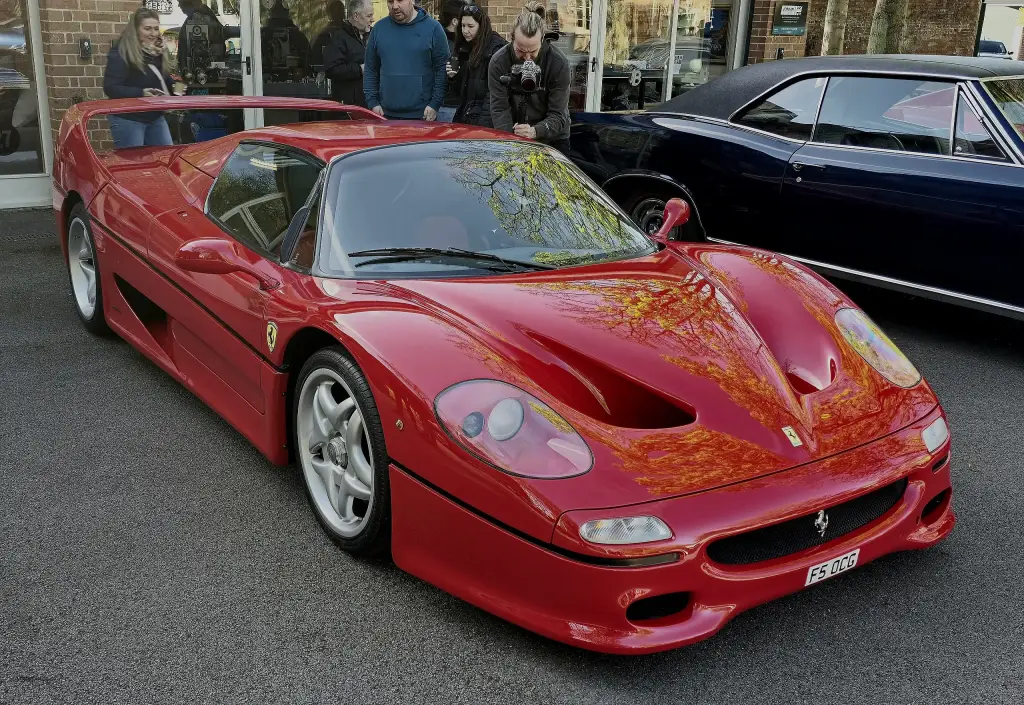
The Ferrari F50 is a limited-production mid-engine sports car built from 1995 until 1997. It is a two-door, two-seat targa top powered by a 4.7-litre naturally aspirated V12 developed from the engine used in the 1990 Ferrari 641 Formula One car.
Ferrari F50 at a glance
| Production | 1995–1997 |
|---|---|
| Type | F130 |
| Body | two-door, two-seat targa top |
| Engine | 4.7 L Tipo F130B V12, 60 valves |
| Layout | longitudinally mounted 65° V12, rear mid-engine |
| Weight distribution | 42 per cent front, 58 per cent rear |
| Induction | natural, variable-length intake manifold |
| Connecting rods | forged titanium |
| Crankshaft | forged steel |
| Built | 349 |
| Design basis | evolution of the 1989 Mythos concept |
based on one source (English Wikipedia).
History of the Ferrari F50
The F50 was introduced in 1995 and produced until 1997, with the last car leaving the line in July of that year. It is a two-door, two-seat targa top, and its design is an evolution of the 1989 Ferrari Mythos concept car, while Pininfarina incorporated cues from contemporary Formula One cars, particularly at the front.
An engine from Formula One
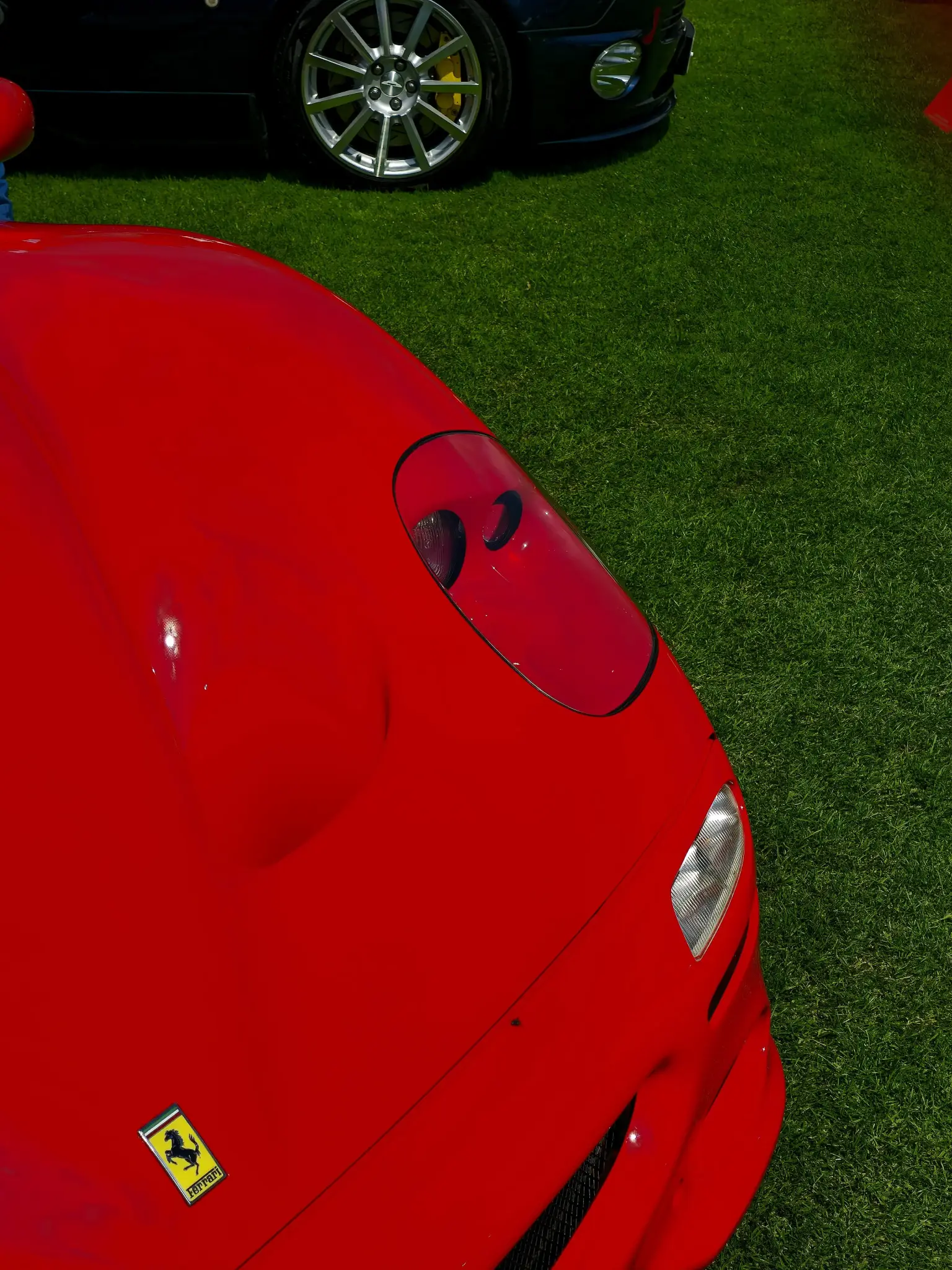
The Tipo F130B is a 4.7-litre naturally aspirated 60-valve V12 developed from the 3.5-litre V12 used in the 1990 Ferrari 641 Formula One car. It is mounted longitudinally and breathes through a carbon fibre reinforced polymer intake manifold with a variable-length system using a butterfly valve, while the block is nodular cast iron, the heads light-alloy aluminium and the pistons forged Mahle items. Connecting rods are forged titanium, the crankshaft forged steel, and the sump, cam covers and oil and water pump housings are magnesium. Weight distribution is 42 per cent front and 58 per cent rear.
Proven before the car
The F50’s engine predated the car: it was used in the Ferrari 333 SP for the American IMSA GT Championship in 1994, which allowed that car to become eligible for the stock engine World Sports Car category. That gave the V12 a competition record before the F50 ever reached a customer.
A total of 349 cars were made, fewer than the F40 that preceded it, with the final example completed in July 1997. Today the F50 is prized both as a limited-production supercar and as the road car that carried a genuine Formula One engine into a production chassis.
Design and features
- F1-derived V12: a 4.7-litre, 60-valve engine based on the 641’s 3.5-litre unit.
- Targa top: an open-roof two-seater rather than a fixed coupé.
- Light internals: titanium con-rods, forged steel crank and magnesium covers.
- Proven in racing: the engine ran in the 333 SP before the road car appeared.
- Only 349 built: a strictly limited production run finished in July 1997.
Ferrari F50 versions
- F50 (1995–1997): the production car, 349 built.
- Mythos concept (1989): the design study the F50 evolved from.
The F50 followed the Ferrari F40 and preceded the Enzo; its engine also powered the Ferrari 333 SP.
Video: Ferrari F50 TERRORIZES MONACO ! CRAZY SOUND !
Video by supercarsriviera on YouTube.
Sources
- Ferrari F50, English Wikipedia: engine, materials, production, design origin