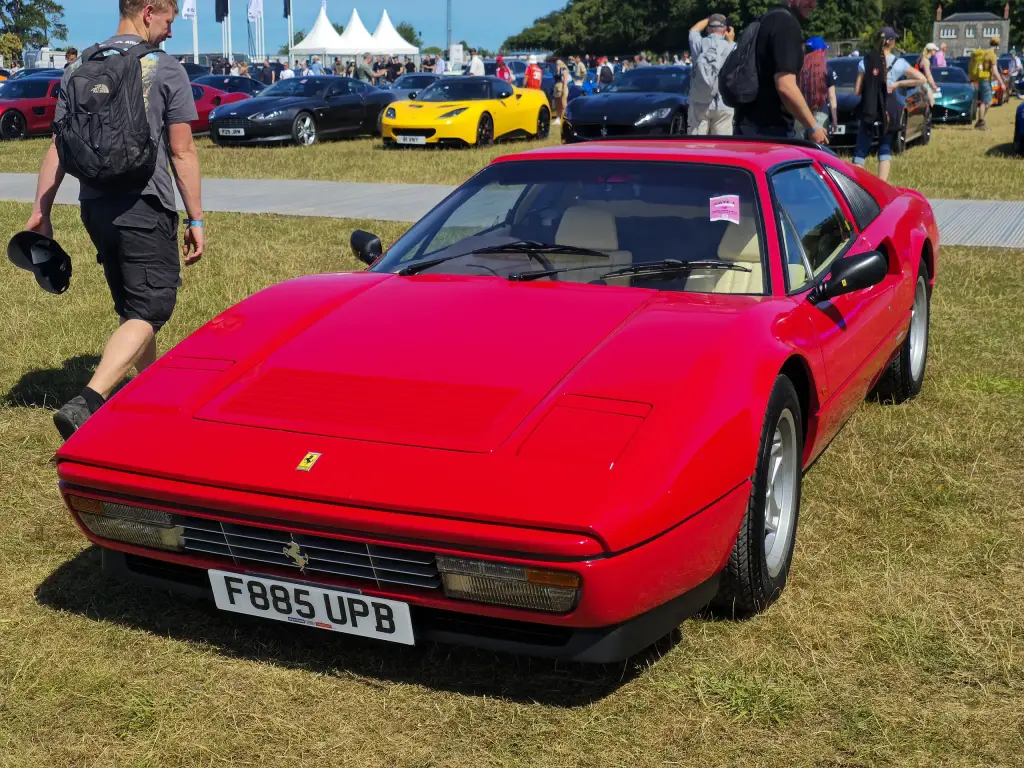
The Ferrari 328 GTB and GTS are mid-engined V8 two-seater sports cars and the successors to the 308 GTB and GTS. Introduced at the 1985 Frankfurt Salon, they were the final evolution of the transversely mounted, naturally aspirated Dino V8.
Ferrari 328 at a glance
| Production | 1985–1989 |
|---|---|
| Models | 328 GTB (coupé), 328 GTS (targa) |
| Type | F106, mid-engined V8, two seats |
| Engine | 3.2 L, transversely mounted 90° V8 |
| Introduced | Frankfurt Salon, 1985 |
| Predecessor | Ferrari 308 GTB and GTS |
| Successor | Ferrari 348 |
| Body | Pininfarina design, built by Scaglietti |
| 1988 update | anti-lock brakes, revised suspension |
| Gearbox | five-speed transaxle |
based on one source (English Wikipedia).
History of the Ferrari 328
The 328 was a revised 308 rather than a new car: the two are treated as one family, sharing similar body, chassis and engine designs. The name gave the formula away — 3.2 litres of engine capacity and eight cylinders — and the increase in displacement brought more power and torque. The model was introduced at the 1985 Frankfurt Salon alongside the Mondial 3.2, and in 1989 it was succeeded by the 348. Many enthusiasts regard the 328 as one of the most reliable and usable Ferraris, partly because much of its maintenance can be done without dropping the engine out of the car.
Design
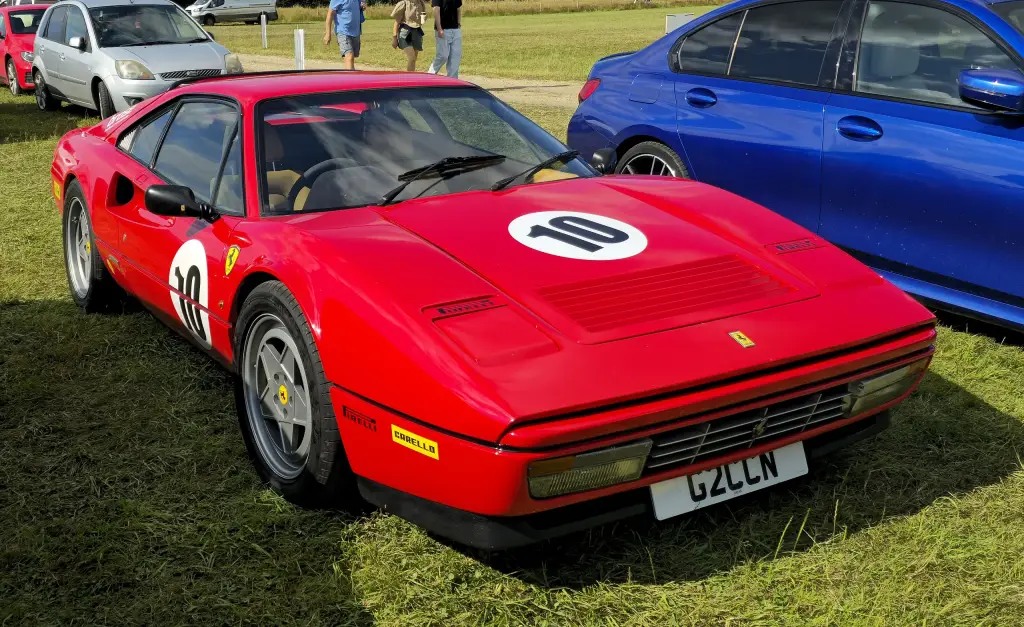
The original Pininfarina shape carried over with subtle changes from the carrozzeria that improved both looks and aerodynamics, and the body was still largely hand-built at Scaglietti. The revised car softened the wedge profile of its predecessor: a rounder nose and a matching tail valance, with body-colour bumpers integral to the panels, echoing work done at the same time on the Mondial 3.2, with which it also shared the radiator grille and front light layout. That gave all the eight-cylinder Ferraris a unified family look. The exhaust-air louvres behind the retractable headlights disappeared and the front-lid radiator louvre, introduced on the 308 Quattrovalvole, grew larger. The interior was thoroughly overhauled, with new seat upholstery and stitching, revised door panels and pulls, modernised switches, and back-lit orange-on-black instruments borrowed from the 1984 GTO. Options included air conditioning, a leather dashboard and headlining, metallic paint, Pirelli P7 tyres and a rear aerofoil.
The oil hose problem and the 1988 update
One minor design flaw was the oil hose running from the lower part of the engine to the oil cooler: it was too short, and under constant pressure with the engine moving it could separate from the cooler, eventually cracking it. One fix was to connect the hoses upside down, giving the lower hose more slack. Ferrari gave the 328 its only major mechanical update late in the 1988 model year with anti-lock brakes, which required redesigned suspension geometry to provide negative offset and convex 16-inch alloy wheels in place of the concave “star” design, in the style of the 3.2 Mondial. The update began with chassis 76626 in February 1988.
Design and features
- 3.2-litre V8: more capacity than the 308 for extra power and torque, still transversely mounted.
- Softer styling: a rounder nose and integrated bumpers that modernised the 308 shape.
- Usability: maintenance without removing the engine made the 328 one of the easiest classic Ferraris to own.
- ABS from 1988: anti-lock brakes came with revised suspension geometry and convex alloy wheels.
Ferrari 328 versions
- 328 GTB (1985–1989): the fixed-roof berlinetta.
- 328 GTS (1985–1989): the targa-roof spider.
- 1988 model: anti-lock brakes and revised suspension from chassis 76626.
The 328 followed the Ferrari 308 and was replaced by the Ferrari 348. More cars are in the Ferrari collection.
Video: Ferrari 328 GTS **SOLD** – Video Test Drive with Chris Moran – Supercar Network
Video by Chris Drives Cars with Chris Moran on YouTube.
Sources
- Ferrari 328, English Wikipedia: design, interior, oil hose fault, 1988 update