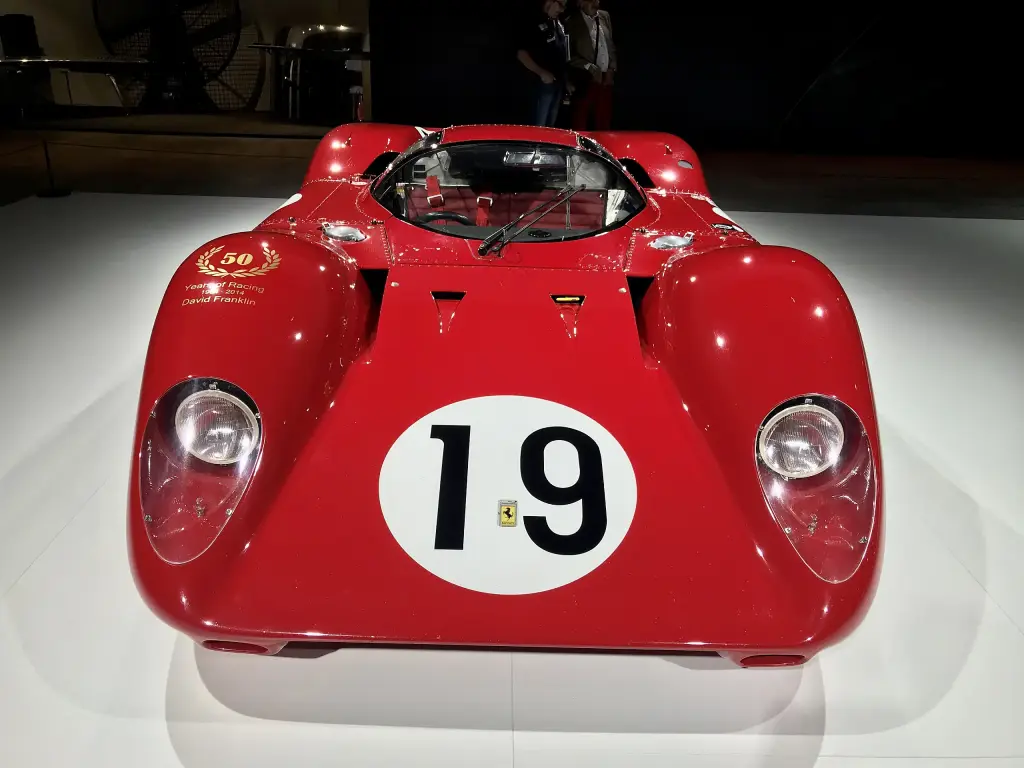
The Ferrari 312 P was a Group 6 prototype raced in 1969 and 1970, powered by a three-litre V12 derived from the Ferrari 312 Formula One car and detuned for endurance racing. When Ferrari’s F1 car moved to a flat-12, the sports prototype followed as the 312 PB.
Ferrari 312 P at a glance
| Raced | 1969 and 1970 |
|---|---|
| Class | Group 6 prototype |
| Engine | 3.0-litre V12 from the Ferrari 312 F1 car |
| Engine state | detuned for endurance racing |
| First race | 12 Hours of Sebring, 1969 |
| Bodies | open barchetta, later closed berlinetta |
| Notable result | second at Sebring 1969, Andretti and Amon |
| Successor | Ferrari 312 PB (flat-12) |
based on one source (English Wikipedia).
History of the Ferrari 312 P
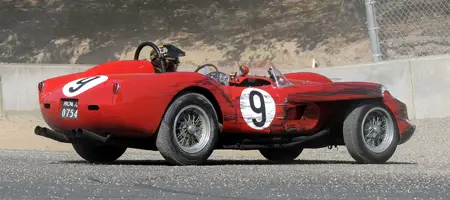
Ferrari boycotted sports car racing in 1968 to protest a rule change that also banned its four-litre 330 P4. The response was a 3,000 cc prototype built in 1969: the 312 P, hardly more than a three-litre Formula One 312 with sports car bodywork, first as an open barchetta and later as a closed berlinetta. Its V12 came from the F1 car and was detuned for the longer races of endurance competition.
Racing in 1969
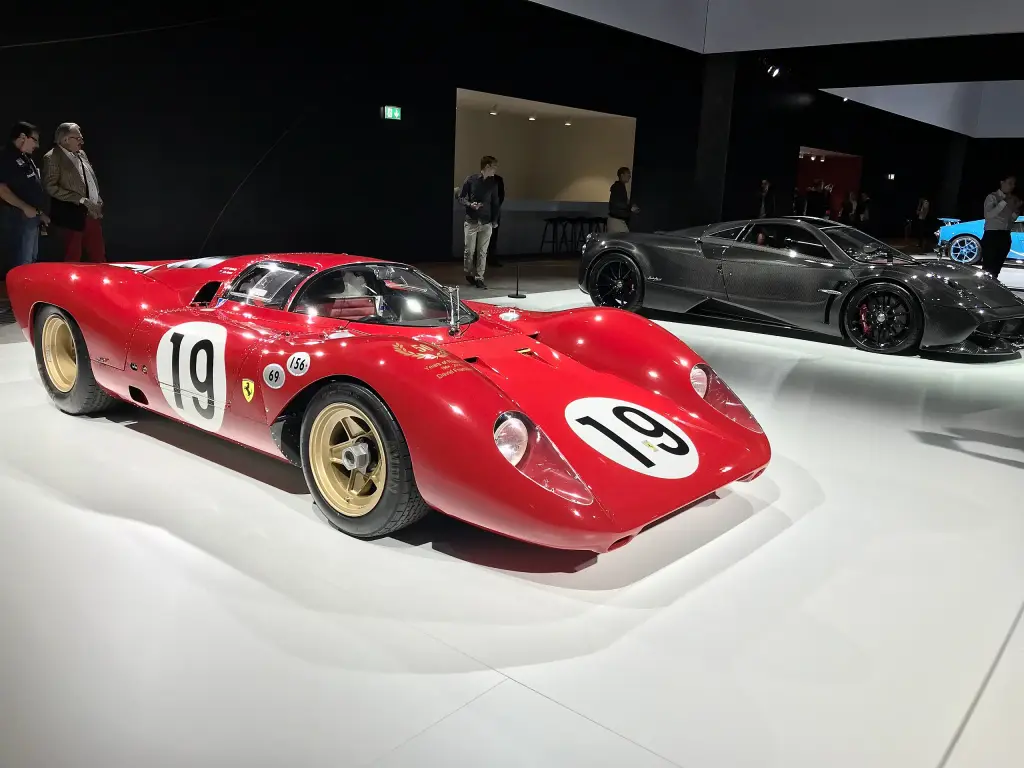
The 312 P’s first race was the 12 Hours of Sebring in 1969. Short of money, Ferrari entered a single car, chassis 0868: Mario Andretti took pole position and, sharing with Chris Amon, finished second, which raised hopes of a Ferrari victory. At the test weekend before Le Mans a different car, chassis 0870, disappointed and it was clear that better aerodynamics, and therefore a closed coupé, were needed. The 0870 also raced at the BOAC 500 at Brands Hatch, where Amon and Pedro Rodríguez finished fourth behind three open Porsche 908/02s. At the 1000 km Monza, Amon took pole in the 312 P spider ahead of Jo Siffert’s 908 LH coupé but retired, and the car also retired at the 1000 km Nürburgring. At the 1000 km Spa, the Rodríguez and David Piper car finished second behind the Siffert and Redman Porsche.
Le Mans and the end
Both 312 Ps were entered for the 1969 24 Hours of Le Mans, now as low-drag berlinettas. They qualified fifth and sixth but did not finish: the Amon car was damaged in the first-lap crash that killed John Woolfe, while the other suffered oil leaks and ran in the top ten for about fifteen hours. The appearance of the Porsche 917 at Geneva in March 1969 made it clear that only a similar five-litre “sports car” could challenge it before the rules loophole closed after 1971. From mid-1969 Ferrari spent part of the money earned from its deal with Fiat on building the 25 five-litre V12 Group 5 cars that became the 512 S. At the end of the season the two remaining 312 Ps were sold to private owners.
Design and features
- F1-derived V12: the three-litre engine of the 312 Formula One car, detuned for endurance racing.
- Two bodies: an open barchetta for twisty circuits and a low-drag berlinetta for Le Mans.
- Light and simple: essentially a converted single-seater, which kept development costs down.
- Superseded quickly: the Porsche 917 pushed Ferrari towards the five-litre 512 S.
Ferrari 312 P versions
- 312 P spider (1969): the open barchetta that finished second at Sebring.
- 312 P berlinetta (1969): closed, low-drag body for Le Mans.
- 312 PB (1971): successor with the flat-12 “boxer” engine of the 312B.
The 312 P shared its engine with the Formula One Ferrari 312B line and came before the five-litre Ferrari 512. More cars are in the Ferrari collection.
Video: 1969 Ferrari 312P (Roaring V12 3.0l at Le Mans Classic)
Video by Retroschaft on YouTube.
Sources
- Ferrari 312 P, English Wikipedia: origin, 1969 races, Le Mans, successor