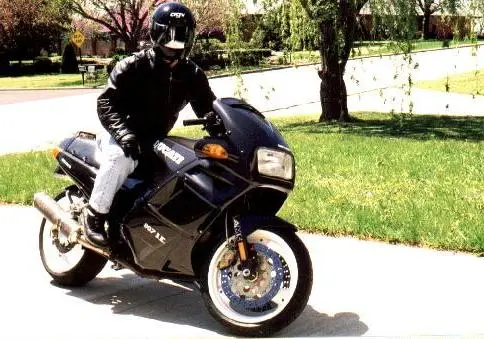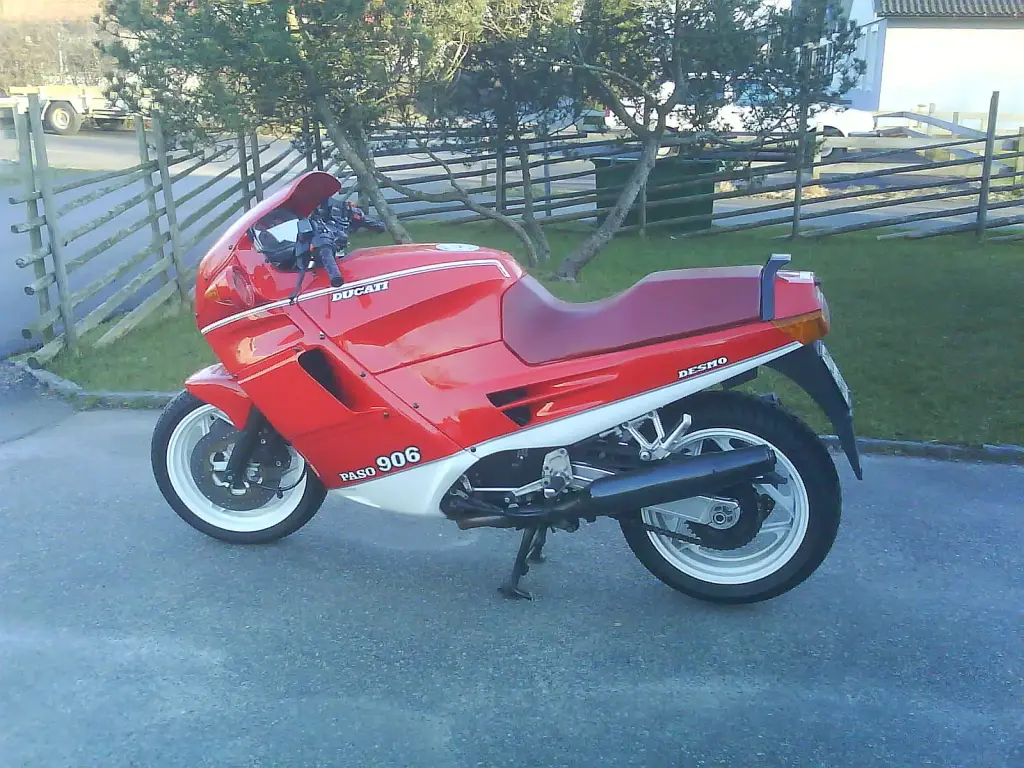
The Ducati Paso was introduced in 1986 with the slogan “Il nostro passato ha un grande futuro”, our past has a great future. The name honoured the racer Renzo Pasolini, nicknamed Paso, who died on 20 May 1973 in an accident at Monza during the Italian motorcycle Grand Prix.
Ducati Paso at a glance
| Maker | Ducati, Borgo Panigale |
|---|---|
| Production | 1986–1992 |
| Designer | Massimo Tamburini |
| Engine | Pantah-derived desmodromic V-twin; 750 cc, then 904 cc |
| Paso 750 | 72.5 hp, 210 km/h, 4,863 built |
| Paso 906 | 904 cc, 88 hp, 220 km/h, 1,802 built |
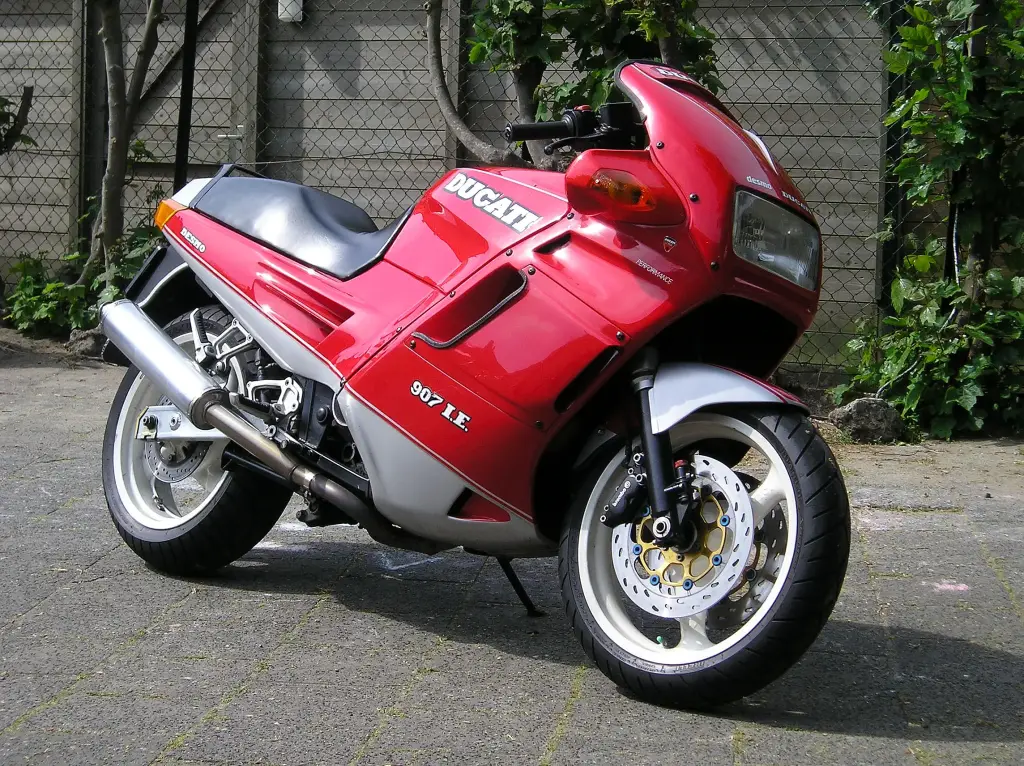
| 907 i.e. | injected, 90 hp, 230 km/h, 2,303 built |
| Wheels | 16-inch radial tyres; 17-inch on the 907 i.e. |
| Fuel system | Weber carburettor, then Weber-Marelli IAW 043 injection |
History of the Ducati Paso
A bike born of a takeover
Cagiva, founded by the Castiglioni brothers, needed an engine, while Ducati, just released from statutory public management, needed revenue. Over a series of meetings and lunches in 1984 they agreed that Ducati would supply engines to Cagiva and then leave motorcycle production. In the end the Castiglioni brothers were offered a deal to buy Ducati on condition that the Ducati name lived on as a motorcycle. On closing the deal, Ducati engines went straight into Cagiva bikes including the Alazzurra and the Elefant. Ducati was in a state of suspended animation as far as engineering went, and the old bevel-drive V-twin had been replaced by the belt-drive Pantah designed by Fabio Taglioni, already known as a strong engine in the Ducati 750 F1.
Tamburini’s design challenge
To fight Japanese competition, Ducati hired Massimo Tamburini, co-founder of Bimota, who later designed the 916 and the MV Agusta F4. He streamlined the bike and its 750 cc engine into a close-fitting integral fairing that hid all the mechanical parts, one of the first motorcycles to do so, along with the Honda CBR Hurricane of the same year. He also reversed the rear cylinder head to meet emissions and noise rules abroad. The Paso 750 had square chromoly steel frame tubes, an aluminium swingarm with progressive suspension, 16-inch wheels with radial tyres, an air-and-oil-cooled engine, electronic ignition and a comprehensive dashboard. The finished design debuted at the 1985 Milan show together with a 350 cc version that was never built. At first it came only in red; by 1988 red, blue and pearl white were offered.
Sales and the 906
Commercial success did not come. The Paso 750 sold 4,863 units between 1986 and 1988, with only 700 imported into the United States in 1987. It was more expensive and slower than its rivals, at 72.5 hp and 210 km/h, and suffered reliability and rideability problems in the electrical and fuel systems from an automotive Weber carburettor ill suited to a small motorcycle engine. In 1989 the Paso 906 replaced the 750 with a six-speed gearbox, a 904 cc engine giving 88 hp and 220 km/h and, most importantly, liquid cooling. It kept the automotive carburettor and the unreliable electrics, and 1,802 were built in 1988–1989.
The 907 i.e.
The final version came in 1991 as the 907 i.e., iniezione elettronica, now without the name Paso. The engine stayed liquid-cooled and the carburettor was replaced by the Weber-Marelli IAW 043 system integrating ignition and electronic fuel injection, which transformed rideability. Power rose to 90 hp, top speed to 230 km/h, and 17-inch wheels gave more stability. Sales stayed slow, and when production ended in 1992 only 2,303 907 i.e. machines had been built.
Design and features
- Integral fairing: one of the first motorcycles to hide all mechanical parts behind bodywork.
- Pantah engine: the belt-drive desmodromic V-twin, reversed rear head for emissions.
- Liquid cooling: introduced with the 906, carried over to the 907 i.e.
- Electronic injection: the Weber-Marelli IAW 043 of the 907 i.e., a big step in rideability.
Ducati Paso versions
- Paso 750 (1986–1988): 72.5 hp, 210 km/h, 4,863 built.
- Paso 906 (1989): 904 cc, liquid-cooled, 88 hp, 1,802 built.
- 907 i.e. (1991–1992): fuel injection, 90 hp, 230 km/h, 2,303 built.
The Paso used the Ducati Pantah engine and prepared the ground for Tamburini’s Ducati 916. More Ducatis are in the Ducati collection.
Video: Ducati Paso 750
Video by yun750 on YouTube.
Sources
- Ducati Paso, English Wikipedia: name, background, design, sales, 906 and 907