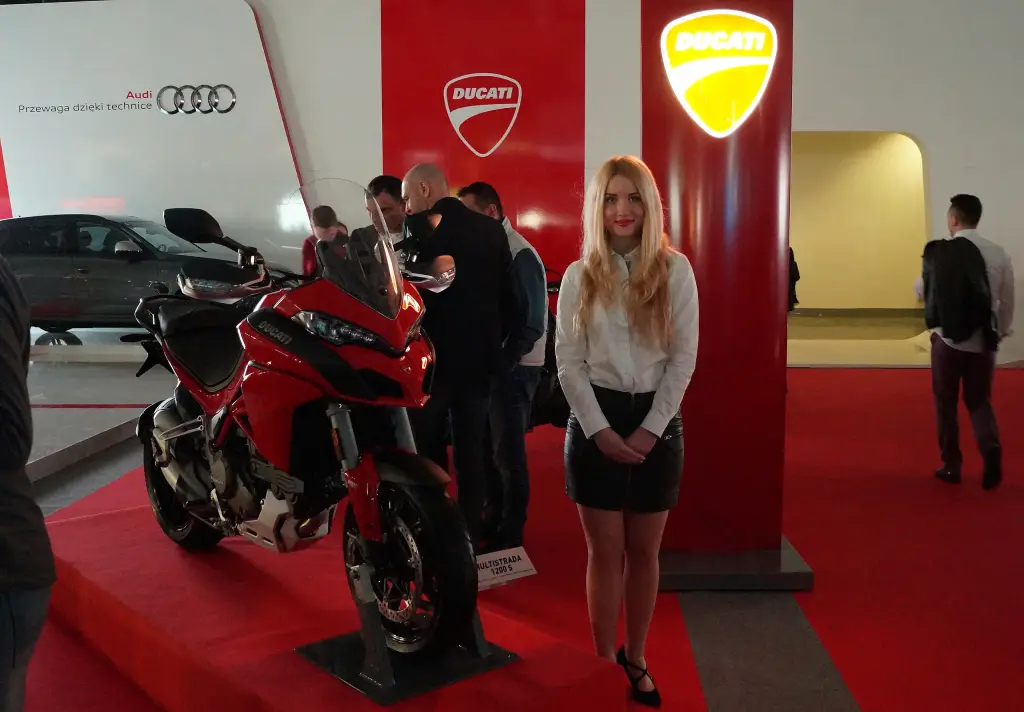
The Ducati Multistrada is a series of V2 and V4-engined adventure-touring motorcycles. First introduced in 2003, it was a novel combination of a comfortable adventure bike and a capable sport tourer. The name is an Italian neologism meaning roughly “many roads”.
Ducati Multistrada at a glance
| Maker | Ducati, Borgo Panigale |
|---|---|
| Introduced | 2003 |
| First model | Multistrada 1000 DS |
| 1000 DS engine | 992 cm³ air-cooled 90° V-twin, 84 hp |
| 1000 DS weight | 188 kg dry, 20 litres of fuel |
| 1100 (2007) | 1,078 cm³, 95 hp, wet clutch |
| 1200 (2010) | 1,198 cm³ Testastretta 11°, 150 hp |
| 1200 dry weight | 189 kg |
| Service interval, 1200 | major service every 30,000 km |
| Riding modes | Sport, Touring, Urban and Enduro |
History of the Ducati Multistrada
An odd combination that worked
The original Multistrada was designed by Pierre Terblanche, then Ducati’s head designer. Like the contemporary Ducati 999, it received very mixed reviews for its unconventional looks. Reviewers nevertheless found it truly versatile, and despite the apparently odd mix of styles concluded that Ducati had guessed right. Initial uptake was slow, but the Multistrada became the most important model in Ducati’s range: in the first half of 2023 the Multistrada V4, all versions together, represented around 18% of the company’s motorcycle sales.
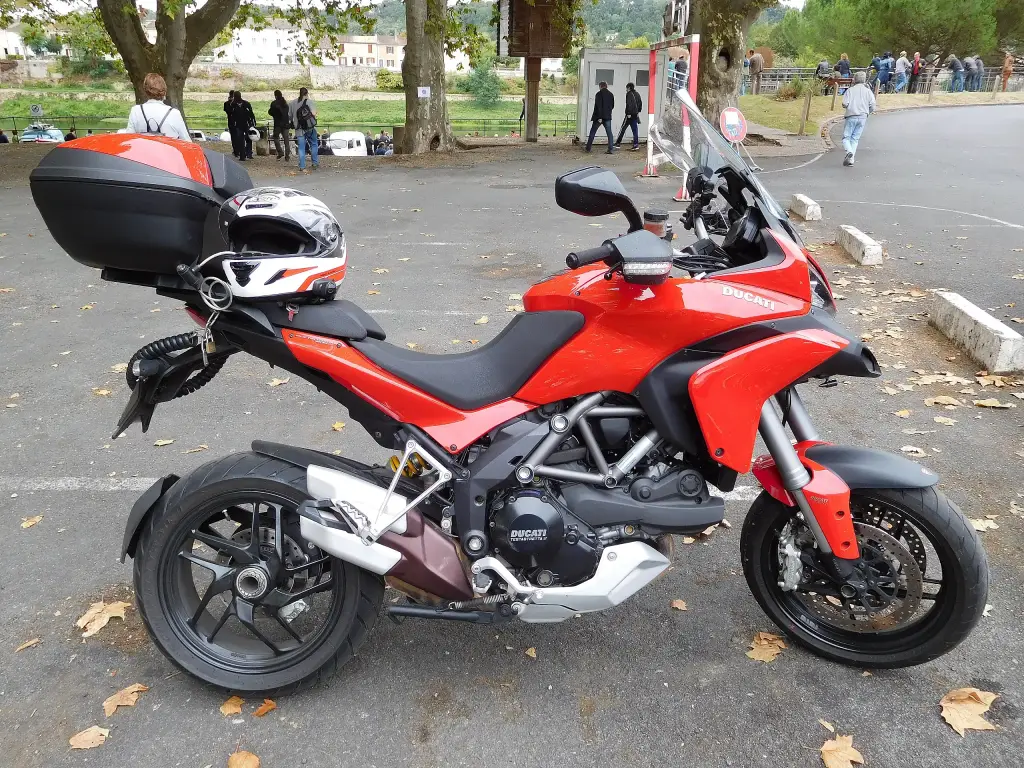
The first generation, 2003–2009
The Multistrada was introduced in 2003 with the 1000 DS as the only model. It had a 992 cm³ air-cooled 90° V-twin with 84 hp, 20 litres of fuel and a dry weight of 188 kg, sharing its engine with the SuperSport and Monster of the time. In 2005 the up-spec 1000S DS and the entry-level 620 arrived, and all models received small fixes for common complaints: a longer sidestand, better-shaped seats and covers, longer mirror arms and a standard touring windshield. The 1000S DS gained gold-coloured Öhlins suspension, black wheels and an aluminium handlebar. The 620 was simplified with a 618 cm³ engine, less fuel capacity, a single front disc, a conventional swingarm and the first oil-bathed wet clutch with a slip-and-assist function, but it was not popular and lasted only from 2005 to 2007. In 2007 came the 1100 and 1100S, with the bore increased by 4 mm to 1,078 cm³, a wet clutch and 95 hp, to meet Euro 3 emissions; the DS suffix was dropped although dual spark ignition stayed.
The second generation, 2010–2014
The second generation was unveiled at EICMA in Milan in November 2009 and was much better received: visitors voted the Multistrada 1200 Best Bike in Show with 48% of the votes. The 1200 and 1200S have a 1,198 cm³ water-cooled 90° V-twin with 150 hp, 20 litres of fuel and a dry weight of 189 kg, the S adding electronically adjustable Öhlins suspension. The engine was adapted from the Ducati 1198 and called Testastretta 11° for its 11 degrees of valve overlap; power fell from 180 to 150 hp but low-down torque, flexibility and economy improved, and the major service interval doubled to 30,000 km.
Four bikes in one
The biggest innovation of the 1200 was the introduction of riding modes. Ducati was not the first to offer adjustable power modes, traction control or electronically adjustable suspension, but the Multistrada 1200 was the first to combine them into preset modes: Sport, Touring, Urban and Enduro. Ducati called this “four bikes in one”. Pirelli developed the Scorpion Trail tyre specifically for the model, with some claimed off-road ability, and it was the factory fitment. In June 2010 the racer Greg Tracy won his class at the Pikes Peak International Hillclimb on a Multistrada 1200S, and Ducati marked it with the Pikes Peak model of 2011, mechanically identical to the 1200S but with special paint.
Design and features
- Versatility: an adventure bike and a sport tourer in one machine, the meaning of the name.
- Testastretta 11°: the 2010 engine retuned from the 1198 for torque and economy, with 150 hp.
- Riding modes: Sport, Touring, Urban and Enduro, the first combination of power, traction and suspension settings.
- Long service intervals: a major service every 30,000 km on the 1200.
- Pikes Peak: Greg Tracy’s 2010 class win and the 2011 Pikes Peak model.
Ducati Multistrada versions
- 1000 DS (2003–2006): 992 cm³, 84 hp, the first Multistrada.
- 1000S DS (2005–): Öhlins suspension and an aluminium handlebar.
- 620 (2005–2007): the simplified 618 cm³ entry model.
- 1100 and 1100S (2007–2009): 1,078 cm³, 95 hp and a wet clutch.
- 1200 and 1200S (2010–2014): Testastretta 11°, 150 hp, riding modes.
- Pikes Peak (2011–): a 1200S in special paint.
The Multistrada came from the same designer as the Ducati 999 and the Hypermotard, and shares engines with the Monster. More Ducatis are in the Ducati collection.
Video: Reiseenduro Vergleich | Ducati Multistrada 1200 S GT | 2013
Video by 1000PS on YouTube.
Sources
- Ducati Multistrada, English Wikipedia: reception, first and second generations, riding modes