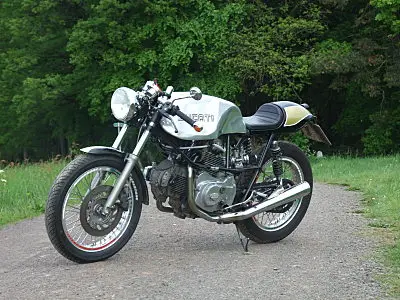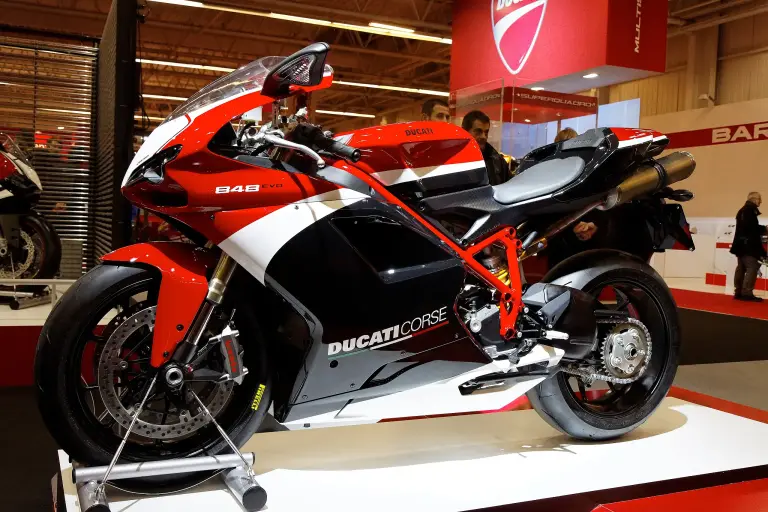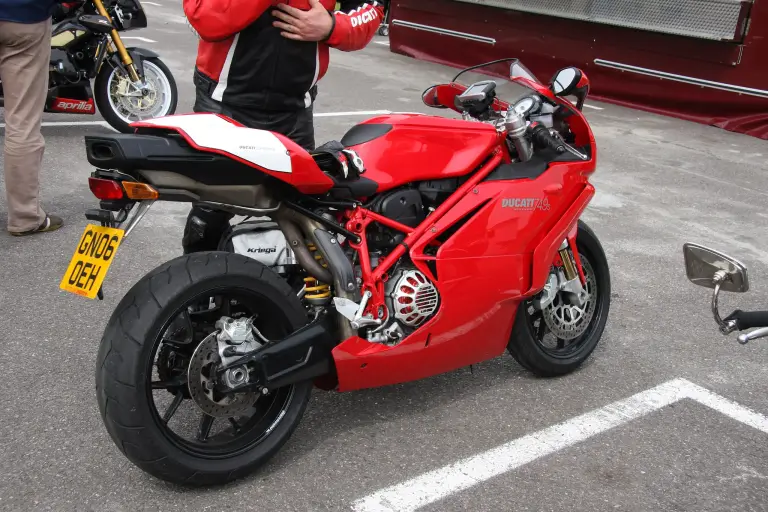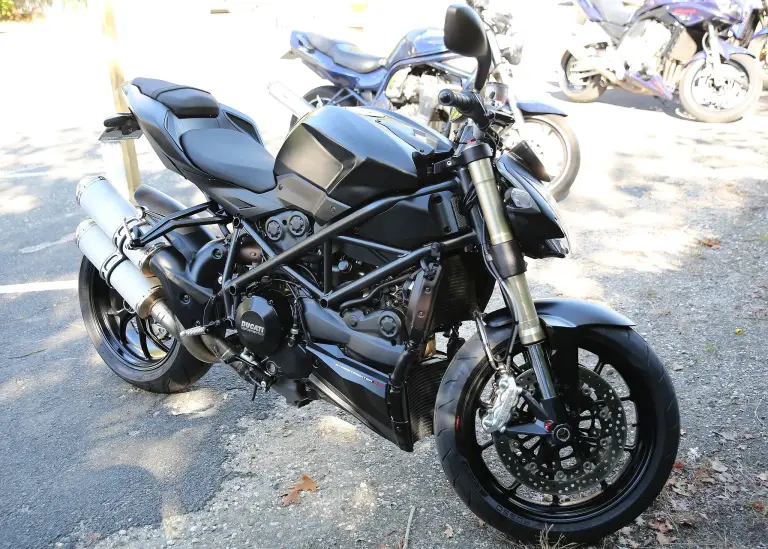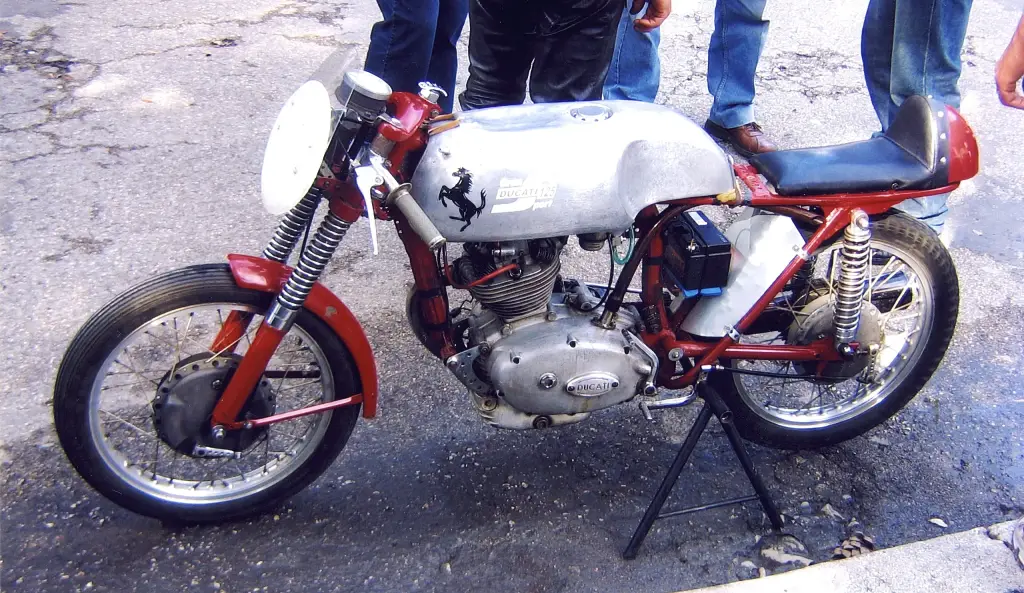
The Ducati 125 was one of the capacities in which Ducati’s overhead-cam singles were offered from the late 1950s. Fabio Taglioni’s bevel-drive OHC engine became the backbone of the range, and the 125 was also built with pushrods and, in the 1970s, as a small two-stroke.
Ducati 125 at a glance
| Maker | Ducati, Borgo Panigale |
|---|---|
| OHC singles production | 1950–1974 |
| Type A shown | Milan Motorcycle Show, late 1956 |
| Type A capacities | 100, 125, 175 and 200 cc |
| Type B capacities | 125, 160, 200, 250 and 350 cc |
| Five-speed gearbox | from 1964 |
| Engine layout | bevel-drive OHC single, vertically split cases, alloy head and barrel |
| Wide-case engines | 1968–1974, in 239, 250, 350 and 450 cc |
| Pushrod singles | mid-1950s to mid-1960s, including the 125 Bronco |
| Two-stroke enduro | 125 Regolarità, 1977–1978 |
This article is based on the English Wikipedia overview page Ducati singles, which covers the 125 among the other capacities.
History of the Ducati 125
Taglioni’s singles
The Ducati singles were single-cylinder motorcycles made by Ducati from 1950 to 1974. Chief engineer Fabio Taglioni developed a desmodromic valve system in these years, opening and closing the valves with the camshaft and without valve springs, and it became a trademark of Ducati motorcycles. The bevel-drive OHC engines were of vertically split unit construction with alloy head and barrel and austenitic liners. Ball bearings were used for the main bearings and roller bearings for the big end, hairspring valve springs closed the valves except on the 239 cc models, and lubrication was by wet sump.
Type A and Type B
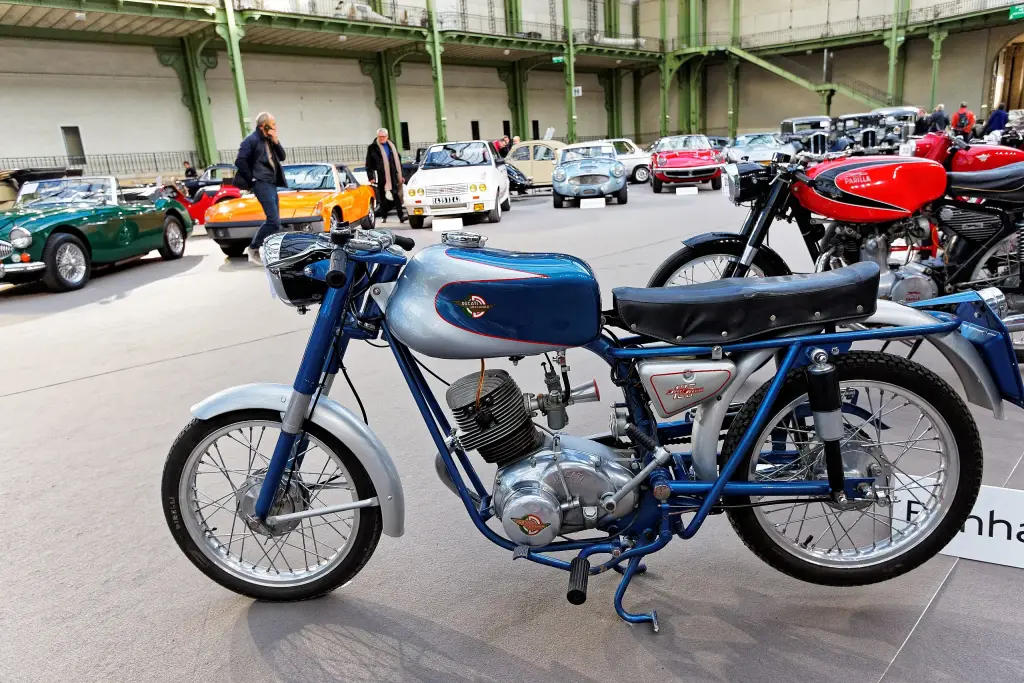
The OHC singles were first shown at the Milan Motorcycle Show in late 1956 and came in 100, 125, 175 and 200 cc variants; production of these Type A engines continued until 1961. With the arrival of the 250 cc Monza and Diana the engines were revised with improvements to the crankshaft, cylinder head and clutch housings. The Type B engines were available in 125, 160, 200, 250 and 350 cc, and from 1964 they had five-speed gearboxes. The earlier engines were later called narrow case after the wide-case version appeared.
Wide case and desmo
In 1968 an improved engine came, based on the units used in the 250SCD and 350SCD racers. Its rear engine mountings were three times wider than the front mounting, and inside it had stronger main bearings and big ends, an improved kickstart and a larger sump. It lasted until OHC production stopped in 1974 and came in 239, 250, 350 and 450 cc. Wide-case engines were also offered in desmo form; unlike the racing engines, the road versions used a single camshaft with helper valve springs to improve starting and low-speed running.
Pushrods and two-strokes
From the mid-1950s to the mid-1960s Ducati also made OHV singles with conventional pushrod operation that were not designed by Taglioni, such as the 125 Bronco. Alongside them the company built 50 cc two-strokes with outputs from 0.92 hp at 4,600 rpm to 4.2 hp at 8,600 rpm, later enlarged to 80, 90 and 100 cc, and for some years these small two-strokes kept the company afloat. In 1977 Ducati made its last serious attempt at a competitive off-road two-stroke: the 125 Regolarità, a six-speed enduro based on an ISDT factory prototype of 1975. Gearbox problems plagued its development and the project was stopped in 1978.
Design and features
- Bevel-drive OHC engine: Taglioni’s design, with vertically split cases and an alloy head and barrel.
- Two generations: Type A from 1956 and Type B with a five-speed gearbox from 1964.
- Wide case: the stronger 1968 engine, also offered with desmodromic valves.
- 125 Regolarità: the six-speed two-stroke enduro of 1977, derived from an ISDT prototype.
Ducati 125 versions
- Type A 125 (1956–1961): the first overhead-cam 125.
- Type B 125 (from 1961): revised crankcase, head and clutch, five speeds from 1964.
- 125 Bronco: the pushrod-engined model of the mid-1950s and 1960s.
- 125 Regolarità (1977–1978): the two-stroke enduro.
The 125 was part of the family described in the 250 Mark 3 and 350 Mark 3 articles. Its ancestor was the Cucciolo. More Ducatis are in the Ducati collection.
Sources
- Ducati singles, English Wikipedia: engine types, capacities, two-strokes, Regolarità