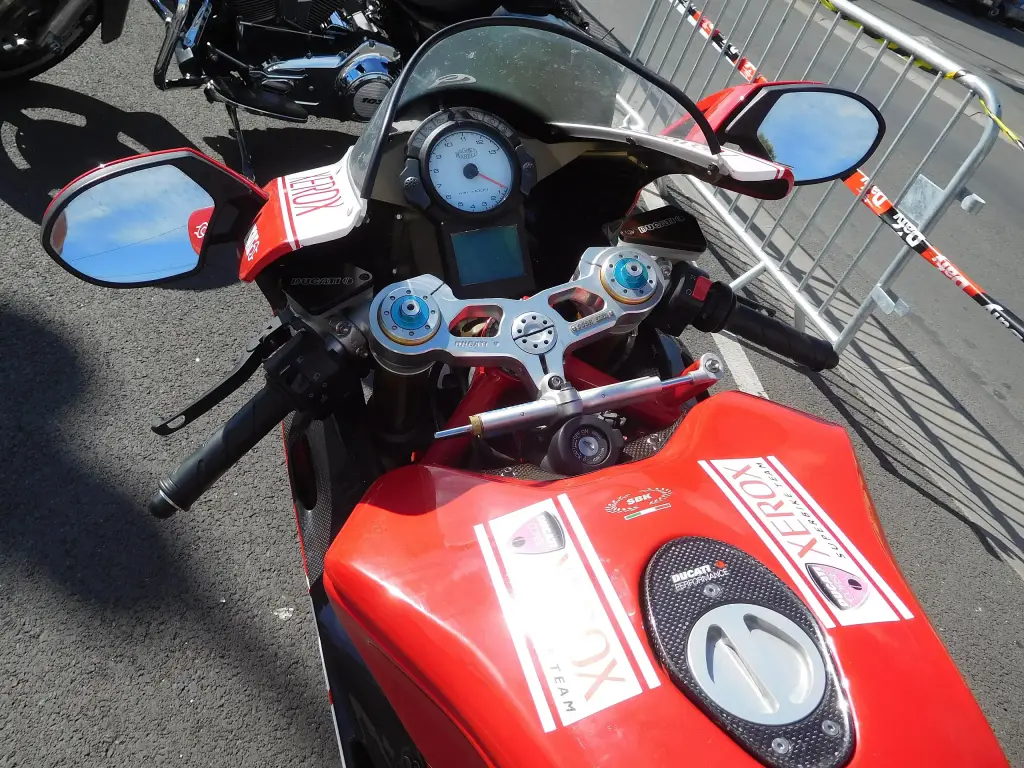
The Ducati 999 is a sport bike made by Ducati from 2003 to 2006. It superseded the Massimo Tamburini-designed Ducati 916, 996 and 998 range of superbikes. It was designed by Pierre Terblanche amid much controversy over its styling.
Ducati 999 at a glance
| Maker | Ducati, Borgo Panigale |
|---|---|
| Production | 2003–2006 |
| Designer | Pierre Terblanche |
| Predecessor | Ducati 916, 996 and 998 |
| Engine | 90° L-twin with desmodromic valves |
| Versions | 999, 999S, 999R |
| 0–100 km/h | under 3 seconds for the S and R |
| Top speed | over 270 km/h |
| Raced until | 2007 season in World Superbike |
| Successor | Ducati 1098 |
History of the Ducati 999
A new shape after Tamburini
The 999 replaced the 916, 996 and 998 family drawn by Massimo Tamburini. Pierre Terblanche’s design was a deliberate break with that shape, and it divided Ducati fans from the start. The motorcycle is known as a high-performance, race-oriented machine. With the traditional Ducati L-twin desmodromic engine layout it has a linear power delivery, with high power and torque available even at low revolutions.
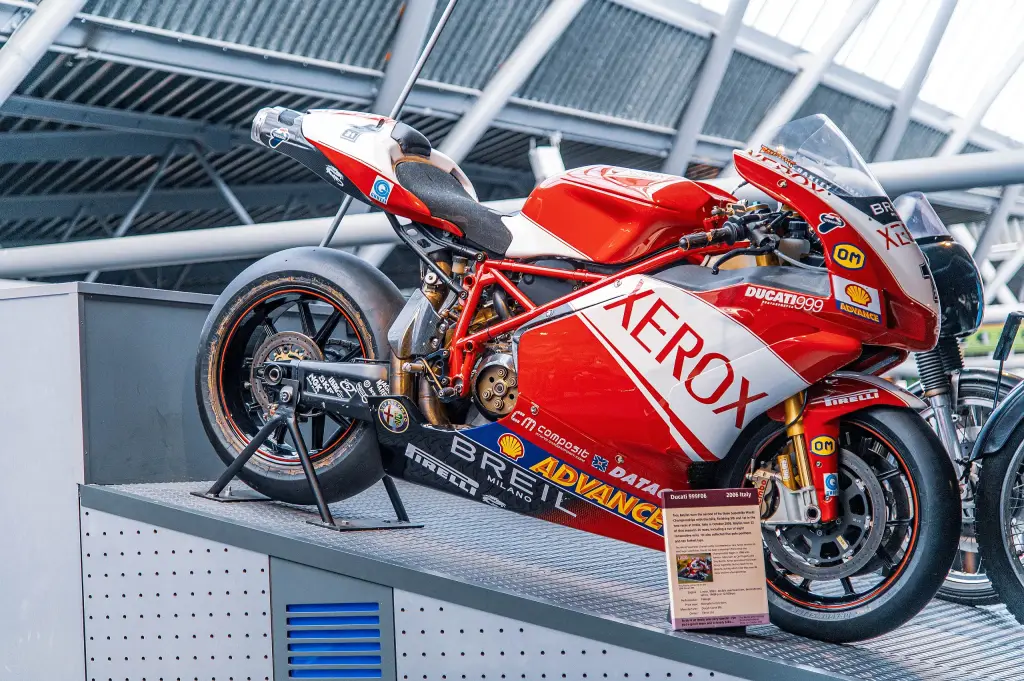
The S and R versions
More powerful 999S and 999R versions were introduced, both capable of 0–100 km/h in under three seconds and a top speed of over 270 km/h. The most loved among enthusiasts are the later single-seat Monoposto models with the Superbike rear trailing arm. With high-specification suspension and a trellis chassis, the 999 was one of the finest handling motorcycles of its time.
Racing
From the start the 999 was successful in the Superbike World Championship. Neil Hodgson won the title in 2003, James Toseland in 2004 and Troy Bayliss in 2006. Gregorio Lavilla also won the 2005 British Superbike Championship on a 999 F04. The model was raced in the world series through 2007, despite no longer being produced, while the rules were changed to allow the new 1098 to compete.
What the press said
A 2003 road test in Newsweek said the 999 resembled “a red Pegasus on wheels”, praising its stylishness and its sheer velocity. The 2005 999S won the Maxisport category of the international Masterbike 2005 comparison and finished second overall. Motor Cycle News of the UK called it “simply the best V-Twin on the planet”, and Motorcyclist praised its front-end grip and strong Brembo brakes.
Design and features
- Terblanche styling: a clean break with the Tamburini line, controversial from its launch.
- Desmodromic L-twin: linear power delivery with strong low-rev torque.
- Chassis: trellis frame and high-specification suspension, praised for handling.
- Monoposto with SBK trailing arm: the later single-seat version most valued by enthusiasts.
- Racing record: world titles in 2003, 2004 and 2006.
Ducati 999 versions
- 999 (2003–2006): the standard model.
- 999S: the higher-specification road version, winner of the Maxisport class at Masterbike 2005.
- 999R: the most powerful version, the basis of the racing machines.
- 999 F04: the British Superbike racer that won the 2005 title with Gregorio Lavilla.
The 999 replaced the Ducati 998, the last of the Tamburini line, and was replaced by the Ducati 1098. Its smaller sister was the Ducati 749. More Ducatis are in the Ducati collection.
Video: Ducati 999 – Termignoni exhaust sound
Video by CAR INFO on YouTube.
Sources
- Ducati 999, English Wikipedia: design, versions, racing, press reviews