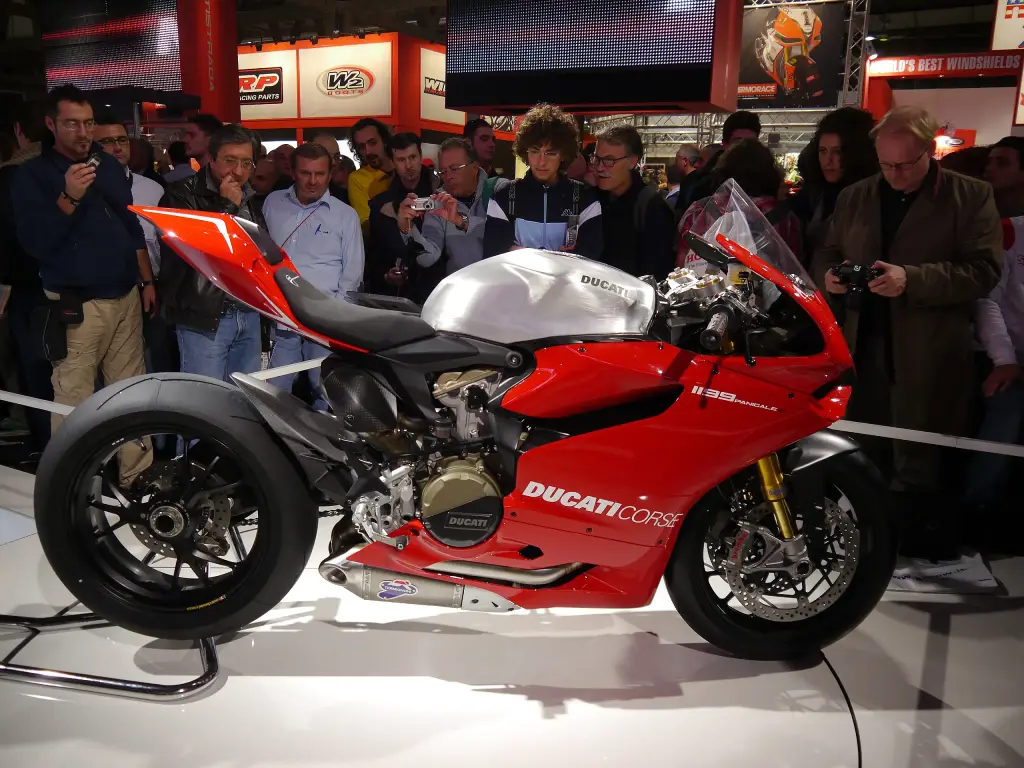
The Ducati 1199 Panigale is a 1,198 cc sport bike introduced at the 2011 Milan motorcycle show and named after the Borgo Panigale district of Bologna where Ducati is based. It replaced the 1198 and was the first Panigale, a family that later grew to include the 899, 959 and 1299 versions.
Ducati 1199 Panigale at a glance
| Maker | Ducati Motor Holding, Borgo Panigale |
|---|---|
| Shown | EICMA, November 2011 |
| On sale | from 24 January 2012 |
| Engine | 1198 cc Superquadro, 90° L-twin, desmodromic |
| Bore × stroke ratio | 1.84:1 |
| Claimed power | 195 hp (145 kW) at 10,750 rpm |
| Claimed torque | 133 N·m (98.1 lb·ft) at 9,000 rpm |
| Dry weight | 164 kg (362 lb) |
| Kerb weight | 188 kg (414 lb) |
| Top speed (tested) | 285.8 km/h (177.6 mph) |
| Chassis | aluminium monocoque, engine as stressed member |
History of the Ducati 1199 Panigale
The Panigale was a clean break with the previous generation. Instead of a steel trellis frame the 1199 used an aluminium monocoque airbox bolted to the engine, which became a stressed member; the result was a motorcycle noticeably smaller and lighter than a conventionally framed superbike. The exhaust and silencers moved from under the seat to under the engine.
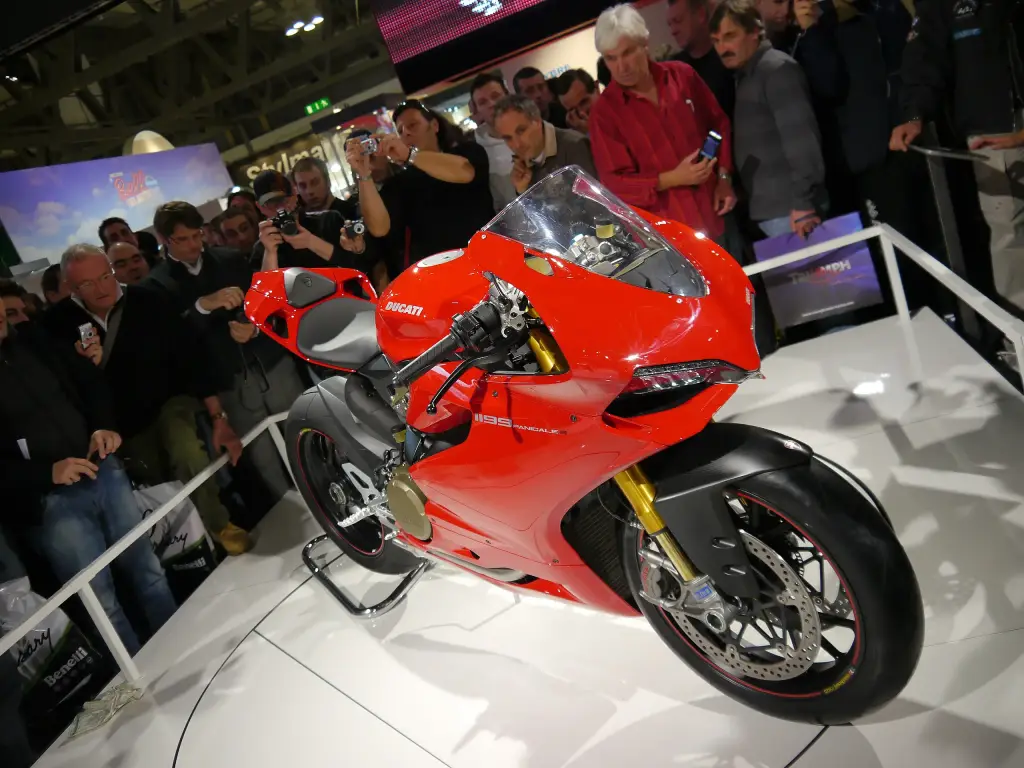
The new Superquadro engine was extremely oversquare at a bore-to-stroke ratio of 1.84:1, and its valve train used gears and a chain instead of the belt-driven camshafts of earlier Ducatis. Ducati claimed it was the world’s most powerful production twin at the time, with 195 hp on the engine test stand, and the bike was among the first production sport motorcycles with electronically adjustable suspension.
The range grew quickly. The 1199 Panigale R of 2013 was the World Superbike homologation model with titanium con-rods, carbon parts and 202 hp with the track-only exhaust; the 1199 S Senna of 2013 was a charity edition for the Instituto Ayrton Senna, following the 916 Senna of 1994; and the 1199 Superleggera of 2014 used magnesium, carbon and titanium to reach a dry weight of 155 kg, in a run of 500. Ducati later widened the family with the 899, 959 and 1299.
Design and features
- Monocoque chassis: the airbox doubles as the frame and the engine is a stressed member.
- Superquadro engine: gear and chain cam drive, 1.84:1 bore-stroke ratio, 195 hp claimed.
- Under-engine exhaust: a first for a Ducati superbike, moving mass low and central.
- Electronic suspension: rebound and compression damping adjusted electronically on the S.
Ducati 1199 Panigale versions
- 1199 Panigale (2012): the base model.
- 1199 Panigale S: Öhlins electronic suspension and lighter parts.
- 1199 Panigale S Tricolore: the S with ABS, DDA+ telemetry with GPS and titanium Termignoni exhausts.
- 1199 Panigale R (2013): homologation special, 202 hp with the race exhaust, 165 kg.
- 1199 Panigale S Senna (2013): 161 Brazilian-market bikes in Senna livery.
- 1199 Superleggera (2014): 500 bikes, magnesium monocoque, 155 kg dry.
The Panigale replaced the 1198, and its racing career followed that of the 1098 and 848 before it. More Ducatis are in the Ducati collection.
Sources
- Ducati 1199, English Wikipedia: specifications, versions, racing
- Ducati Panigale, Italian Wikipedia: range, versions, awards