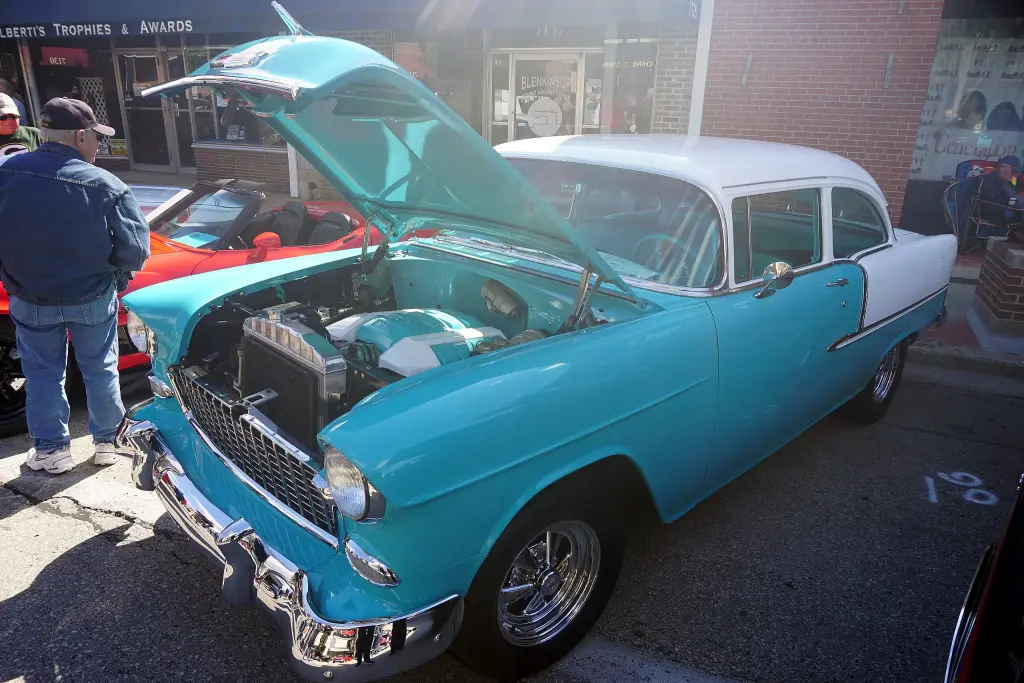
The Chevrolet 210, or Two-Ten, was the mid-range model of the Chevrolet line from 1953 until 1957. It replaced the Styleline DeLuxe, and in 1953 and 1954 it was the best-selling Chevrolet of all — a balance of style and equipment that cost less than the Bel Air.
Chevrolet 210 at a glance
| Production | 1953–1957 |
|---|---|
| Class | Full-size car, mid-range model |
| Replaced | Chevrolet Styleline DeLuxe |
| Replaced by | Chevrolet Biscayne |
| 1953 body styles | Convertible, Sport Coupe hardtop, two- and four-door sedans, four-door wagons |
| First engines | 235 cu in Thrift-King six, 108 hp; Blue Flame six, 115–125 hp |
| V8 from 1955 | 265 cu in Turbo-Fire, 162–225 hp |
| Top engine 1957 | 283 cu in with fuel injection, 283 hp |
| Transmissions | Three-speed manual, overdrive, Powerglide; Turboglide from 1957 |
| Station wagons | Handyman, Townsman, Beauville nine-seater from 1956 |
History of the Chevrolet 210
The Two-Ten arrived for 1953 as the replacement for the Styleline DeLuxe and sold best of all Chevrolets in 1953 and 1954. It offered more style and equipment than the base 150 but cost less than the Bel Air, and for 1953 it was available in the widest choice of body styles in the range: a convertible, a Sport Coupe hardtop, two- and four-door sedans and four-door station wagons. Unlike the 150, the Two-Ten could always be ordered with the same luxury options as the Bel Air, including the Powerglide automatic, power windows and a power seat.
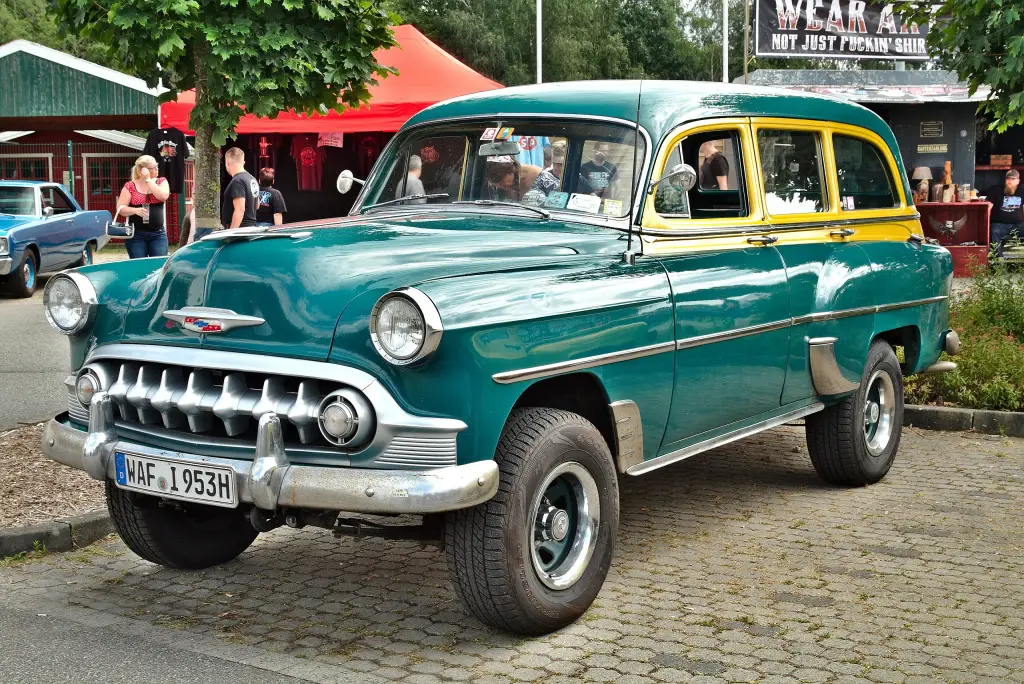
As American buyers turned towards luxury, the Bel Air began to outsell both the 150 and the 210. Chevrolet answered by reintroducing the Two-Ten Sport Coupe hardtop in the middle of the 1955 model year and adding a four-door Two-Ten Sport Sedan for 1956, but neither matched the Bel Air, being only about a hundred dollars cheaper while offering less trim and prestige. On the wagon side the Townsman was the top Two-Ten wagon in 1953, moved up to the Bel Air for 1954 and returned in 1955; the cheaper Handyman, a four-door wagon in 1953–1954, became a two-door for 1955–1957, and both were joined by a nine-passenger Beauville four-door wagon in 1956–1957.
The 1955 model year brought a new chassis, the first small-block V8 and 11-inch drum brakes, and the Two-Ten buyer could choose any powertrain in the range. For 1957 the Two-Ten shared the wedge-shaped side trim of the Bel Air, but the wedge was painted in body or two-tone colour instead of being filled with an aluminium panel, and the Chevrolet script sat inside it. The Two-Ten was replaced by the Biscayne after 1957.
Design and features
- Best-seller of 1953–1954: the middle model outsold both the 150 and the Bel Air in the first two years.
- Full option list: Powerglide, power windows and power seat were available, unlike on the 150.
- Widest body range: convertible, hardtop, sedans and wagons in the first year.
- Small-block V8 from 1955: the 265 and later the 283, up to 283 hp with fuel injection.
Chevrolet 210 versions
- Sport Coupe hardtop: the pillarless two-door, reintroduced mid-1955.
- Sport Sedan (1956–1957): the four-door hardtop.
- Handyman and Townsman wagons: the cheaper and the better-equipped estate cars.
- Beauville (1956–1957): a nine-passenger four-door wagon.
The Two-Ten sat between the Chevrolet 150 and the Chevrolet Bel Air. More cars are in the Chevrolet collection.
Sources
- Chevrolet 210, English Wikipedia: history, body styles, engines, transmissions