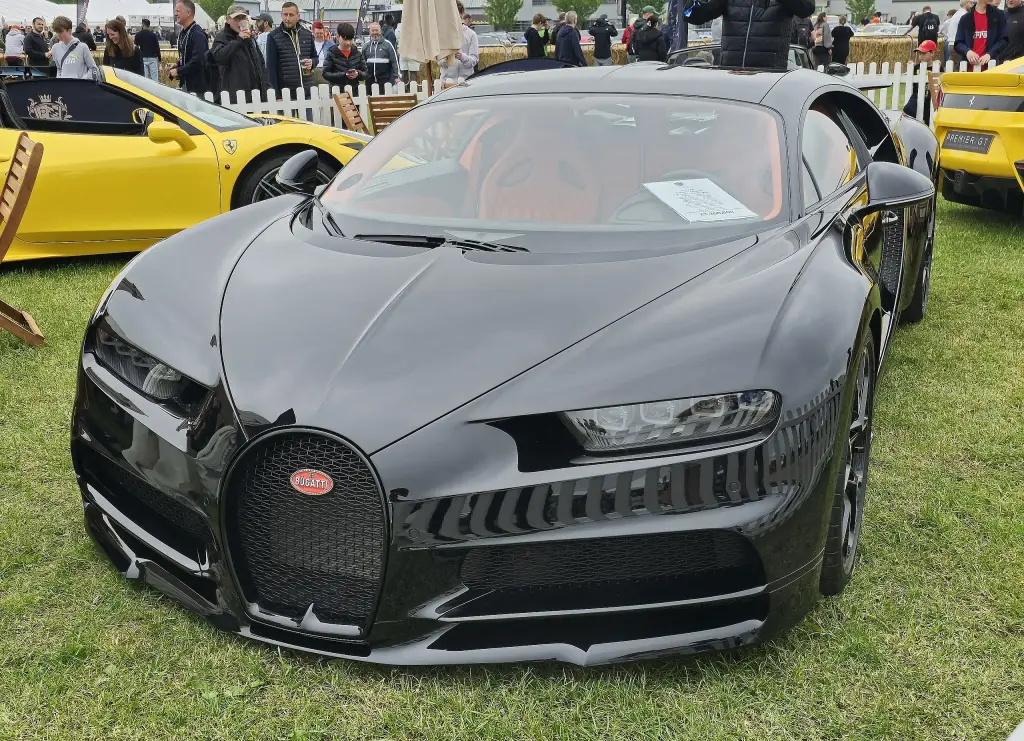
The Bugatti Chiron is a mid-engine two-seater that replaced the Veyron as the company’s flagship. Designed in Germany by Bugatti Engineering GmbH and built in Molsheim, it was first shown at the Geneva Motor Show on 1 March 2016.
Bugatti Chiron at a glance
| Maker | Bugatti Automobiles S.A.S., Molsheim, France |
|---|---|
| Production | 2016–2024 |
| Class | mid-engine two-seat hypercar |
| Engine | 7,993 cc quad-turbocharged W16 |
| Power | 1,500 PS (1,479 hp) at 6,700 rpm |
| Torque | 1,600 N·m from 2,000 to 6,000 rpm |
| 0–100 km/h | 2.4 seconds |
| 0–300 km/h | 13.6 seconds |
| Top speed | limited to 420 km/h |
| Base price | €2,400,000 |
| Fuel consumption | 22.5 L/100 km combined |
History of the Bugatti Chiron
A Veyron with more of everything
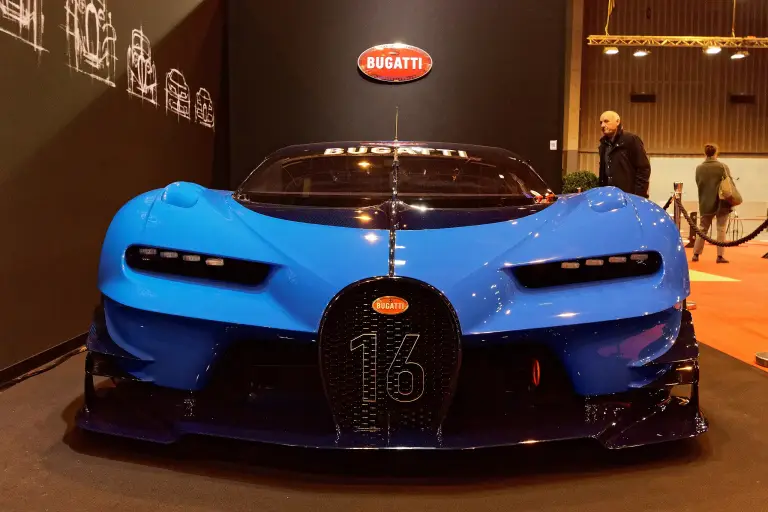
The Chiron was first previewed by the Bugatti Vision Gran Turismo concept at the 2015 Frankfurt Motor Show and went on sale at Geneva in March 2016. It is named after the Monégasque racing driver Louis Chiron. The main carry-over from the Veyron is the 8.0-litre quad-turbocharged W16, heavily updated to produce 1,500 PS and 1,600 N·m — 300 PS more than the Veyron Super Sport and 499 PS more than the original Veyron. Like its predecessor it uses a carbon fibre body structure, independent suspension and a Haldex all-wheel drive system; the body has a stiffness of 50,000 Nm per degree.
Performance
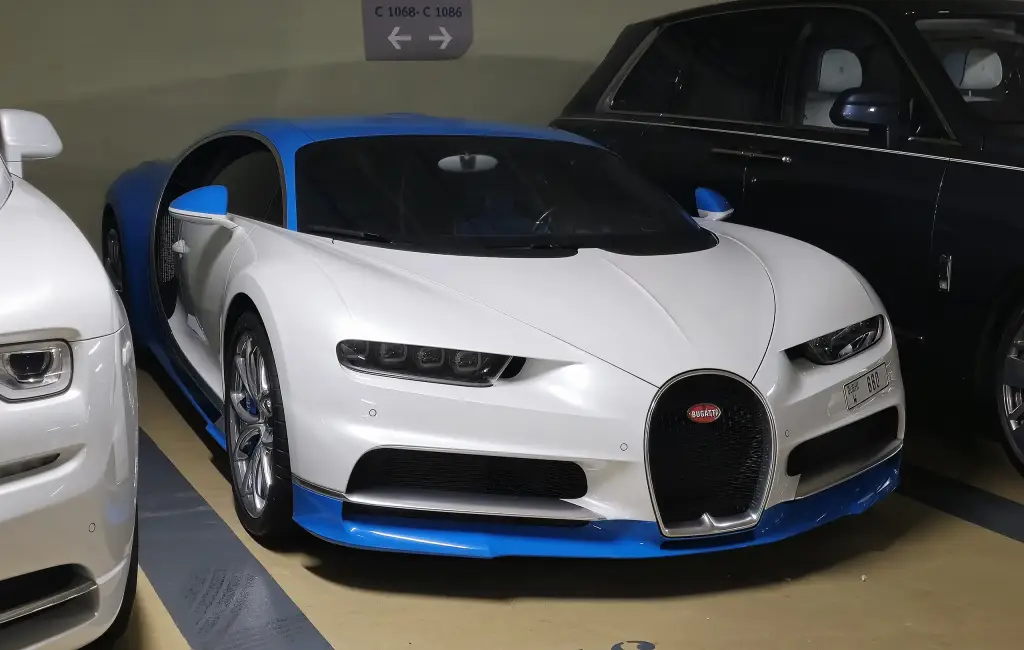
Bugatti quotes 0–100 km/h in 2.4 seconds, 0–200 km/h in 6.5 seconds and 0–300 km/h in 13.6 seconds. In a record-setting test in 2017 a Chiron reached 400 km/h in 32.6 seconds and then needed 9.4 seconds to stop. Top speed is electronically limited to 420 km/h, or 375–380 km/h without the special key, because no tyre then made could take the stress of the car’s true maximum.
Sales and the end of the run
The first 200 cars were sold before the first was delivered; the base price was €2,400,000 with a €200,000 deposit. Deliveries began in March 2017 in Europe and the Middle East. Every Chiron had been sold by January 2022, and in September 2023 Bugatti built the last base-specification car. The production run ended in May 2024 with the Chiron L’Ultime, a North-American Super Sport finished in fading blue paint and covered with the car’s history. Bugatti still makes cars based on the Chiron.
Sport versions
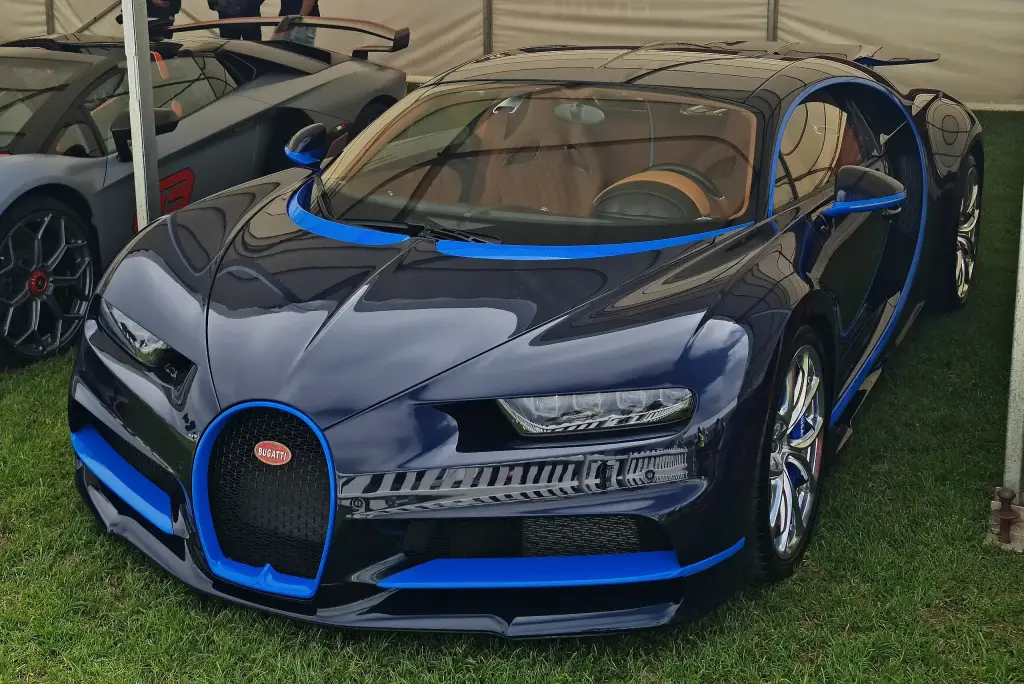
At Geneva in 2018 came the Chiron Sport, mechanically identical but 18 kg lighter through a lighter exhaust, more carbon fibre and stiffer suspension, with revised steering and torque vectoring; it cost an extra US$400,000. The 110 Ans Bugatti of February 2019 was a Chiron Sport in matte Steel Blue carbon fibre with French flag accents, limited to 20 cars. In September 2019 Bugatti presented the Chiron Super Sport 300+, limited to 30 cars at €3.5 million net, with a 1,600 PS version of the W16, longer gear ratios, revised aerodynamics and a body 248.9 mm longer.
Design and features
- Quad-turbo W16: an 8.0-litre engine of 1,500 PS and 1,600 N·m.
- Carbon fibre structure: a body of 50,000 Nm per degree stiffness.
- 420 km/h limit: restricted for tyre safety, 375–380 km/h without the top-speed key.
- Record acceleration: 400 km/h in 32.6 seconds in 2017, then a 9.4-second stop.
Bugatti Chiron versions
- Chiron (2016): the standard car, 1,500 PS.
- Chiron Sport (2018): 18 kg lighter, stiffer and with torque vectoring.
- Chiron Sport 110 Ans Bugatti (2019): 20 cars in matte Steel Blue.
- Chiron Super Sport 300+ (2019): 30 cars, 1,600 PS, €3.5 million net.
- Chiron L’Ultime (2024): the last car of the run.
The Chiron replaced the Veyron, and its W16 descends from the engine of the EB 110 project era. More cars are in the Bugatti collection.
Sources
- Bugatti Chiron, English Wikipedia: specifications, performance, sales, variants