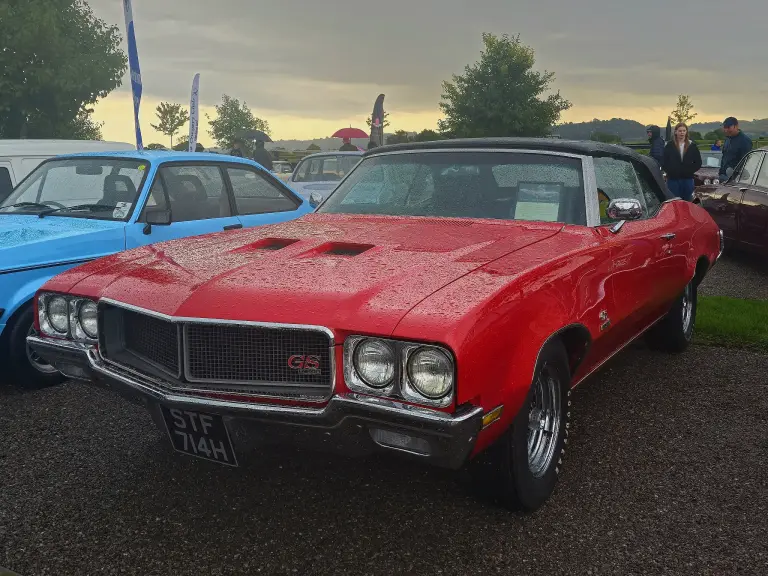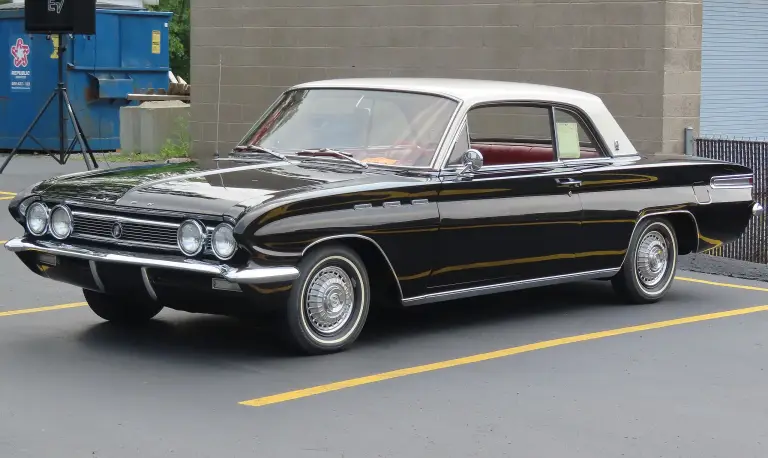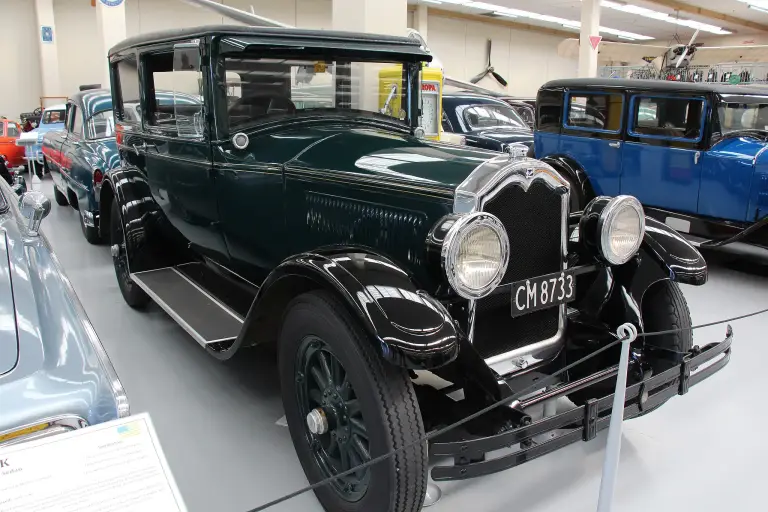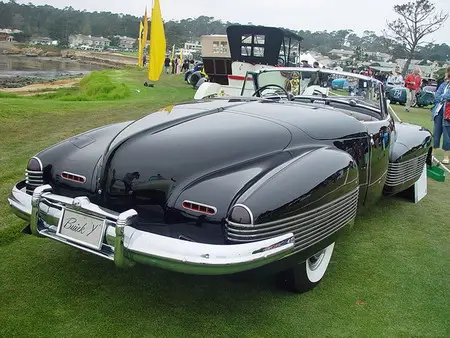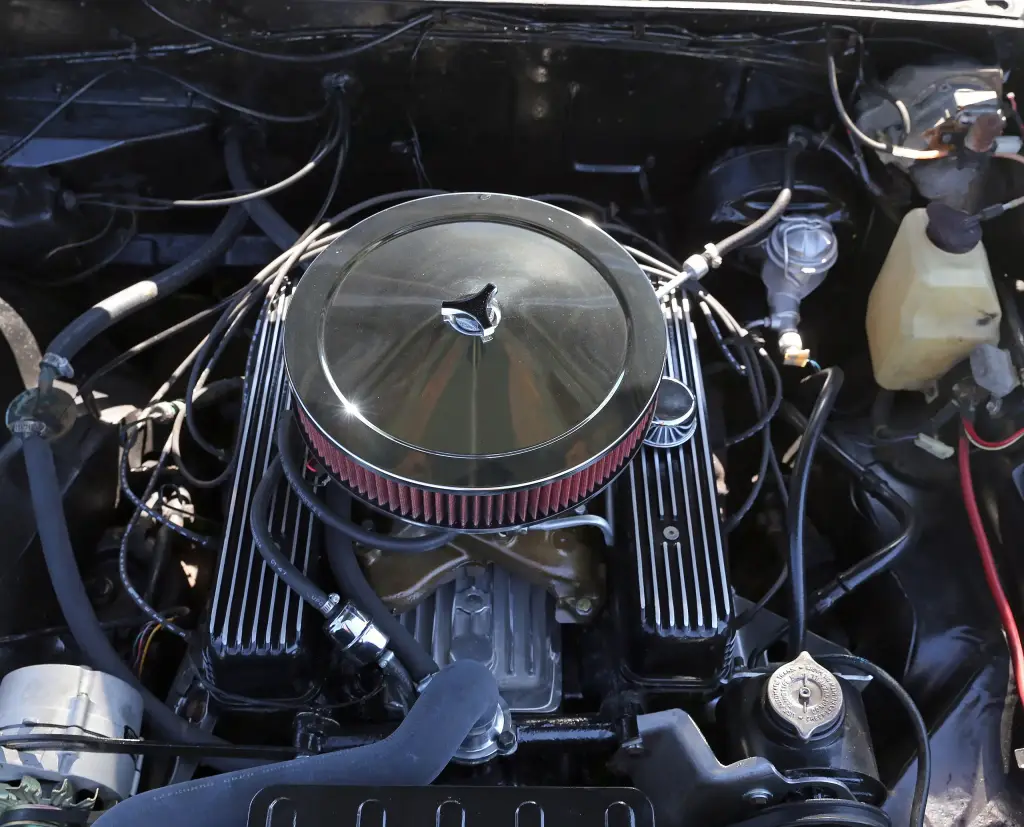
The Buick V8 is a family of overhead-valve V8 engines built by Buick from 1953 to 1981. All were 90-degree, water-cooled, naturally aspirated units, and they fall into three groups: the Nailheads, the small-blocks and the big-blocks.
Buick V8 engine at a glance
| Maker | Buick, General Motors |
|---|---|
| Production | 1953–1981 |
| Layout | 90-degree OHV V8, water-cooled |
| Development began | 1944 |
| First engine | 322 cu in (5.3 L), 1953 |
| Nailheads | 1953–1966, 264–425 cu in |
| Small-blocks | 1961–1982, 215–350 cu in |
| Big-blocks | 1967–1976, 400–455 cu in |
| Bore spacing | 4.75 in (121 mm) for Nailhead and big-block |
| Nickname | Nailhead, from the long, small valves |
Based on one source, the English Wikipedia article on the Buick V8 engine.
History of the Buick V8 engine
Buick had built only inline engines since 1903, but work on its first V8 began in 1944. The engine made its debut in the 1953 cars after a million miles of road testing, and Buick set out to make it powerful, efficient, smooth, quiet, durable and easy to service in the lightest and most compact package it could build at reasonable cost.
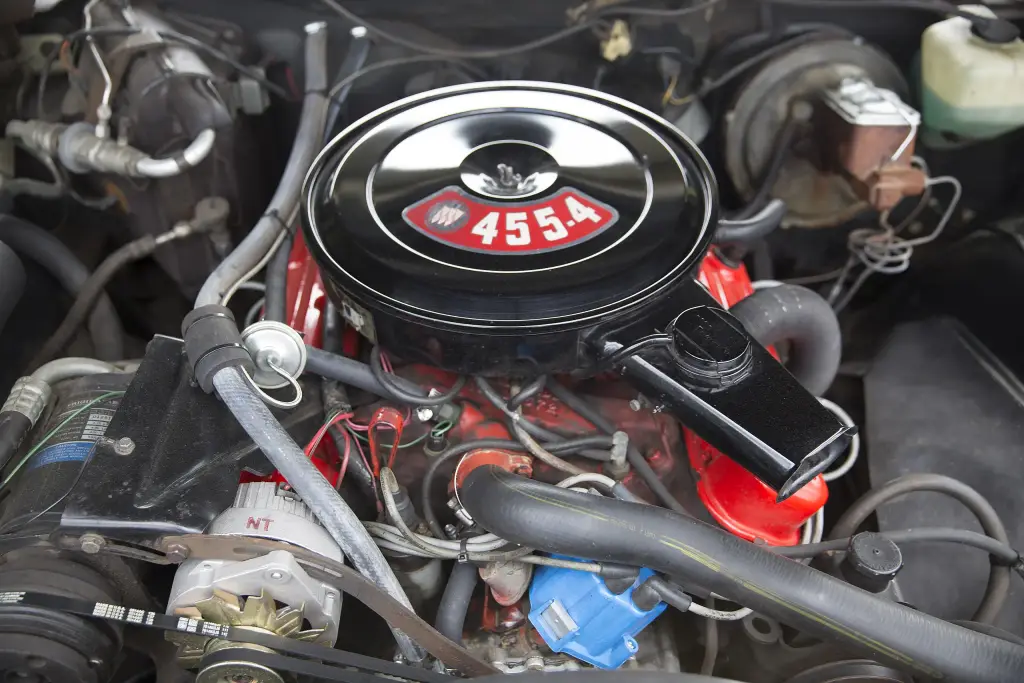
Moving from inline to 90-degree V engines raised worries about clearance under the bonnet, especially on the steering-gear side. Buick solved that with an oversquare design — a stroke-to-bore ratio of 0.8:1 — and vertical, in-line valve positioning, which kept the engine narrow. With an inch more front track on the 1953 cars, the company said all the chassis improvements developed for the straight-eight could be carried over.
The new engine had combustion chambers with a spark plug closer to the centre than any other American engine of the time, and its exhaust valve was smaller than in rival big V8s. Buick argued that a smaller valve opening earlier and higher matched the flow of a larger one, gave a more compact chamber, ran cooler and cost less. Compression ratios were 8:1 and 8.5:1, higher than Chrysler’s 1953 engines, and the whole unit was shorter, narrower and lighter than the big engines of the day.
Three families followed. The Nailheads, built from 1953 to 1966 in two generations, ran from 264 to 425 cubic inches and take their nickname from their unusually long, small valves and horizontal valve covers. The small-blocks were made from 1961 to 1982 in sizes from 215 to 350 cubic inches, and the big-blocks from 1967 to 1976 in 400 to 455 cubic inches. The terms describe the block, not the displacement.
Nailheads and big-blocks share a 4.75-inch bore spacing, while the small-block had its own block and spacing. Buick’s 350, 400 and 455 share their displacements with other GM divisions but are entirely different designs. A Nailhead can be recognised by valve covers whose top surfaces are horizontal; later Buick V8s have a front-mounted distributor tilted towards the driver and siamesed centre exhaust ports.
Design and features
- Three families: Nailhead, small-block and big-block, each with its own block.
- Compact by design: oversquare bore and vertical valves kept the engine narrow.
- Centrally placed spark plug: closer to the middle than in rival engines.
- Easy to identify: horizontal valve covers mark a Nailhead.
Buick V8 engine versions
- Nailhead first generation (1953–56): 322 and 264 cubic inches.
- Nailhead second generation (1957–66): 364, 401 and 425.
- Small-block (1961–82): 215 to 350 cubic inches, including the aluminium 215.
- Big-block (1967–76): 400, 430-based and 455 cubic inches.
The first Buick V8 went into the Roadmaster and Super, and the 425 Nailhead powered the Wildcat; the small-block’s aluminium ancestor also fathered the Buick V6. More Buicks are in the Buick collection.
Sources
- Buick V8 engine, English Wikipedia: development, design, three engine families