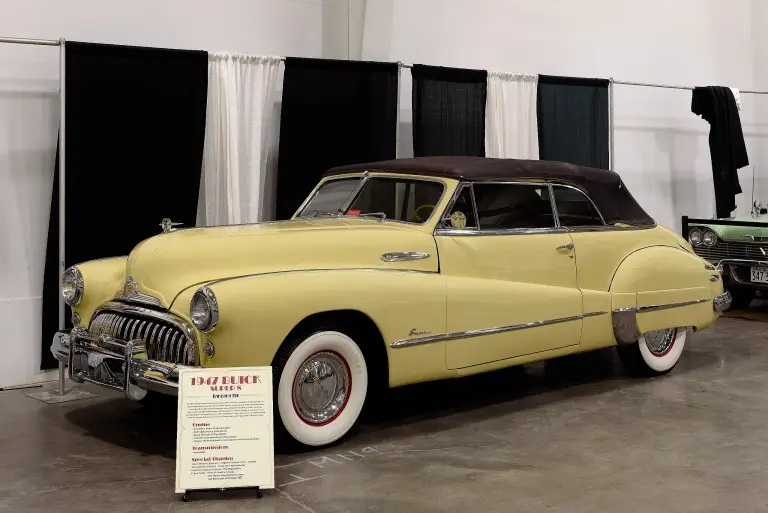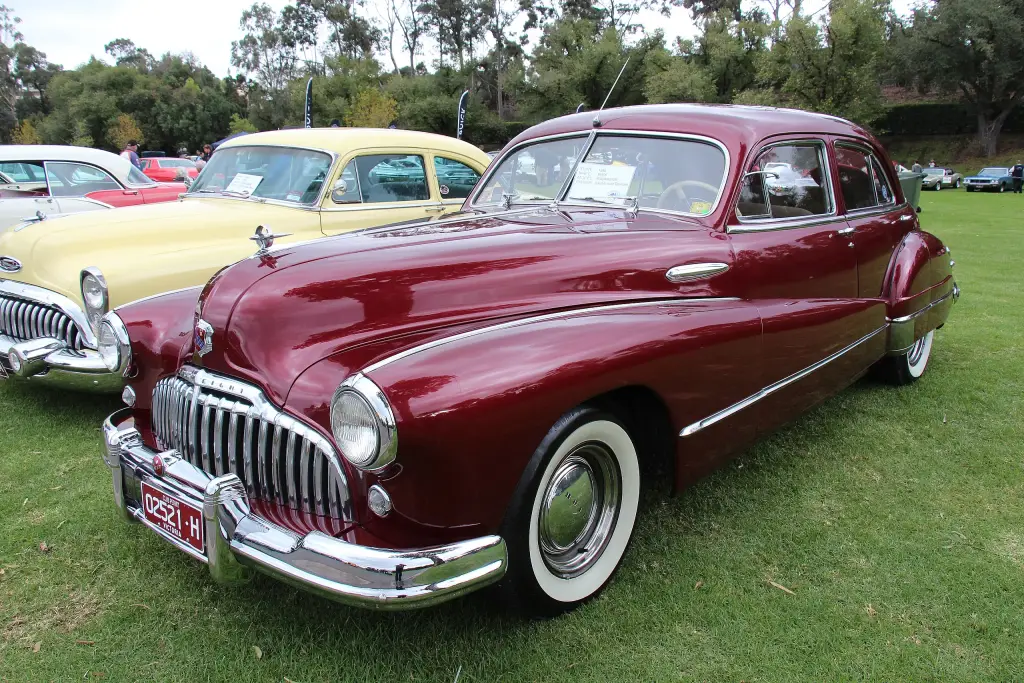
The Buick Roadmaster was built in three separate periods: from 1936 to 1942, from 1946 to 1958 and again from 1991 to 1996. Between 1946 and 1957 it was Buick’s flagship, and its last estate car closed the history of the American full-size wagon.
Buick Roadmaster at a glance
| Maker | Buick, General Motors |
|---|---|
| Production | 1936–42, 1946–58, 1991–96 |
| Precursor | Series 80 (1931–1935) |
| 1932 engine | 344.8 cu in straight-eight, 104 hp |
| 1936 engine | 320.2 cu in straight-eight, 130 hp |
| 1936 sedan price | US$1,255 |
| 1936 production | 16,049 Roadmasters |
| Platform | GM C platform until 1991, then B-body |
| 1991 model | 10 in longer than the Park Avenue |
| Estate wagon | from 1947 to 1996 |
Based on one source, the English Wikipedia article on the Roadmaster. The record titled «Buick roadster» shows the same car and is covered here.
History of the Buick Roadmaster
The Roadmaster’s ancestor was the Series 80 of 1931–33, the first Buick with the 344.8-cubic-inch overhead-valve straight-eight, making 104 hp and rising to 113 hp in 1932. It shared its GM C platform with the Series 90 and was positioned as a luxury sedan with an eight-cylinder engine. Body styles began as a coupe or sedan, gained a Victoria coupe for 1932, and in 1933 added convertibles reviving the phaeton name. The Series 80 sold 24,117 cars before being dropped at the end of 1933.
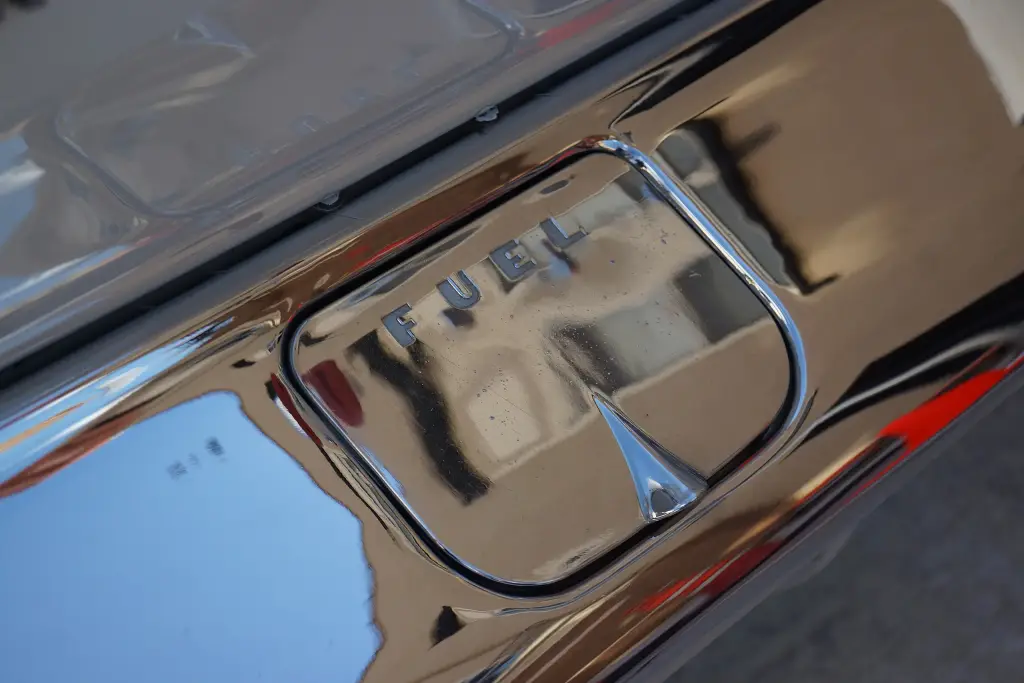
For 1936 Buick gave names to its whole range and the Series 80 became the Roadmaster. That year the engines were simplified from four sizes to two, and the Roadmaster received the 320.2-cubic-inch straight-eight of 130 hp, an all-steel Turret Top and hydraulic brakes. The sedan weighed 4,098 pounds and cost US$1,255 — $440 less than the cheapest Cadillac. A four-door convertible phaeton was the only other body style, at US$1,565, of which 1,064 were built. Buick sales rose from just over 48,000 to nearly 158,000, with 16,049 Roadmasters.
The 1937 cars were restyled with all other GM models: a divided grille with horizontal bars, squared-off fenders and streamlined headlight shells, with overall height cut by an inch and a half. A Formal Sedan with a roll-down glass partition joined the range at US$1,641, and 452 were sold.
The Roadmaster Estate station wagon arrived in 1947 and was built in several generations until 1996. Roadmasters of 1936 to 1958 used Buick’s longest non-limousine wheelbase and shared their structure with the entry-level Cadillac Series 65, the Buick Limited and, after 1940, the Oldsmobile 98.
The name returned in 1991 as Buick’s largest car. That generation was the first Roadmaster on GM’s B-body rather than the C-body, and it measured 10 inches longer than the C-body Park Avenue with a five-inch longer wheelbase. It shared its platform and powertrains with the Chevrolet Caprice, Cadillac Fleetwood and Oldsmobile Custom Cruiser. The Roadmaster Estate, the last full-size American station wagon and the last with exterior woodgrain trim, ended production after 1996.
Design and features
- Flagship status: Buick’s top model from 1946 to 1957.
- Longest wheelbase: the biggest non-limousine Buick of the pre-war years.
- Estate wagon: built from 1947 until the end of the line in 1996.
- 1991 revival: the largest Buick of its time, on the B-body.
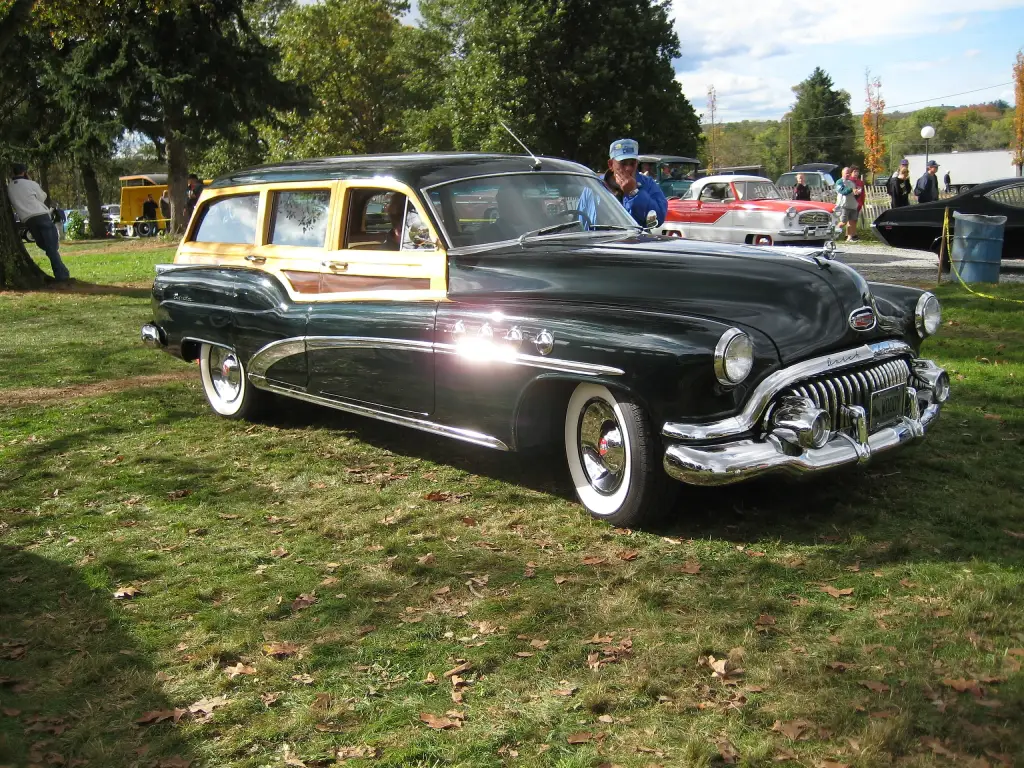
Buick Roadmaster versions
- Series 80 (1931–35): the model that became the Roadmaster.
- Roadmaster (1936–42, 1946–58): sedan, coupe, convertible and estate.
- Formal Sedan (1937): with a glass partition behind the driver.
- Roadmaster (1991–96): B-body sedan and Estate wagon.
The Roadmaster was the bigger stablemate of the Special and the Century, and it gave its name to the Estate wagon line. More Buicks are in the Buick collection.
Sources
- Buick Roadmaster, English Wikipedia: Series 80, 1936-37 cars, three production periods