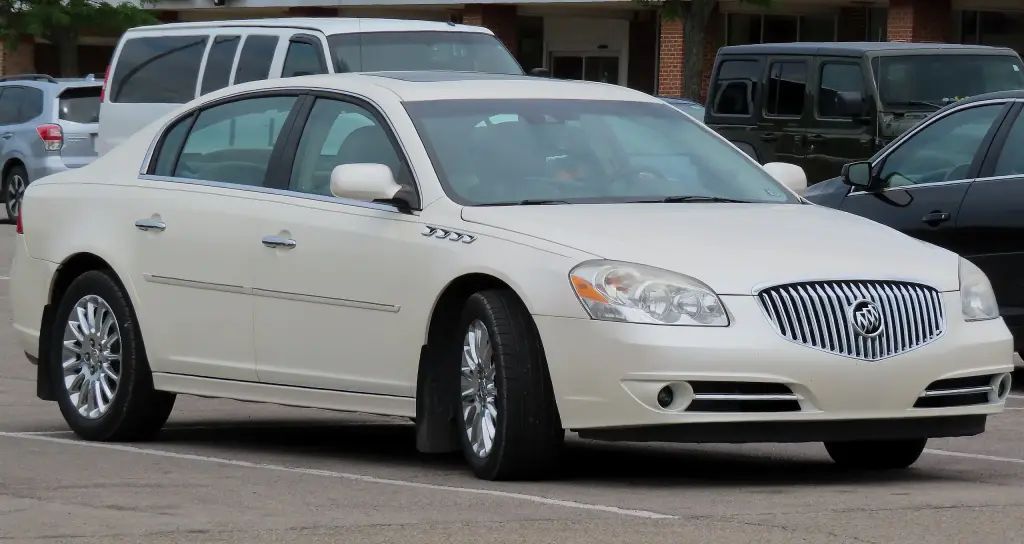
The Buick Lucerne is a full-size sedan built from 2005 to 2011 and named after the Swiss city of Lucerne. It replaced both the LeSabre and the Park Avenue, and it was Buick’s flagship until the second-generation LaCrosse took over.
Buick Lucerne at a glance
| Maker | Buick, General Motors |
|---|---|
| Production | 2005–2011 |
| Class | full-size sedan |
| Platform | revised G platform, called H by GM |
| Standard engine | 3.8 L 3800 V6 |
| Optional engine | 4.6 L Cadillac Northstar LD8 V8 |
| From 2009 | 3.9 L LZ9 V6 as the base engine |
| Suspension option | Magnetic Ride Control |
| VentiPorts | three per fender on V6 cars, four on V8s |
| Assembly | Detroit/Hamtramck, alongside the Cadillac DTS |
| Last car built | 15 June 2011 |
Based on one source, the English Wikipedia article on the Lucerne.
History of the Buick Lucerne
The Lucerne replaced both the full-size LeSabre and the Park Avenue, using a revised version of GM’s G platform that the company called the H platform. It was introduced with the familiar 3.8-litre 3800 V6 as standard and a 4.6-litre Cadillac Northstar LD8 V8 as an option, plus an optional active suspension sold as Magnetic Ride Control. From 2005 all GM vehicles with the 3.8 V6 became the first SULEV-compliant cars.
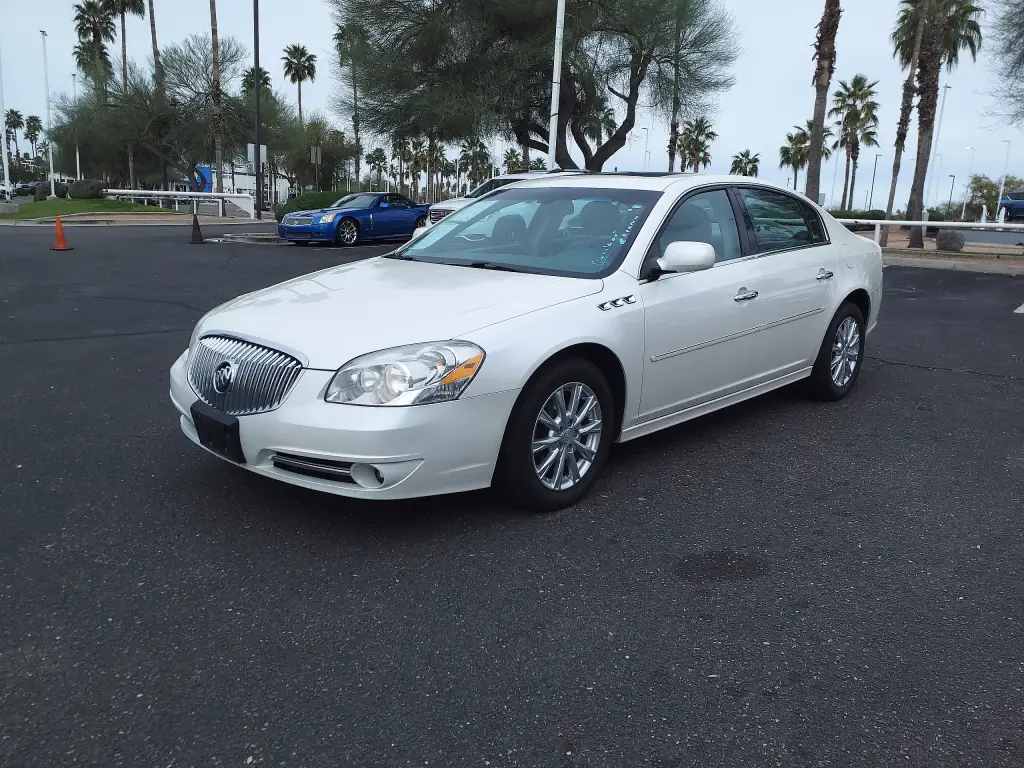
The styling carried a row of VentiPorts on each front fender, counted honestly by cylinder bank: three on each side for the V6 and four for the V8. The CXL trim added a long list of premium equipment. The car was built at GM’s Detroit/Hamtramck plant alongside the Cadillac DTS, a plant that won J.D. Power Initial Quality Awards from 2004 to 2006.
A Super trim was added at the 2007 New York show, with the 4.6-litre Northstar L37 V8, 17 hp more, revised trim, new front styling and a rear spoiler. All Lucernes received a modest update for 2008, adding optional blind spot monitoring and lane departure warning, and two new trims appeared — the CXL Special Edition and the Super.
For 2009 the base engine changed to the 3.9-litre LZ9 V6, and Buick added Bluetooth, XM NavTraffic and flex-fuel capability at no extra cost. The 2010 cars made the Super’s rocker panels, grille and fog lights standard, and the 2011 model was largely unchanged.
The last Lucerne was built on 15 June 2011, and the second-generation LaCrosse replaced it as Buick’s flagship for 2012. In crash tests the IIHS gave the Lucerne a Good score for front impacts and Acceptable for side impacts, though it also found that 2006–08 cars had the highest fatality rate in the large four-door class.
Design and features
- Two engines: the 3800 V6 or a 4.6-litre Northstar V8.
- Magnetic Ride Control: optional active suspension.
- VentiPorts by cylinder count: three per side on V6 cars, four on V8s.
- Super trim: the V8 performance model from 2008.
Buick Lucerne versions
- CX and CXL: the standard V6 trims.
- CXL Special Edition: added for 2008.
- Super: 4.6 Northstar V8, revised styling and a rear spoiler.
The Lucerne replaced the LeSabre and the Park Avenue, and it was replaced by the LaCrosse. More Buicks are in the Buick collection.
Sources
- Buick Lucerne, English Wikipedia: engines, trims, updates, safety, end of production