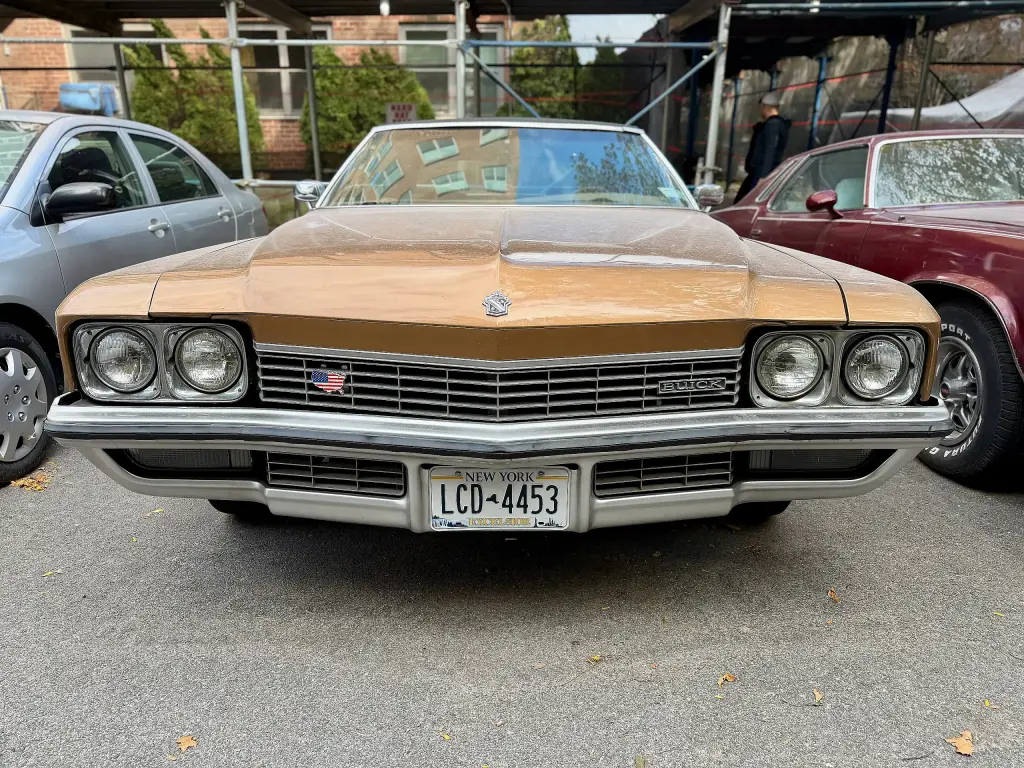
The Buick LeSabre was a full-size car built from 1959 to 2005. The name is French for «the sabre», and the car was Buick’s entry-level full-size model through all eight of its generations — and consistently its best seller.
Buick LeSabre at a glance
| Maker | Buick, General Motors |
|---|---|
| Production | 1959–2005 |
| Class | full-size car |
| Bodies | coupe, sedan, hardtop, convertible, station wagon |
| 1959–61 engine | 364 cu in V8, 250 hp |
| 1962–63 engine | 401 cu in V8, 280 hp |
| From 1970 | 455 cu in V8 optional |
| From 1977 | downsized, still rear-wheel drive |
| From 1986 | front-wheel drive, unibody |
| Later engine | 3.8 L (231 cu in) V6 |
| Trims | Custom and Limited |
Based on one source, the English Wikipedia article on the LeSabre.
History of the Buick LeSabre
The LeSabre name first appeared on the 1951 Le Sabre show car, which introduced aircraft-inspired ideas such as the wrap-around windscreen and tail fins. In 1959 it became the production name of what had been the Buick Special, and it was one of four nameplates launched that year alongside the Invicta, Electra and Electra 225 — the one that lasted longest.
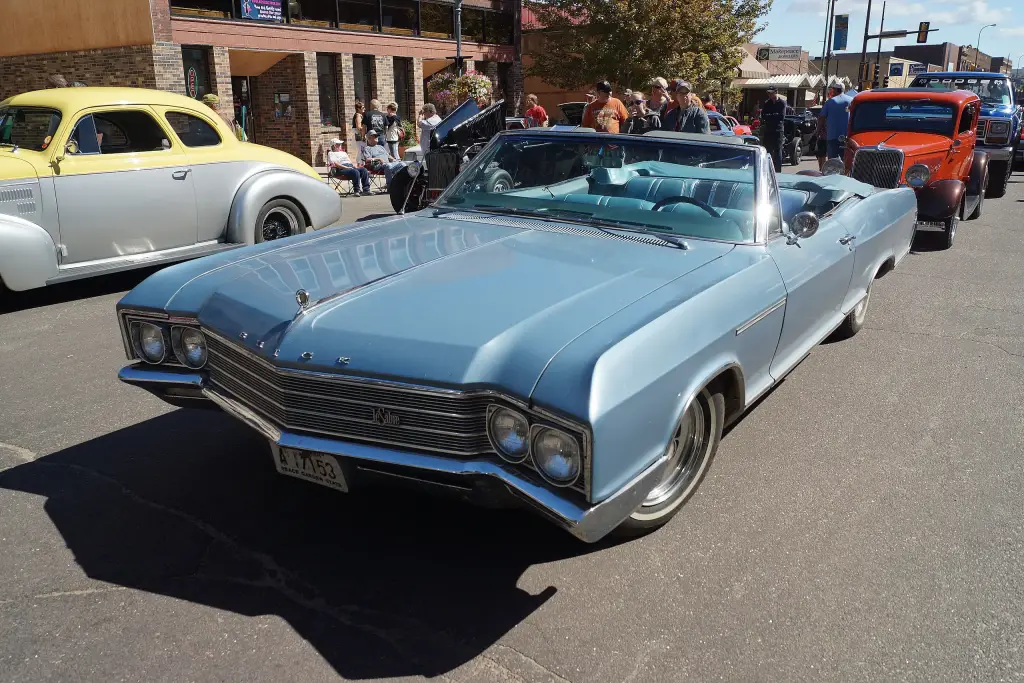
For 1959 the LeSabre used the 364-cubic-inch V8, smaller than the 401 in the Invicta and Electra. In standard form it made 250 hp, with a 300 hp four-barrel version optional. The 1959 styling was new across the range: slanted headlights, a chrome square grille and Delta-wing fins with round tail lamps. A three-speed manual was nominally standard but rarely ordered; almost everyone chose the Dynaflow automatic, power steering and power brakes.
From 1962–63 the LeSabre took a two-barrel 401 V8 of 280 hp. From 1964 it shared its engines with the mid-size Buicks — 300 cubic inches in 1964–65, 340 in 1966–67 and 350 in 1968–76 — while the Estate Wagon kept the bigger units. A 455 V8 returned as an option from 1970 to 1976.
The LeSabre was rear-wheel drive with body-on-frame construction from 1959 to 1985, the station wagon lasting to 1990. Convertibles were offered every year to 1975, and two- and four-door hardtops until 1976; from 1977 only pillared body styles were sold. The 1977 cars were the first downsized generation but kept rear drive and a separate frame.
The 1986 generation switched to front-wheel drive, unitary construction and a transverse engine, and the 3.8-litre V6 became the standard engine for most models; V8s disappeared after the last rear-drive cars in 1985. Two more front-drive generations followed in 1992 and 2000, and the LeSabre was offered in Custom and Limited trim. The last cars were built in 2005, after which the Lucerne took its place.
Design and features
- Entry-level model: the cheapest route into a full-size Buick for 46 years.
- Best seller: consistently Buick’s most popular full-size line.
- Two architectures: rear-drive body-on-frame until 1985, front-drive unibody from 1986.
- The 3800 V6: the engine that powered most later LeSabres.
Buick LeSabre versions
- Custom: the standard trim.
- Limited: the top trim.
- Estate Wagon: the load carrier, offered to 1990.
- Convertible: available every year to 1975.
The LeSabre succeeded the Special and was replaced by the Lucerne; it shared the showroom with the Electra. More Buicks are in the Buick collection.
Sources
- Buick LeSabre, English Wikipedia: range, engines, transmissions, generations