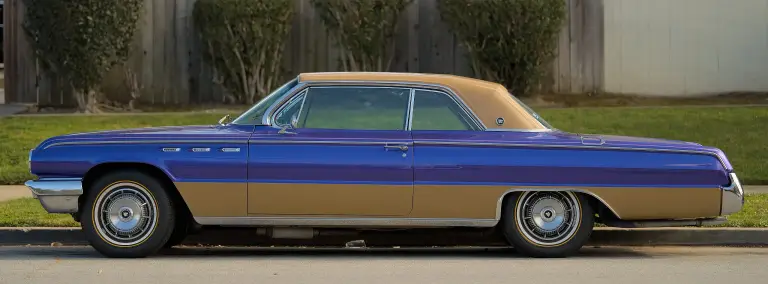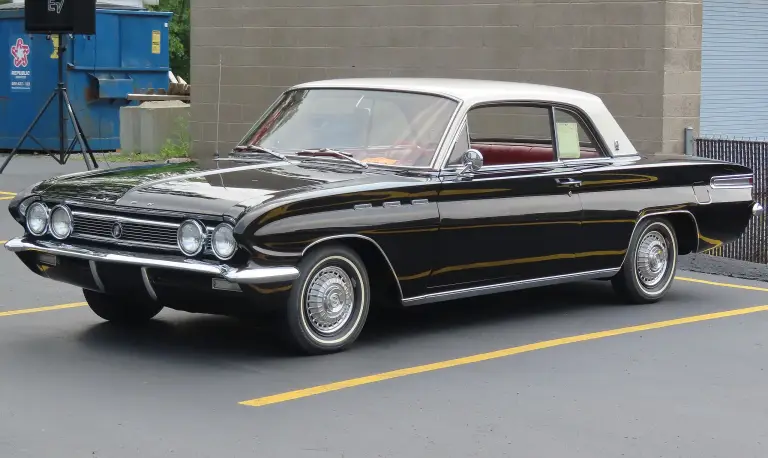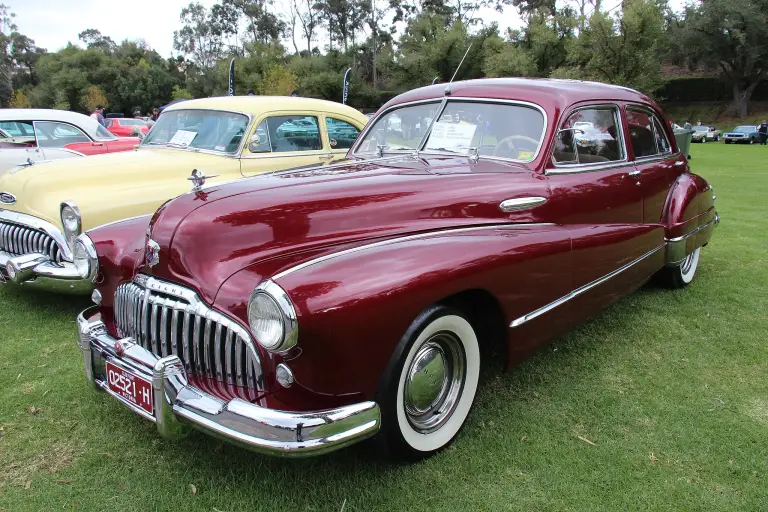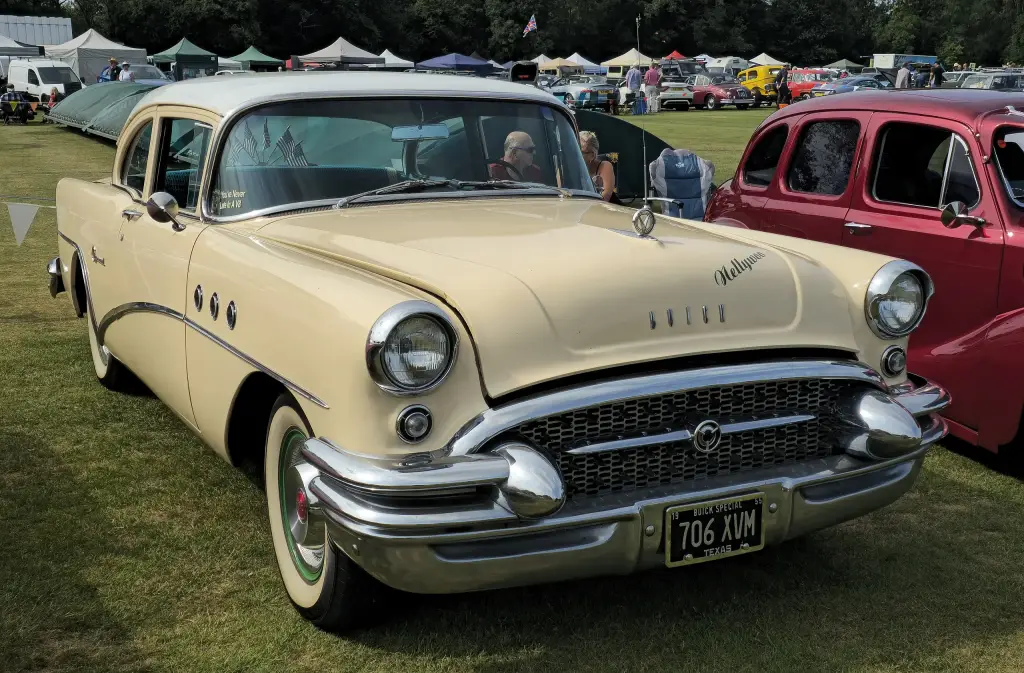
The Buick Special was usually Buick’s cheapest model. It started as a full-size car in 1936, returned in 1961 as a compact, became mid-size in 1964, and introduced the V6 engine that General Motors used for the next four decades.
Buick Special at a glance
| Maker | Buick, General Motors |
|---|---|
| First use | Series 40 of 1930, 1934–35 |
| Special name | 1936–1942, 1946–1958, 1961–1969 |
| 1935 engine | 233 cu in straight-eight, 93 bhp |
| 1936 wheelbase | 118 in, then 122 in |
| 1940 price | from US$795 (Business Coupe) |
| 1961 form | compact, shared with Pontiac Tempest and Oldsmobile F-85 |
| 1961 engine | 215 cu in (3.5 L) aluminium V8 |
| Legacy | introduced the modern Buick V6 |
| Later use | entry trim of the Century, 1975–79 and 1991–96 |
Based on one source, the English Wikipedia article on the Special.
History of the Buick Special
The Special’s ancestry runs through the Series 40 of 1930, which used a 257.5-cubic-inch overhead-valve straight-six of 80.5 bhp and was Buick’s most popular model that year with 74,257 built. After a pause in 1931, the Series 40 returned for 1934–35 with a 233-cubic-inch straight-eight of 93 bhp. It was the most affordable Buick, offered in six body styles: the five-passenger Sedan Model 41 cost US$925, and every Buick had a dashboard selector that allowed low-grade or premium fuel.
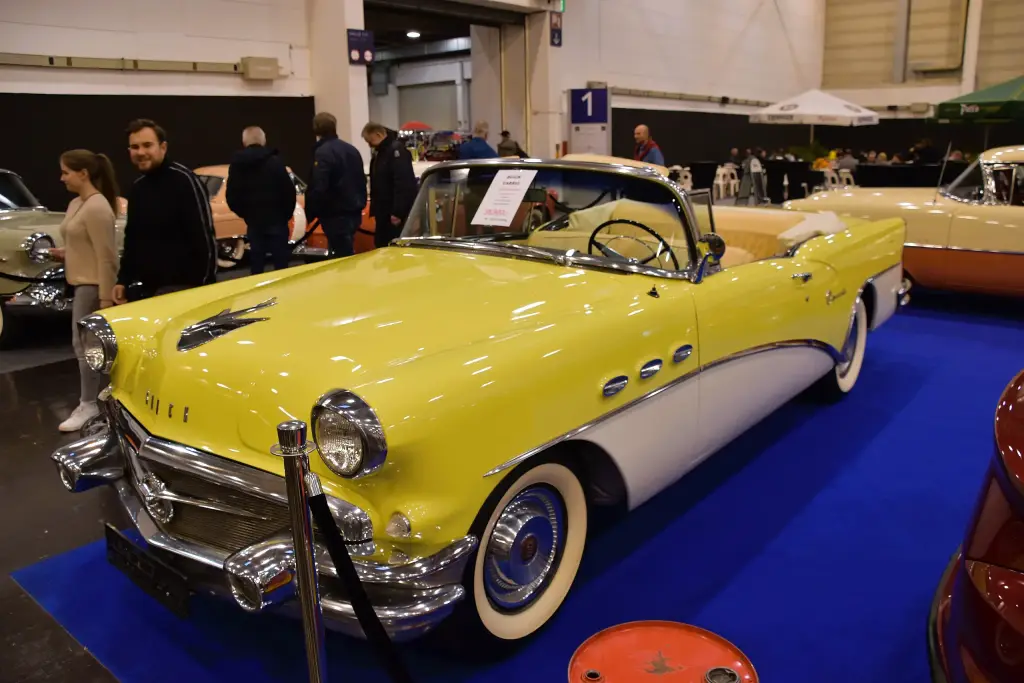
For 1936 the whole range was given names and the Series 40 became the Special, Buick’s entry-level full-size car. The first Specials rode on a 118-inch wheelbase, raised to 122 inches for 1937 when all Buicks grew and the engine became a 248-cubic-inch eight. There was a full restyle in 1939, and for 1940, the only year it was offered, a four-door convertible Sport Phaeton of which just 552 were built. Prices ran from US$795 for the Business Coupe to US$925 for the Touring Sedan or Convertible.
The 1941 cars were all new, and the Estate Wagon moved from the Super into the Special range. A shorter 40-A series shared its body with the 1941 Oldsmobile Series 70. Production stopped on 4 February 1942. When it resumed, only the larger B-body Special was offered, in four-door sedan and two-door sedanet form — a rare model, under two per cent of Buick’s 1946 output.
A new body arrived halfway through the 1949 model year, with nine grille bars that also served as bumper guards, and a better-equipped Special DeLuxe. The 248-cubic-inch engine was replaced in 1951 by the larger Fireball straight-eight.
In 1961 the name returned on a completely different car: one of GM’s three new compacts, sharing its chassis, engines and basic sheet metal with the Pontiac Tempest and Oldsmobile F-85. The Special introduced the modern Buick V6, which became a core GM engine and lived on in upgraded form until 2006. By 1970 Special was no longer a standalone model, though the name was used again as the entry trim of the Century from 1975 to 1979 and from 1991 to 1996.
Design and features
- Entry-level Buick: the cheapest route into the marque for decades.
- Six body styles: the Series 40 range of 1935 started at US$925.
- Sport Phaeton: a four-door convertible built only for 1940, 552 cars.
- V6 pioneer: the 1961 compact introduced the engine GM used until 2006.
Buick Special versions
- Series 40 (1930, 1934–35): the car that became the Special.
- Special (1936–42, 1946–49): full-size entry model.
- Special (1949–58): new body, then the Fireball straight-eight.
- Special (1961–69): compact, then mid-size from 1964.
The Special was the base for the Skylark and shared its engines with the Century and Roadmaster. More Buicks are in the Buick collection.
Sources
- Buick Special, English Wikipedia: Series 40, 1936-42 cars, 1949 body, 1961 compact