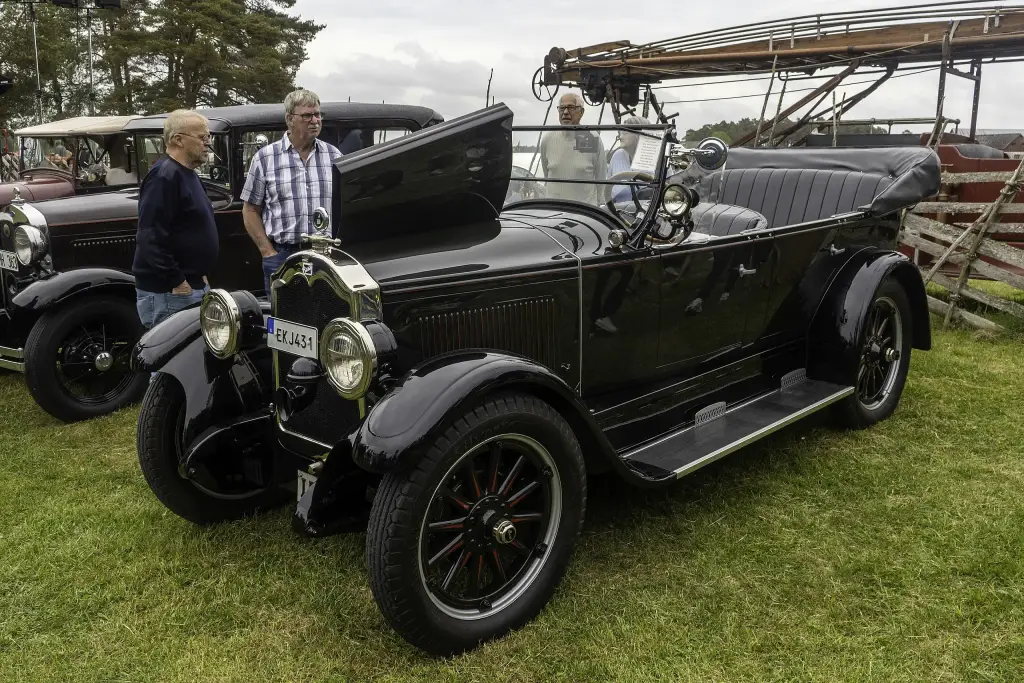
The Buick Six was Buick’s luxury car from 1914 to 1931, the senior companion to the four-cylinder Buick Four. It introduced a long list of firsts for the marque, from left-hand steering to electric starting.
Buick Six at a glance
| Maker | Buick, General Motors |
|---|---|
| Production | 1914–1931 |
| Class | luxury automobile |
| Below it | Buick Four |
| Engine | 331 cu in (5.4 L) overhead-valve six |
| Wheelbase | 130 in (3,302 mm) |
| 1914 price | US$1,985, touring sedan only |
| 1914 firsts | left-hand steering wheel, Delco electric starter |
| Also new | electric lighting and electric Klaxon horn |
| Coachwork | Fisher Body of Detroit |
| From 1925 | split into Standard Six and Master Six |
| 1925 top model | seven-passenger Town Car, US$2,925 |
Based on one source, the English Wikipedia article on the Buick Six.
History of the Buick Six
The Buick Six appeared in 1914 as the senior car above the four-cylinder Series B Four. It used a new platform shared with the Oldsmobile Six, and it was the first Buick with the steering wheel on the left, an electric starter from Delco Remy, electric lighting and an electric Klaxon horn. The gear lever and handbrake moved to a central position inside the car, an arrangement used on every GM product for 1914.
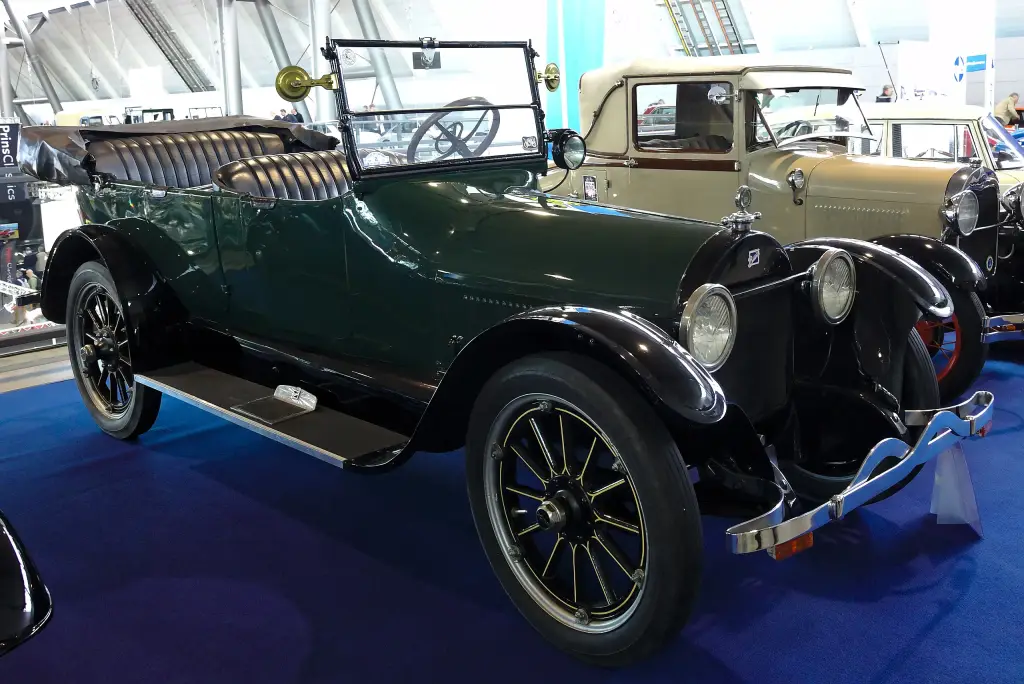
Power came from Buick’s patented overhead-valve six of 331 cubic inches, engineered under Walter Lorenzo Marr, although the cylinder head was not removable until later developments. The wheelbase was 130 inches, and in its first year the Six was offered only as a touring sedan at US$1,985.
Bodywork came from Fisher Body of Detroit, and by 1925 the catalogue listed fourteen different body styles. The top of the range that year was a seven-passenger Town Car at US$2,925.
In 1925 the range was reorganised: the four-cylinder platform was cancelled and the Six was split into the cheaper Standard Six and the high-end Master Six. Buick stayed with smooth six-cylinder engines while Oldsmobile adopted the Light Eight; Cadillac would not offer a six for several decades. Buick was also the only GM division to use its own overhead-valve engine design.
The Six remained the basis of Buick’s upper range until 1931, when every Buick moved to the new straight-eight. Its successors, the Standard Six and Master Six, carried the six-cylinder tradition into the early 1930s.
Design and features
- Left-hand steering: the first Buick to put the wheel on the left.
- Electric starting: Delco Remy starter, lighting and Klaxon horn.
- Overhead-valve six: 331 cubic inches from Buick’s own design.
- Fourteen body styles: the 1925 catalogue included a Town Car.
Buick Six versions
- Touring sedan (1914): the only body style at launch.
- 1925 range: fourteen body styles, topped by the Town Car.
- Standard Six (from 1925): the cheaper six-cylinder Buick.
- Master Six (from 1925): the high-end six-cylinder Buick.
The Six sat above the Buick Four and was split in 1925 into the Master Six and the Standard Six. More Buicks are in the Buick collection.
Sources
- Buick Six, English Wikipedia: launch, engine, firsts, 1925 range