The Buick Skylark name was used in six separate production runs over 46 years, on cars as different as a handmade luxury convertible and a front-wheel-drive compact. It was named after the bird.
Buick Skylark at a glance
| Maker | Buick, General Motors |
|---|---|
| First use | 1953–1954, Roadmaster Skylark convertible |
| 1953 price | over US$5,000 |
| 1953 production | 1,690 (the most successful of its trio) |
| 1954 production | 836 |
| Returned | 1961, as a luxury version of the Special |
| 1961 engine | 215 cu in (3.5 L) V8, 185 hp |
| Became | the basis of the Gran Sport and GSX |
| Later form | front-wheel drive from the mid-1980s |
| Also used for | the Apollo-derived and Somerset models |
Based on one source, the English Wikipedia article on the Skylark. The records titled «Buick slylark» and «Buick somerset» belong to the same line.
History of the Buick Skylark
The Skylark first appeared in 1953 to mark Buick’s fiftieth anniversary, alongside the Oldsmobile 98 Fiesta and Cadillac Series 62 Eldorado. Of those three limited-production convertibles, the Skylark was the most successful, with 1,690 cars at a list price just over US$5,000 — more than 50 per cent above the Roadmaster convertible it was based on.
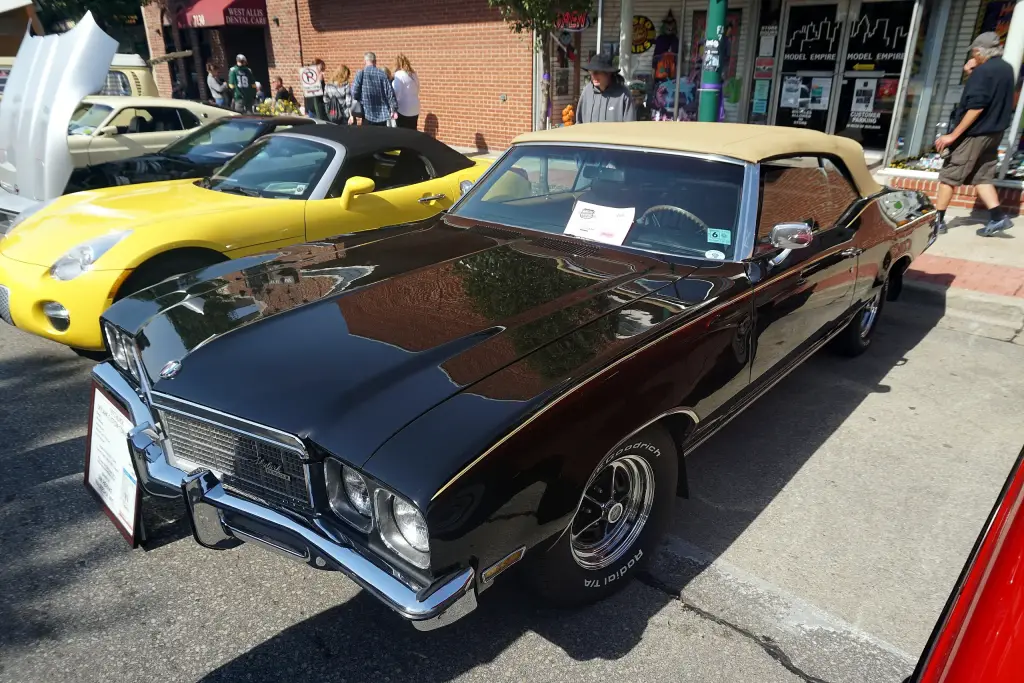
It was largely handmade. Only the hood, boot lid and part of the convertible tub were shared with the Roadmaster and Super convertibles; the inner doors were made by cutting a Roadmaster two-door’s doors in two and welding them back at an angle to create the rakish dip. The windscreen was cut almost three inches shorter and the seats and steering column lowered to suit. It introduced Buick’s 322-cubic-inch Fireball V8 and a 12-volt electrical system, both firsts for the division, plus full-cutout wheel openings and the new Sweepspear line.
The 1954 Skylark, renamed Model 100, moved to the shorter Century/Special chassis, kept the big-car powertrain and gained a semi-barrel boot and tail lamps on chrome fins. Sales fell short at 836 cars and the model was cancelled at the end of the year.
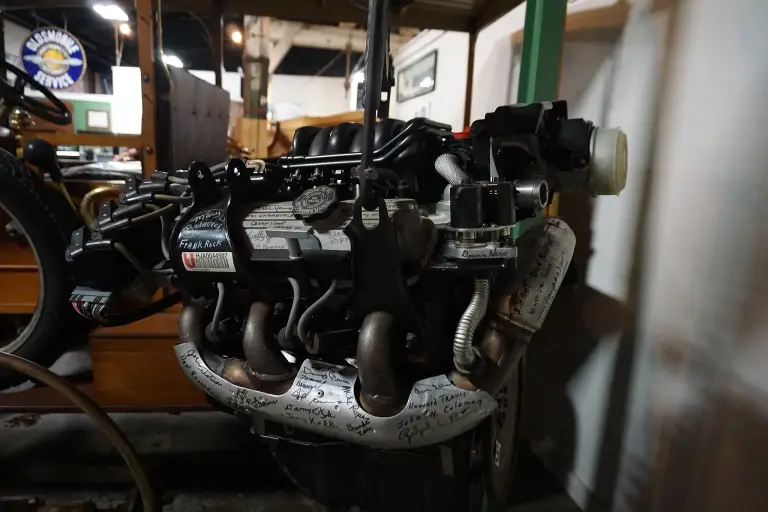
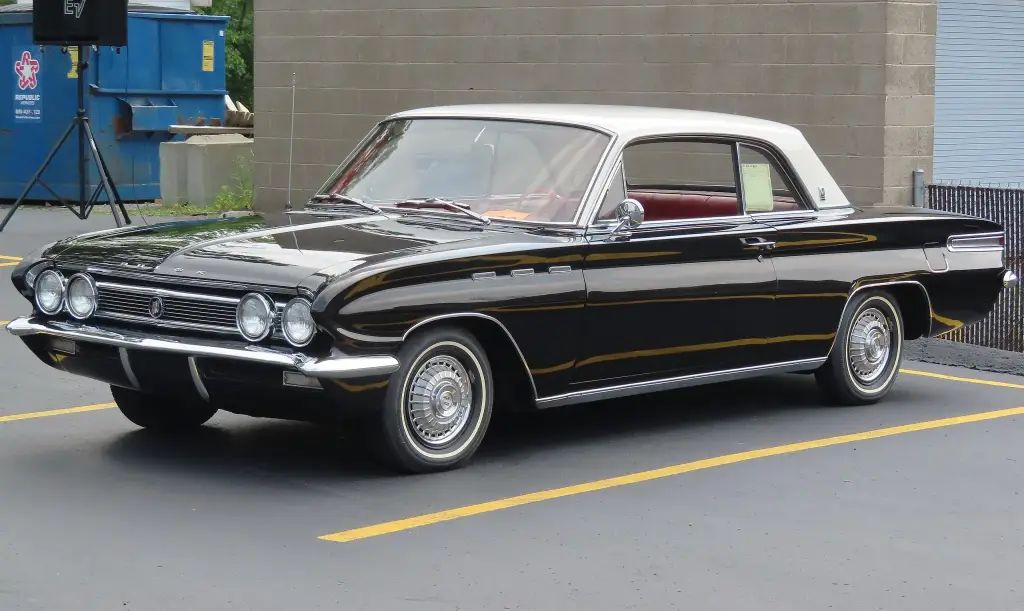
The name returned in the middle of the 1961 model year as a luxury trim of the new compact Special, with its own emblems, tail lamps, side mouldings, turbine wheel covers and a vinyl roof. It replaced the Special’s two-barrel 215-cubic-inch aluminium V8 with a four-barrel version, raising output from 155 hp to 185 hp. From there the Skylark became Buick’s luxury performance model, and it was the car on which the Gran Sport and GSX were based.
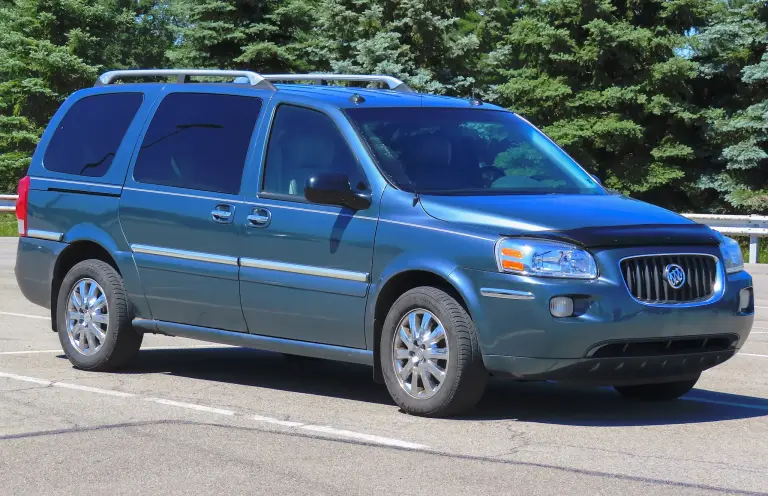
As GM downsized in the late 1970s the Skylark became the entry-level model, with the Special name reduced to a trim designation, and in the 1980s it moved to front-wheel drive, sold as a coupe and sedan over three generations. The Apollo of 1973–75 was renamed Skylark for 1975–76, and the Somerset of 1985–87 was part of the same front-drive line.
Design and features
- Handmade original: the 1953 convertible used reworked Roadmaster doors and a shortened windscreen.
- Division firsts: the 1953 car introduced the Fireball V8 and a 12-volt system to Buick.
- Sweepspear: the styling line that ran almost the length of the 1953 car.
- Muscle car basis: the Gran Sport and GSX were Skylark derivatives.
Buick Skylark versions
- Roadmaster Skylark (1953): the anniversary convertible, 1,690 built.
- Skylark Model 100 (1954): on the shorter chassis, 836 built.
- Special Skylark (1961–63): the luxury compact trim.
- Later generations: rear-drive intermediates, then front-drive compacts.
- Apollo and Somerset: models that carried the Skylark name at other times.
The Skylark was based on the Special and the Roadmaster, and it fathered the Gran Sport; the Apollo became a Skylark in 1975. More Buicks are in the Buick collection.
Sources
- Buick Skylark, English Wikipedia: 1953-54 cars, 1961 return, later generations