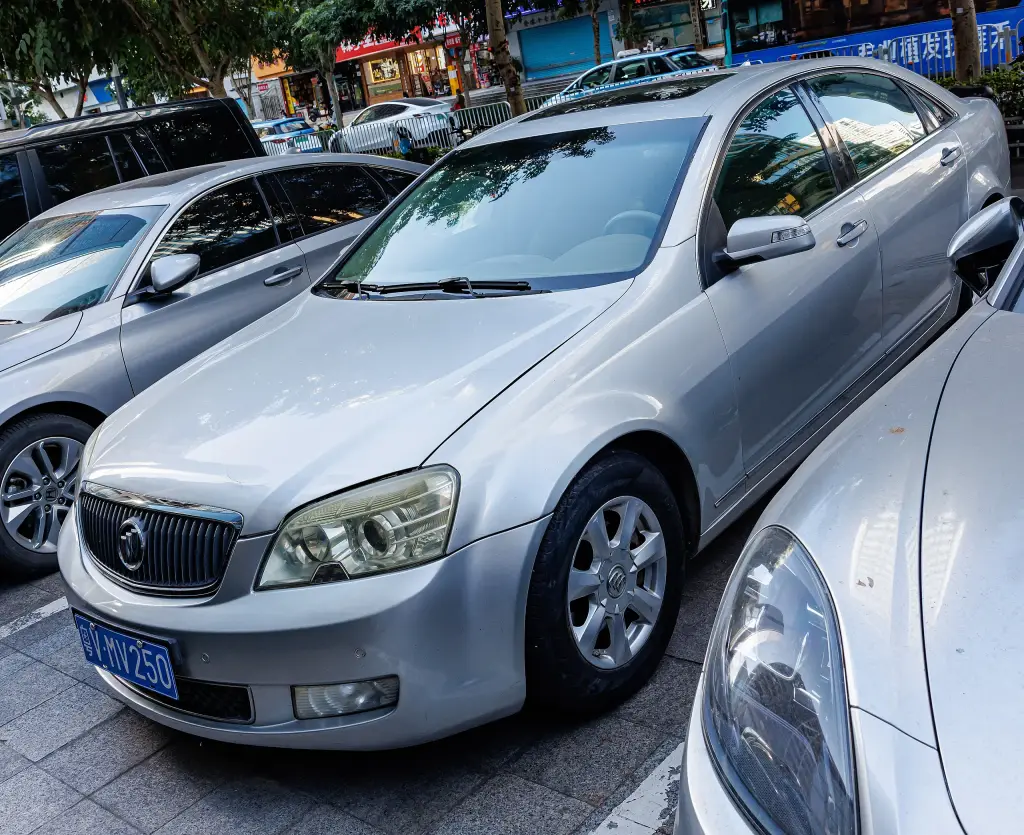
The Buick Park Avenue is a name that grew from trim level to flagship. It appeared in 1975 as an appearance package on the Electra 225 Limited, became an Electra trim in 1978 and a model of its own for 1991, and was revived in 2007 for China.
Buick Park Avenue at a glance
| Maker | Buick, General Motors |
|---|---|
| First used | 1975, as an Electra appearance package |
| Trim level | 1978–1990, on the Electra |
| Own model | 1991–2005 |
| Architecture | GM C platform, front-wheel drive |
| Base engine | 3.8 L naturally aspirated V6 |
| Ultra engine | 3.8 L supercharged V6, from 1992 |
| Concept preview | 1989 Park Avenue Essence |
| Flagship features | DynaRide, automatic level control |
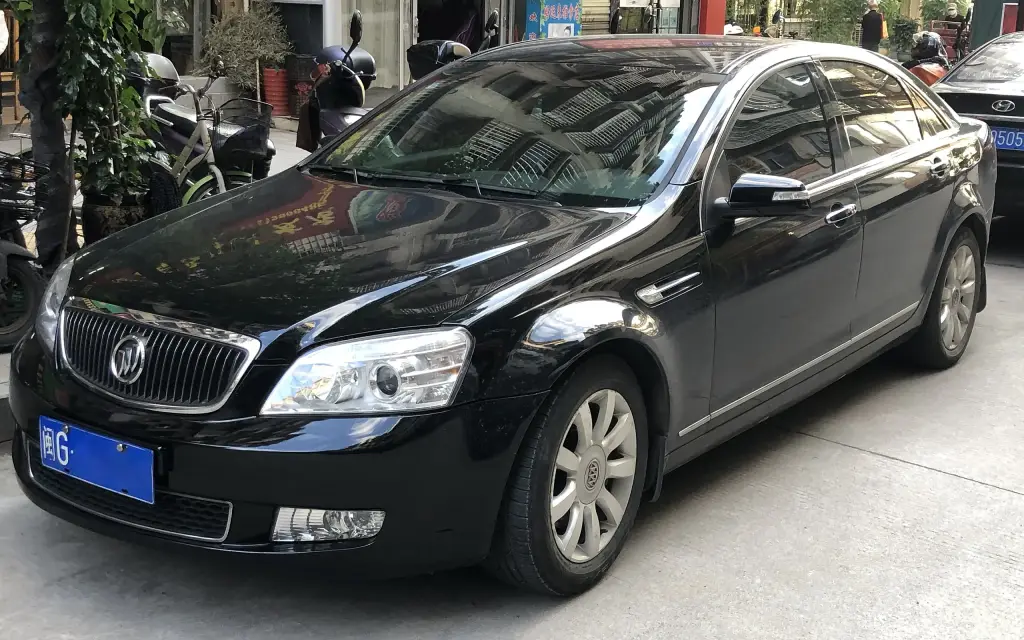
| China revival | 2007, based on the Holden Caprice WM |
Based on one source, the English Wikipedia article on the Park Avenue.
History of the Buick Park Avenue
Park Avenue is a boulevard in an affluent part of New York City, and Buick borrowed the name for a 1975 appearance package on the Electra Limited. It brought seats similar to the Cadillac Sixty Special, a 455 V8, a limited-slip differential, 15-inch rallye wheels, rear automatic levelling, a remote mirror with thermometer and automatic climate control. Options included a centre console, leather and the Air Cushion Restraint System.
In 1978 the Park Avenue became an official Electra trim level, with its own grille and tail lamps. There was a redesigned flat front for 1979, and a more extensive redesign for 1980. For 1985 the Park Avenue was redesigned with the rest of the Electra line as it moved from the rear-drive C-body to the new front-drive C-body, with the 3800 V6 as standard; a diesel was offered for that one year and sold poorly. The coupe lasted until 1987.
For 1989 Buick added the Park Avenue Ultra, with a leather interior, 20-way power front seats designed by Lear Siegler and styled by Giorgetto Giugiaro, a padded vinyl roof, simulated burled elm trim, anti-lock brakes and electronic instruments. The Ultra cost more than a Cadillac Sedan de Ville, though it gained wider recognition with the next generation.
The 1989 Park Avenue Essence concept previewed the production car, with a prototype Delco Navicar navigation system and a 165 hp version of the 3800 V6. The first standalone Park Avenue went on sale in July 1990 for 1991 on the GM C platform, as Buick’s largest front-wheel-drive sedan and its flagship. It used DynaRide deflected-disc strut valving and an automatic level control that pumped air into the rear Chapman struts. The base car had the naturally aspirated V6 and velour; from 1992 the Ultra came with a supercharged V6 and leather.
The Park Avenue was also sold in Europe from 1991 to 1996 with its own lighting, mirrors and badging. Two generations were built in the United States until 2005, after which the Lucerne replaced it. In 2007 the nameplate returned on a large sedan built by Shanghai GM for China on the Holden Caprice WM/WN platform.
Design and features
- From package to model: an Electra option in 1975, a flagship by 1991.
- DynaRide: deflected-disc strut valving for a softer ride.
- Ultra: the supercharged, leather-trimmed top model from 1992.
- Chinese revival: the name returned in 2007 on a Holden-based sedan.
Buick Park Avenue versions
- Electra Park Avenue (1975–1990): first an option, then a trim level.
- Park Avenue (1991–96): first standalone generation.
- Ultra: the supercharged top trim.
- China (2007–): Shanghai GM sedan on the Holden Caprice platform.
The Park Avenue grew out of the Electra and was replaced by the Lucerne; its final Chinese form is related to the GL8 in the same showrooms. More Buicks are in the Buick collection.
Sources
- Buick Park Avenue, English Wikipedia: option package, trim level, generations, Essence, China
_(HOLDEN_CAPRICE_(WM)).jpg)
