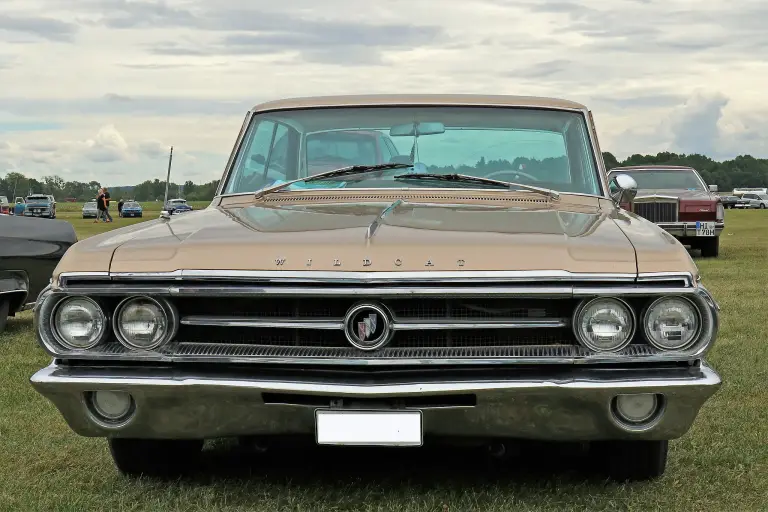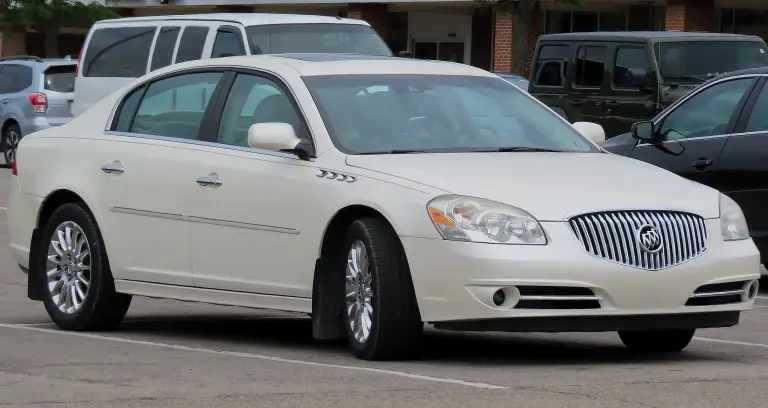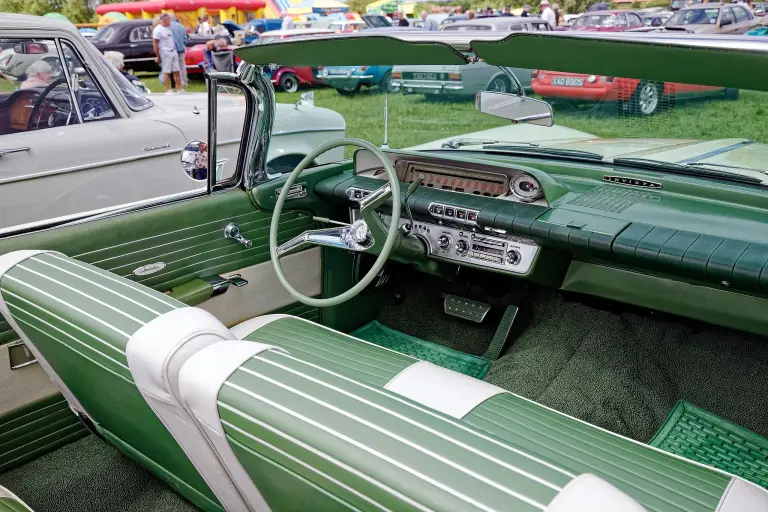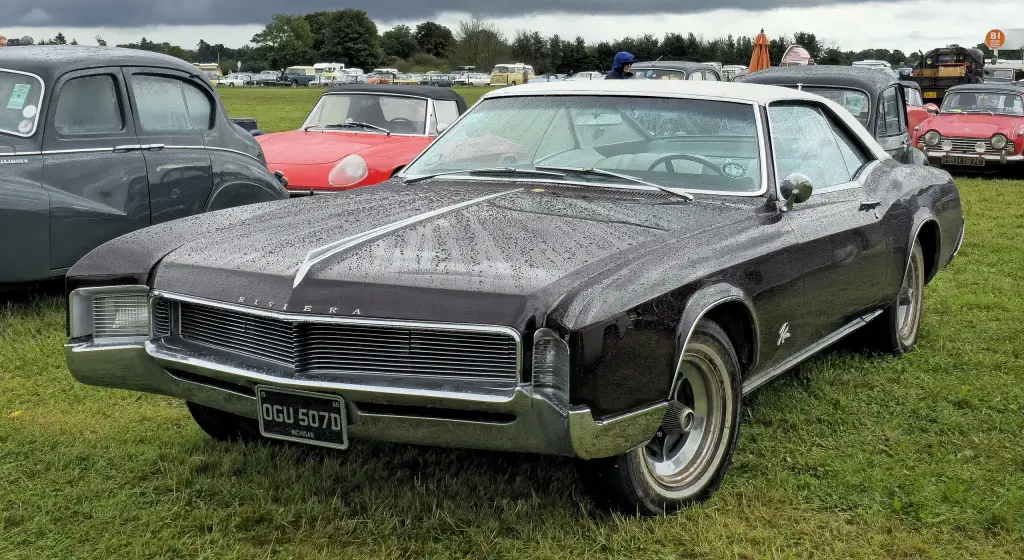
The Buick Riviera is a personal luxury car sold from 1963 to 1999, with a gap in 1994. It was General Motors’ first entry into the segment, and it was praised by journalists from the moment it appeared.
Buick Riviera at a glance
| Maker | Buick, General Motors |
|---|---|
| Production | 1963–1999 (no 1994 model) |
| Class | personal luxury car |
| Platform | GM E platform, new for 1963 |
| Drive | rear-wheel drive until 1979, then front-wheel drive |
| First generation | 1963–1965 |
| 1963 wheelbase | 117.0 in (2,970 mm) |
| 1963 length | 208.0 in (5,280 mm) |
| 1963 weight | 3,998 lb (1,813 kg) |
| First-year production | 40,000 |
| Total production | 1,127,261 |
| Name | from the French Riviera |
Based on one source, the English Wikipedia article on the Riviera.
History of the Buick Riviera
The Riviera name first entered the Buick range in 1949 as the designation for a new two-door pillarless hardtop. The Roadmaster Riviera coupe, with the Cadillac Coupe de Ville and Oldsmobile 98 Holiday coupe, was among the first mass-produced cars of that body style. The name spread to the Super in 1950, the Special in 1951 and the Century in 1954, and through the 1950s it also marked long-wheelbase four-door sedans and, from 1955, four-door hardtops.
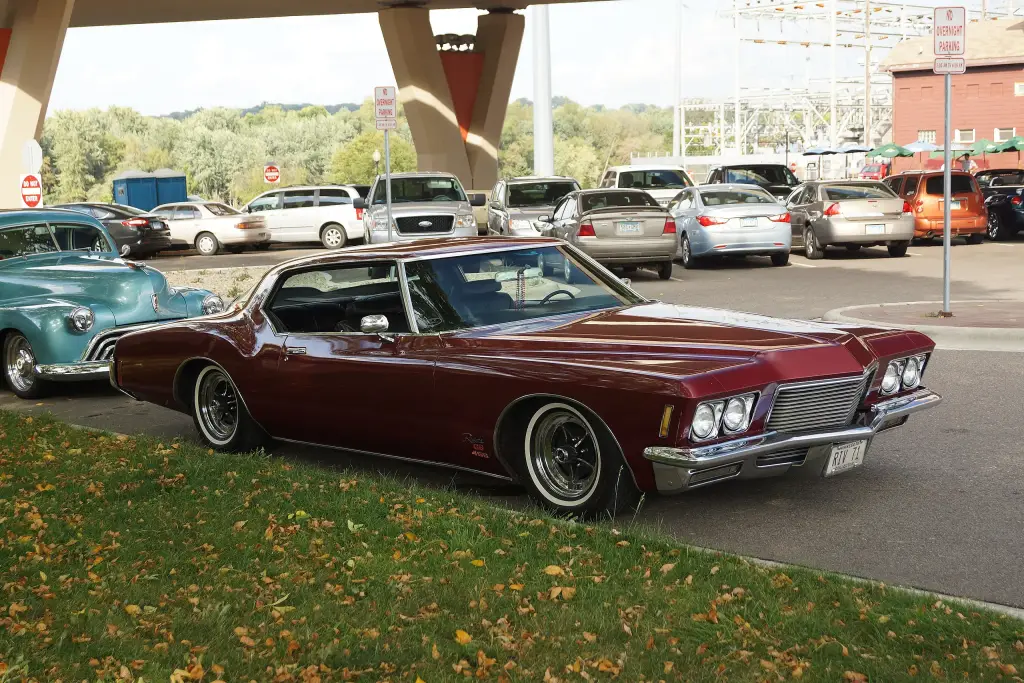
By 1959 the Riviera tag was used more sparingly, for a premium six-window hardtop shared at first only with Cadillac and offered on the Electra 225. It was still a trim designation in 1963, the year the separate E-body coupe appeared.
That car was born of a gap in GM’s range. Ford’s Thunderbird and the Chrysler 300C had created a market for a stylish two-door, and GM had nothing to offer. An experimental Cadillac design, the XP-715, was drawn by stylist Ned Nickles with knife-edge lines inspired by a custom Rolls-Royce that styling chief Bill Mitchell had seen in London. Cadillac passed on it in 1960 and the project was thrown open to the divisions; Buick, desperate to revive falling sales, won with a presentation helped by the McCann-Erickson agency.
The production Riviera was introduced on 4 October 1962 as a 1963 model. Its bodyshell was unique to Buick, unusual for a GM product, with hidden headlights set in the fender grilles. The styling used the Coke-bottle look, with a tapered midsection between flaring fenders, and there was no trace of the Sweepspear that had been on earlier Riviera-trimmed Buicks. It rode on a shortened cruciform frame with a 117-inch wheelbase and 208-inch length — shorter than a LeSabre but slightly longer than a Thunderbird — and at 3,998 pounds it was about 390 pounds lighter than either.
The first generation ran for three years and 112,544 cars: exactly 40,000 in 1963, 37,658 in 1964 and 34,586 in 1965. Later generations changed size and style dramatically, and the Riviera switched to front-wheel drive from 1979. The name was also revived for concept cars shown in 2007 and 2013.
Design and features
- Knife-edge styling: Bill Mitchell’s angular design on a unique bodyshell.
- Hidden headlights: set into the fender grilles from the start.
- Own platform: the new GM E platform, later shared with the Toronado and Eldorado.
- Long life: eight generations and 1,127,261 cars in total.
Buick Riviera versions
- First generation (1963–65): the original E-body coupe.
- Later rear-drive generations: growing in size through the 1960s and 1970s.
- Front-wheel drive (1979 onwards): shared with the Toronado and Eldorado.
- Concept revivals (2007, 2013): show cars that reused the name.
The Riviera name began as a trim on the Roadmaster and later shared its platform with the Reatta. More Buicks are in the Buick collection.
Sources
- Buick Riviera, English Wikipedia: name history, origins, 1963 model, production