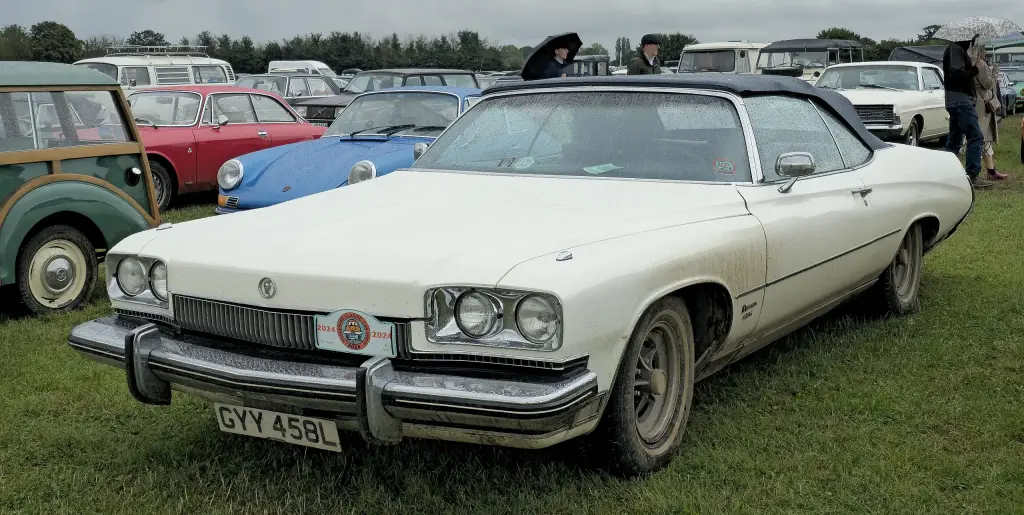
The Buick Centurion was a full-size car built for the 1971 to 1973 model years. It replaced the Wildcat as the sporty member of Buick’s three full-size lines and sat between the LeSabre and the Electra.
Buick Centurion at a glance
| Maker | Buick, General Motors |
|---|---|
| Production | 1971–1973 |
| Class | full-size car |
| Position | between the LeSabre and the Electra |
| Bodies | two- and four-door hardtop, convertible |
| 1971 engine | 455 cu in (7.5 L) V8, 315 hp (235 kW) gross |
| 1972 engine | 455 V8, 250 hp net |
| 1973 engine | 350 V8 standard, 455 optional |
| Transmission | Turbo Hydra-matic, standard from March 1971 |
| Total built | 110,539, including 10,296 convertibles |
Based on one source, the English Wikipedia article on the Centurion.
History of the Buick Centurion
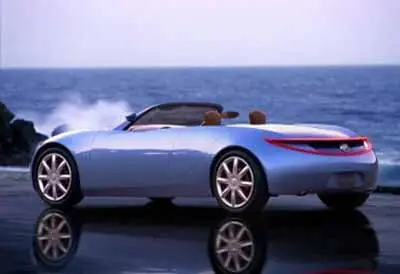
The Centurion name was first used on a Buick show car at the 1956 Motorama. That car had a red and white fibreglass body, an aircraft-style interior, a fully clear bubble top and what Buick called the first backup camera, in place of a rear-view mirror — though it was never shown to work. It now lives in the Sloan Museum in Flint, Michigan.
The production Centurion arrived for 1971, replacing the Wildcat. It was almost identical to the contemporary LeSabre, differing in badging, grille, minimal chrome trim and the absence of the VentiPorts worn by other full-size Buicks. Instead of the usual tri-shield, its emblem was a side profile of a Roman centurion. Two- and four-door hardtops and a convertible were offered; there were no pillared sedans.
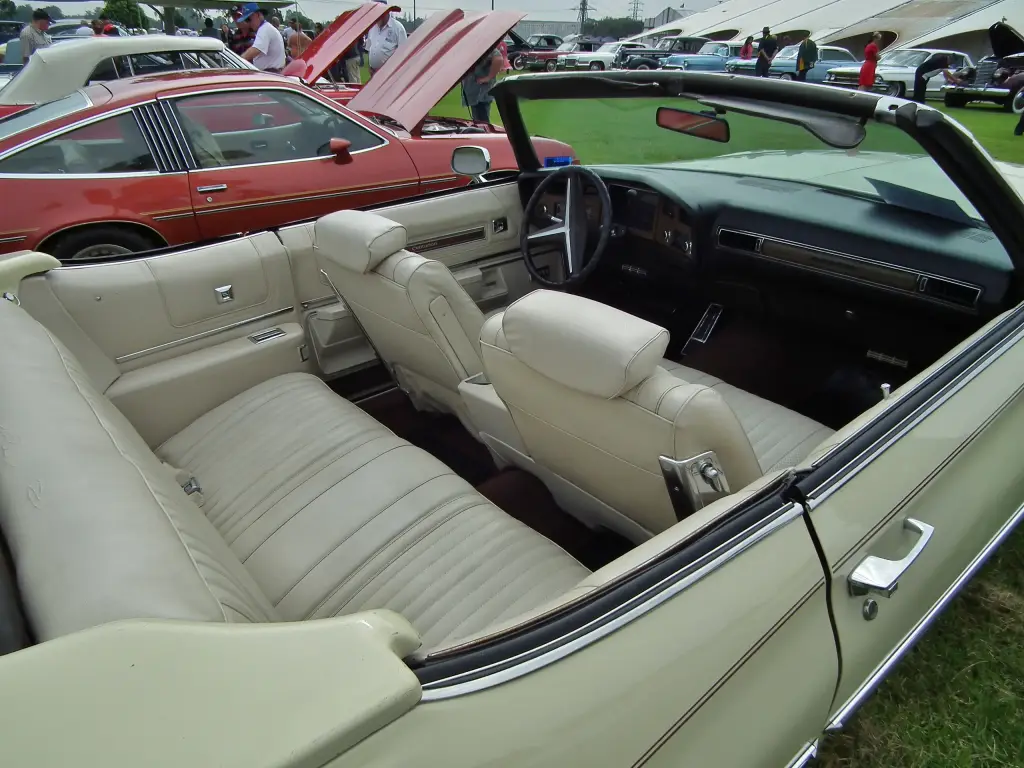
For 1971 the only engine was the 455-cubic-inch big-block V8, in two power levels depending on single or dual exhaust. The base version made 315 hp (235 kW) at 4,400 rpm and 510 lb·ft (690 N·m) at 2,800 rpm. Early in the model year a 455 Stage 1 with manual transmission was also available, shared with the GSX; interior trim was upgraded over the LeSabre with a notchback bench and a centre armrest. Sales reached 29,398, nearly 25 per cent more than the Wildcat.
The 1972 car brought a revised vertical-bar grille and new tail lamps. The 455 was now rated at 250 net horsepower, an on-paper drop caused by the industry-wide switch from gross to SAE net measurement. Sales rose more than 20 per cent to 36,165.
For 1973 the Centurion gained a larger front bumper and a vertical grille shared with the LeSabre. The standard engine became a four-barrel 350 V8 of 175 net horsepower, with the 250 hp 455 optional. With the LeSabre convertible dropped and the Century losing its convertible, the Centurion was Buick’s only open car that year — and its last until the 1982 Riviera. Total production was 110,539, including 10,296 convertibles, one of the shortest model runs in modern Buick history. It was replaced for 1974 by the LeSabre Luxus.
Design and features
- 455 V8 as standard: the big-block was the only engine in 1971 and 1972.
- Own emblem: a centurion’s profile instead of the Buick tri-shield.
- No VentiPorts: the only full-size Buick of the period without them.
- Last Buick convertible: in 1973 it was the marque’s only open model.
Buick Centurion versions
- Two-door hardtop: semi-fastback roof with a standard vinyl top in 1971.
- Four-door hardtop: the volume body style.
- Convertible: 10,296 built over three years.
- 455 Stage 1 (1971): manual-transmission option shared with the GSX.
The Centurion replaced the Wildcat and sat below the Electra, above the LeSabre. Its Stage 1 engine was shared with the Gran Sport, and more Buicks are in the Buick collection.
Sources
- Buick Centurion, English Wikipedia: 1956 show car, 1971-73 models, engines, sales