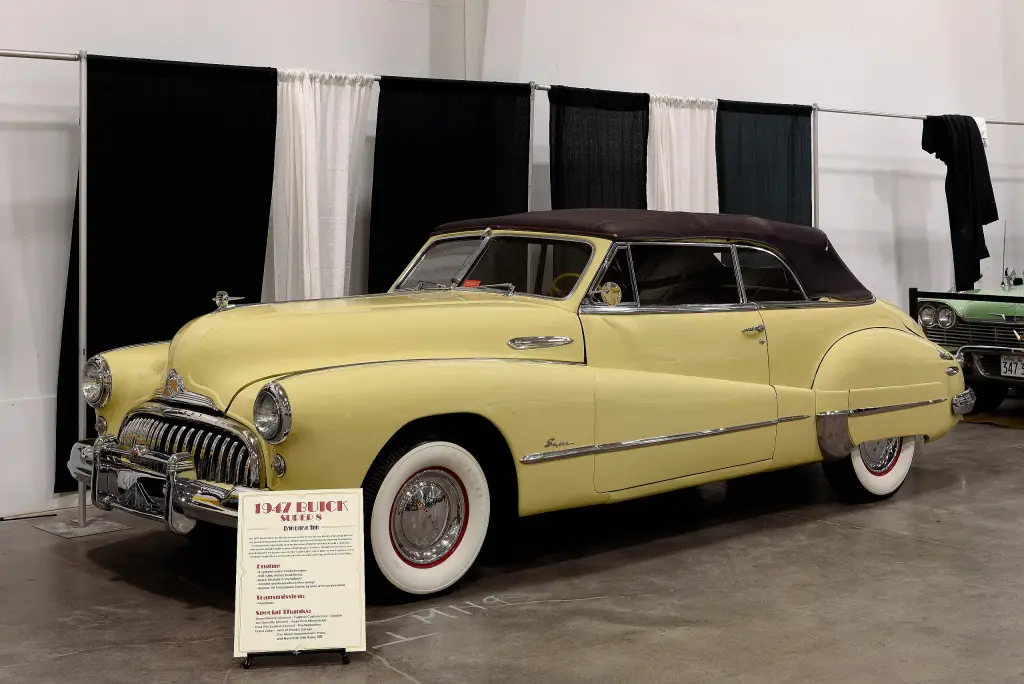
The Buick Super was a full-size car built from 1940 to 1958, with a break during the war. Its formula was simple: the long Roadmaster wheelbase with the smaller Special engine, which gave plenty of room without the fuel consumption of the biggest Buicks.
Buick Super at a glance
| Maker | Buick, General Motors |
|---|---|
| Production | 1940–1942 and 1946–1958 |
| Precursor | Series 50 (1930–1935) |
| Formula | Roadmaster wheelbase with the Special straight-eight |
| 1940 engine | 248 cu in (4.1 L) straight-eight, 107 hp |
| 1941 engine | same unit with compound carburation, 125 hp |
| 1940 wheelbase | 121.0 in (3,073 mm) |
| 1940 price | US$1,058–1,549 |
| 1940 sales | 128,736 |
| Also called | Buick Eight or Super Eight |
| Later use | performance trim on LaCrosse and Lucerne, 2008–11 |
Based on one source, the English Wikipedia article on the Super. The record titled «Buick eight» shows the same car and is covered here.
History of the Buick Super
The Super’s line began with the Series 50 of 1930, which used a 331.4-cubic-inch straight-six of 99 bhp and sold 28,204 cars. With the arrival of the smaller Marquette brand and the temporary disappearance of the Series 40, the Series 50 became Buick’s entry-level model, with only a coupe or sedan at US$1,540. Its engine grew to 230.4 cubic inches for 1932, when Buick introduced Wizard Control and a free-wheeling transmission, and output rose through the decade. The Series 50 was built until 1936, by which time 127,416 had been made.
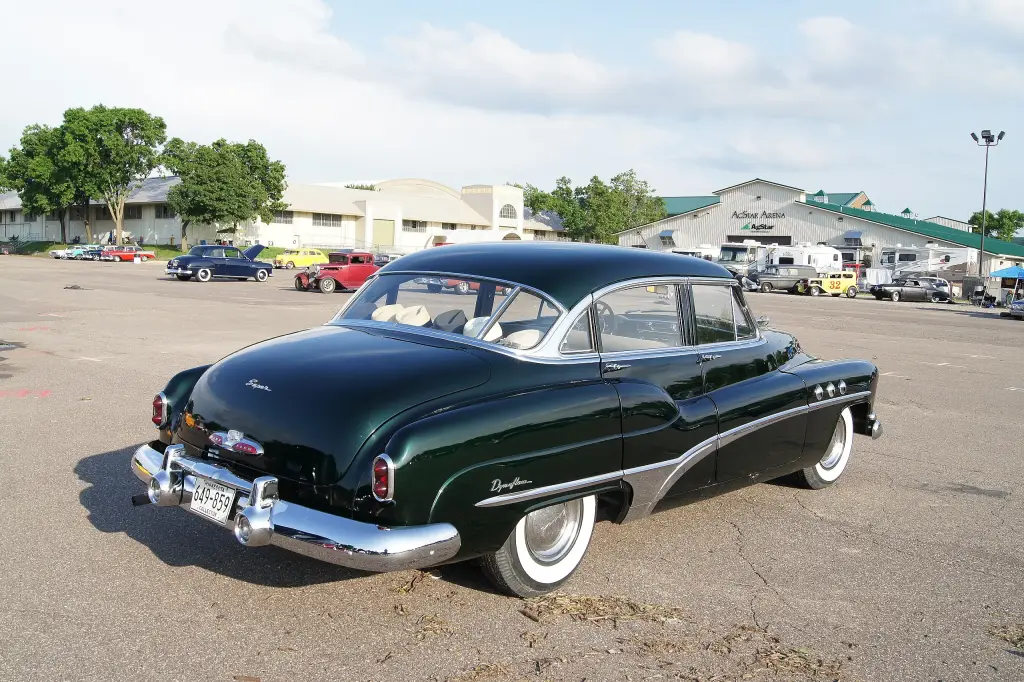
The Super itself arrived for 1940, sharing the Art Deco torpedo C-body with the Roadmaster, Cadillac Series 62, Oldsmobile Series 90 and Pontiac Custom Torpedo. It was wider than the previous year’s cars by more than five inches inside, with no running boards, and it offered roughly the room, performance and luxury of the discontinued LaSalle.
Its formula was the Series 80 Roadmaster’s longer wheelbase with the Series 40 Special’s smaller straight-eight — an economical combination of space and fuel consumption. The 248-cubic-inch Fireball engine made 107 hp. Four body styles were offered at first — coupe, convertible, sedan and four-door convertible — with an Estate wagon added mid-year that was exclusive to the Super. Prices ran from US$1,058 for the Sport Coupe to US$1,549 for the Convertible Phaeton, and 128,736 cars were sold in the first year.
For 1941 the changes were mostly under the bonnet: compression rose from 6.15:1 to 7.0:1, the pistons were redesigned, and Compound Carburetion — twin two-barrel carburettors, the forerunner of the four-barrel — was fitted to every Buick except the Special. Output rose to 125 hp, and buyers could choose from nineteen two-tone colour combinations at no extra cost.
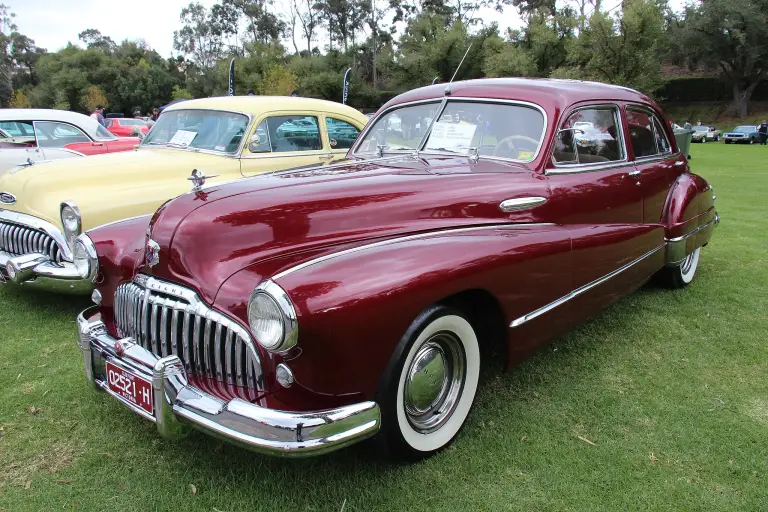
Because every Buick from 1931 had a straight-eight, and the word was engraved on the grille, the Super was often called the Buick Eight or Super Eight. The model ran to 1958. In 2008 the name returned as a performance trim on the V8-powered LaCrosse and Lucerne, lasting until 2011.
Design and features
- The Super formula: big body, smaller engine, better economy.
- Torpedo styling: the 1940 Art Deco C-body shared with the Roadmaster.
- Compound Carburetion: twin two-barrels from 1941, 125 hp.
- Estate wagon: exclusive to the Super when added in 1940.
Buick Super versions
- Series 50 (1930–35): the model that led to the Super.
- Super (1940–42, 1946–58): coupe, sedan, convertible and estate.
- Super Eight: the informal name from the grille lettering.
- Super trim (2008–11): the performance version of the LaCrosse and Lucerne.
The Super combined the body of the Roadmaster with the engine of the Special, and the name later returned on the Lucerne. More Buicks are in the Buick collection.
Sources
- Buick Super, English Wikipedia: Series 50, 1940-41 cars, formula, later trim use