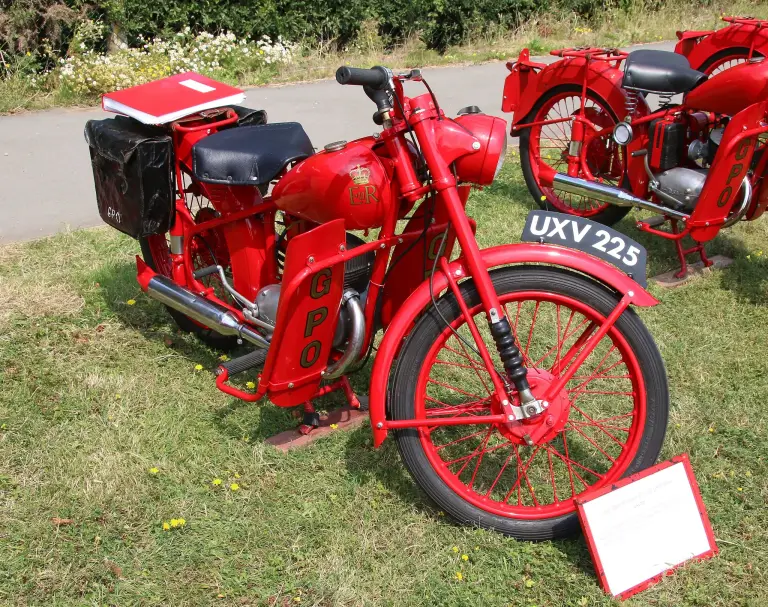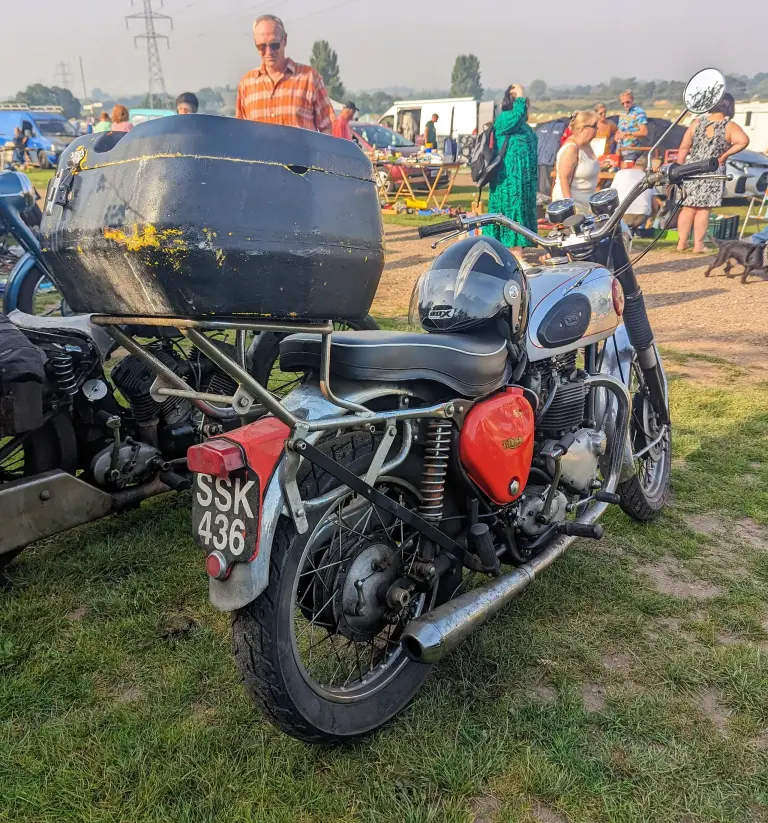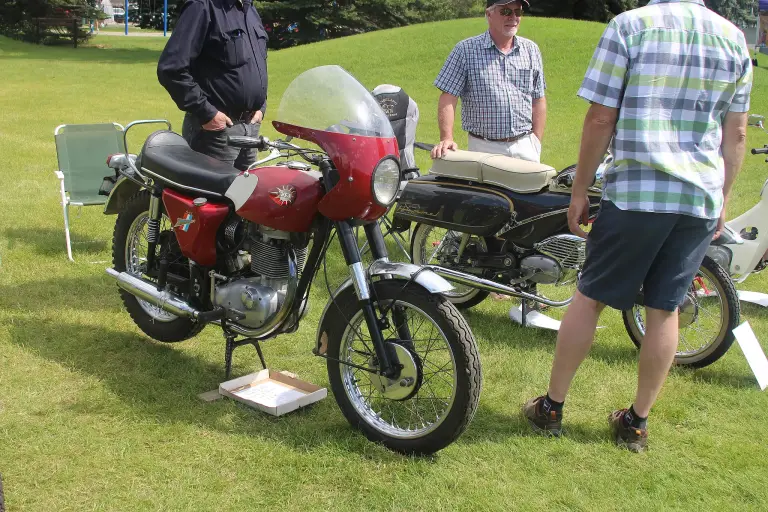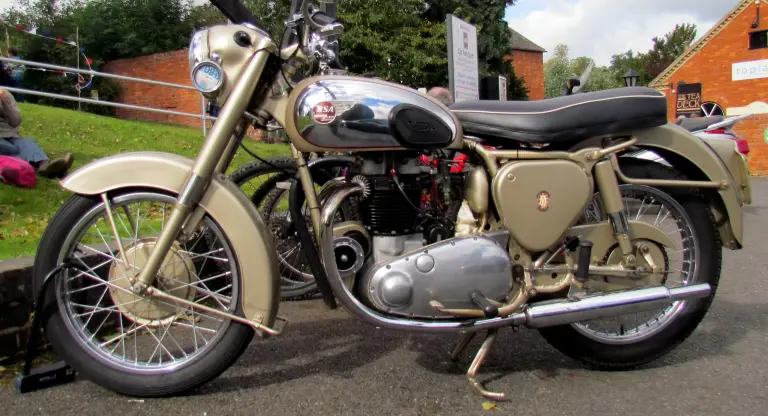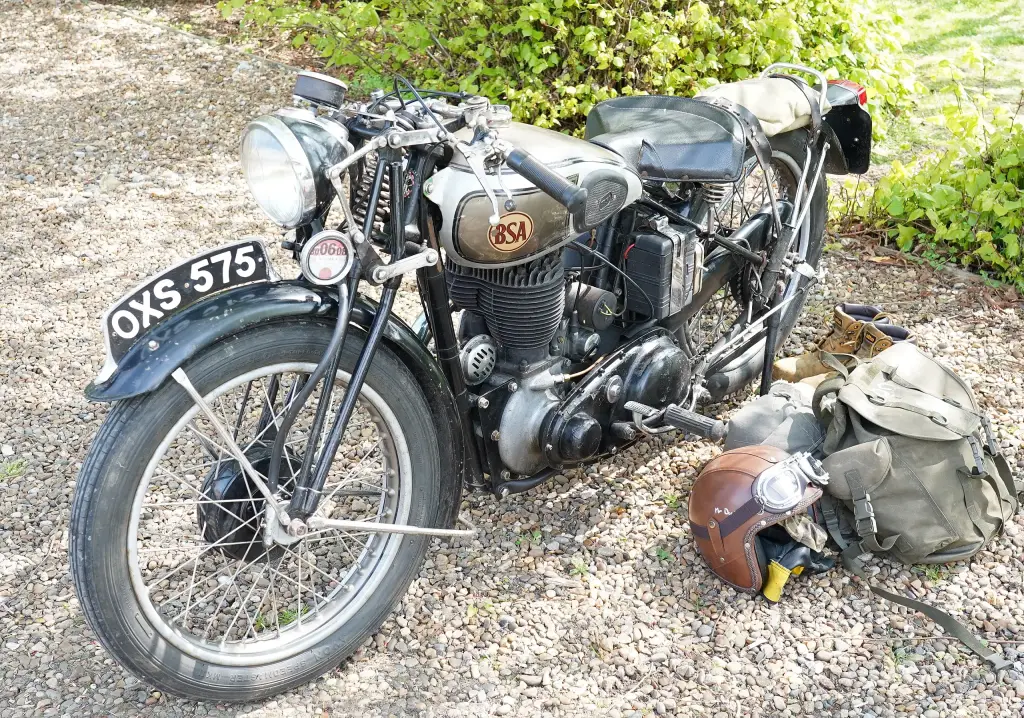
The BSA M20 is a British motorcycle made by Birmingham Small Arms at its factory in Small Heath, Birmingham. Although the War Office viewed it as a near failure in 1936, the M20 became one of the longest-serving motorcycles in the history of British military motorcycling and the most numerous type produced for the Second World War, with 126,000 in active service.
BSA M20 at a glance
| Maker | Birmingham Small Arms Company, Small Heath |
|---|---|
| Designer | Val Page |
| Development began | 1937 |
| Engine | 500 cc single-cylinder side-valve |
| Type | heavy-framed sidecar model in origin |
| Gearbox | standard BSA item |
| In service by 1945 | 126,000 |
| Early military models | K-M20 (1939), then W-M20 from October 1939 |
| Headlight | 8-inch Lucas DU142 at first, later 6-inch DU42 |
| Post-war | civilian and military use into the late 1960s |
Based on one source, the English Wikipedia article on the M20.
History of the BSA M20
At the outbreak of the Second World War BSA was Britain’s largest motorcycle manufacturer, with a long history of supplying armaments to the armed forces. The M20, designed by Val Page, began development in 1937 as a heavy-framed sidecar machine with a simple 500 cc single-cylinder side-valve engine of low compression and plenty of low-end torque through a standard BSA gearbox.
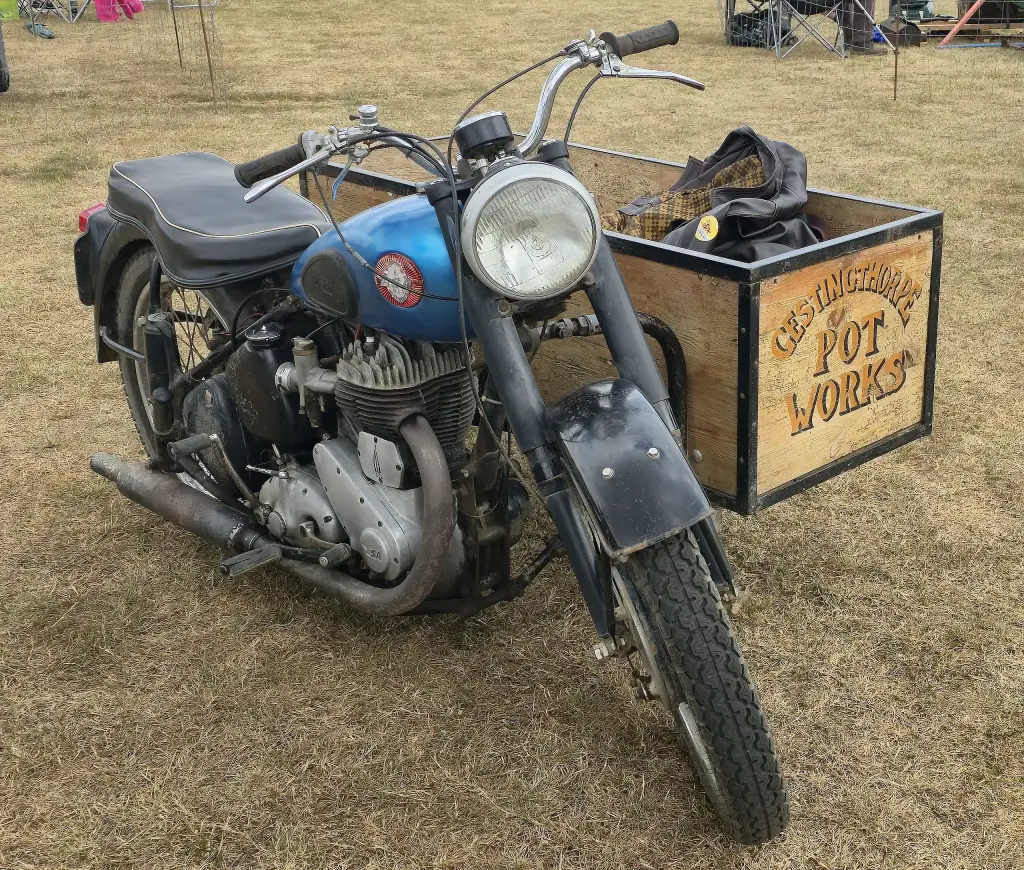
The M20 failed its first submission to the War Office in 1936 because of unacceptable engine wear: the prototype needed a replacement piston and cylinder after about 6,000 miles. In 1937 three more were submitted for testing; two just passed the 10,000-mile suitability tests at the Military Vehicles and Engineering Establishment at Chertsey, while the third was used in service trials in 1938, when a small batch was commissioned. The machine was criticised for being heavy and slow with poor ground clearance, and was saved by its reliability and ease of maintenance. As demand for transport grew, larger orders followed, and while most M20s served with the British Army, the model also equipped the Royal Navy and the Royal Air Force, working as a general-purpose machine for convoy escort and dispatch work in almost every theatre. After the war its low cost, reliability and spare parts availability kept it in military use through the national service years of the 1950s and in smaller numbers to the end of the 1960s.
Early K-M20 models of 1939 were built from standard civilian parts with military fittings added: a large 8-inch Lucas DU142 headlight with a blackout mask, a timing-gear cover with a screw-in plug for access to the magneto drive pinion nut, and special filler caps for the petrol and oil tanks. They also had a long spiked prop stand on the rear nearside, pivoted from a lug brazed to the rear frame tube. Factory ledgers show K-M20s exported to Sweden, South Africa and India as well as to dealers and distributors at home.
Workers building the M20 were killed in an air raid on the BSA factory in Armoury Road, Small Heath, on the night of Tuesday 19 November 1940. The factory was one of the Luftwaffe’s main targets and at 9.25pm a low-flying aircraft dropped two bombs that destroyed the southern end of the building. Rescuers included BSA’s own fire brigade, who pumped the Birmingham and Warwick canal dry to put out the fire. Fifty-three workers were killed and 89 injured, and it was six weeks before the last bodies could be recovered. Much of the factory and equipment was destroyed or damaged, but BSA had 67 factories, so work moved elsewhere and M20 production carried on.
From October 1939 the K-M20 became the W-M20, with girder forks and the valanced rear mudguard removed. Late in 1940 the War Office bought some civil-specification M20s finished in military paint. Front and rear number plates disappeared in 1941, and service in North Africa in 1941 and 1942 showed the need for easy adjustment of the fork dampers, so special knobs were made in bakelite and later in pressed steel. The DU142 headlight gave way to a smaller 6-inch Lucas DU42 with a hooded, slotted blackout shield, and a universal L-WD-MCT1A tail light was fitted. The 1942 rubber shortage brought canvas-covered metal handlebar grips and foot pegs, and production was standardised with only minor changes until the end of the war. A new large rear carrier for WD steel pannier frames and bags arrived in early 1942, moving the long prop stand forward of the nearside rear wheel spindle nut, and 1943 brought a redesigned crankcase sump shield and the Vokes high-capacity air cleaner, a box-shaped canister on top of the fuel tank for dusty conditions. In early 1945 a push-button headlight switch appeared and the main lighting switch moved to a bracket under the offside of the saddle.
The M20 has also been tuned for speed trials: a 1938 machine ridden by Bill Jenkins of Dallas reached 108 mph at Bonneville with a heavily modified side-valve engine on nitrous oxide, and in October 1995 an M20 with a Gold Star crankshaft sprocket running on 95 per cent methanol and 5 per cent acetone reached 112 mph at RAF Elvington in Yorkshire.
Design and features
- Side-valve simplicity: low compression and strong low-end torque made the 500 cc single easy to maintain in the field.
- Saved by reliability: criticised as heavy and slow, the M20 won its place through dependable service and simple upkeep.
- Military fittings: blackout headlight, spiked prop stand, pannier carrier, sump shield and Vokes air cleaner.
- Mass production: 126,000 in service by the end of the war, built across a network of BSA factories.
BSA M20 versions
- K-M20 (1939): the first military version, a civilian machine with military fittings.
- W-M20 (from October 1939): girder forks and no valanced rear mudguard.
- 1942–1945 standardised models: canvas-covered grips and pegs, pannier carrier, sump shield and Vokes air cleaner.
- Civilian M20: a reliable and affordable post-war machine, also used for speed trials.
The M20 was the machine the army chose over the 350 cc B31 and the light C11, and it was eventually replaced in service by the B40. More models are in the BSA collection.
Video: BSA M20 500 ccm 1942 First Start
Video by VideouploadUser100 on YouTube.
Sources
- BSA M20, English Wikipedia: development, wartime service, modifications