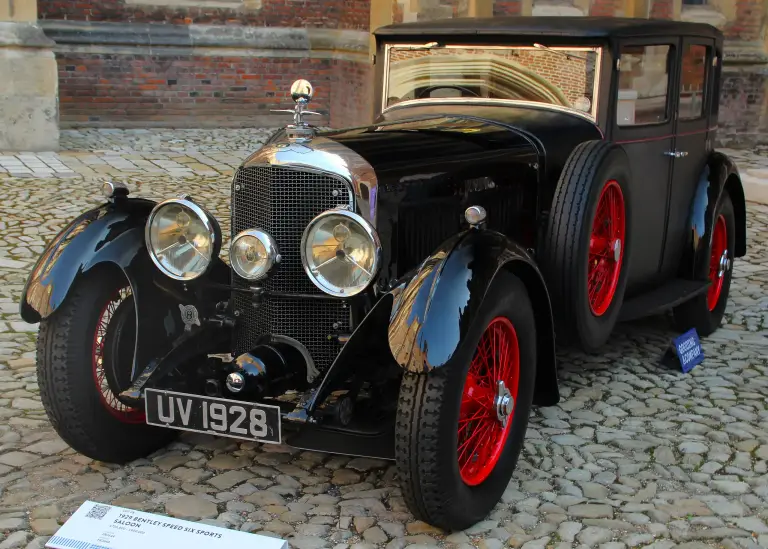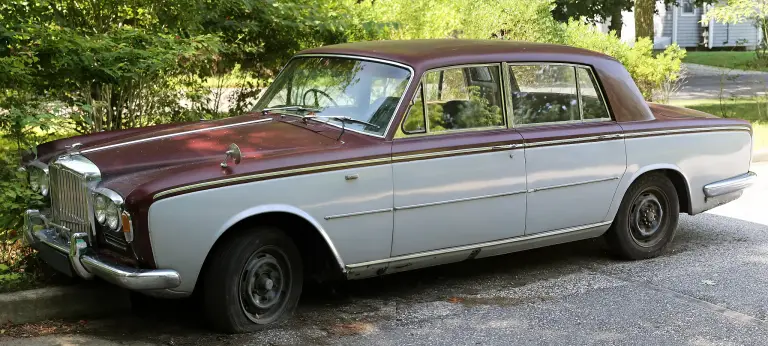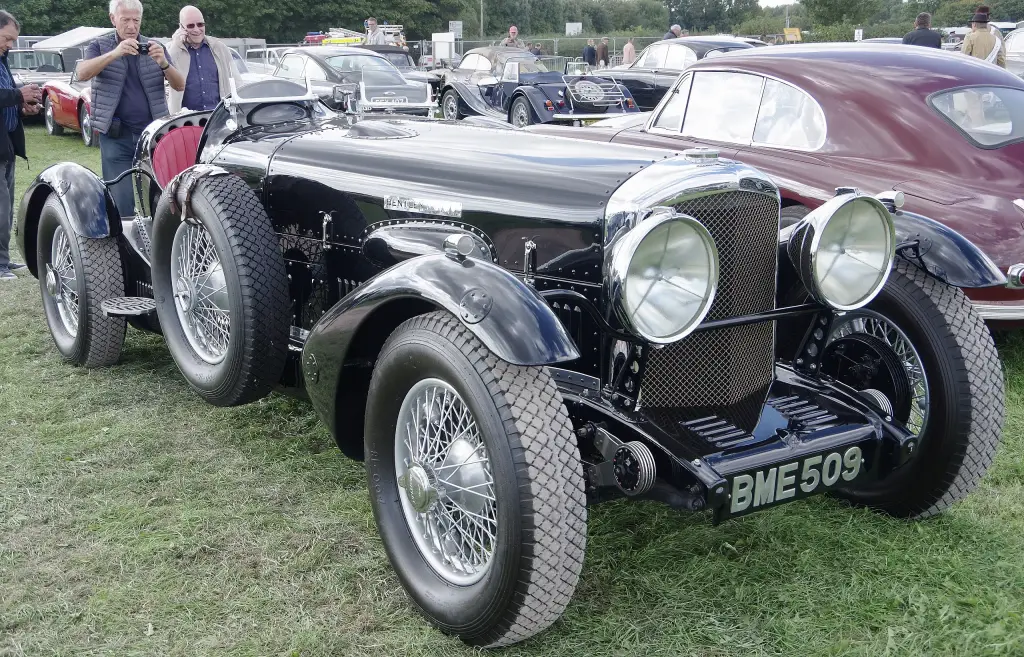
The Bentley 3½ Litre was a luxury car produced from 1933 to 1939 and the first new Bentley model after Rolls-Royce bought the marque in 1931. It was presented in September 1933, shortly after the death of Henry Royce, and became known as the Derby Bentley because it was built in the Rolls-Royce factory at Derby.
Bentley 3½ Litre at a glance
| Maker | Bentley Motors, built at Derby |
|---|---|
| Production | 1933–1939 |
| Engine | 3,669 cc straight-six, overhead valves, two SU carburettors |
| Bore and stroke | 82.5 mm × 114.3 mm |
| Power | about 110 bhp at 4,500 rpm |
| Top speed | 90 mph |
| Gearbox | four-speed manual, synchromesh on third and fourth |
| Chassis | nickel steel, double-dropped |
| Weight | 1,139 kg as a driveable chassis |
| Price | about £1,500 when a Ford 8 cost £100 |
| Built | 1,177 3½ Litre, then 1,234 4¼ Litre |
This page is based on English Wikipedia only, so the facts were not cross-checked against a second source. The old site calls this car the 3 L; this page covers the 3½ Litre Derby Bentley.
History of the Bentley 3½ Litre
The 3½ Litre was based on an experimental Rolls-Royce project called Peregrine, which was to have used a supercharged 2¾-litre engine. In the end the car received a less adventurous engine developed from the Rolls-Royce 20/25 straight-six, with a higher compression ratio, a sportier camshaft profile and two SU carburettors on a crossflow cylinder head. It produced about 110 bhp at 4,500 rpm and gave a top speed of 90 mph.
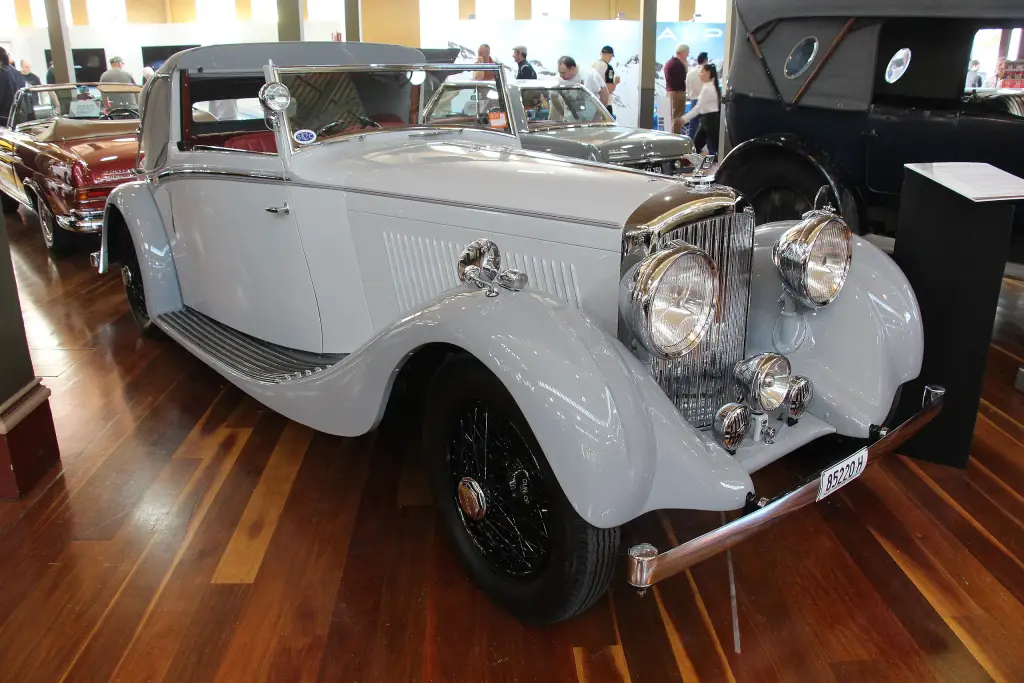
From the outset the car was intended to compete on quality and grace rather than on the sporting reputation that had been the cornerstone of the pre-1931 Bentley company. The cars kept the famous curved radiator shape of earlier Bentleys, but in all meaningful respects they were Rolls-Royces. The blend of style and grace proved popular with the inter-war elite, and the car was advertised as “the silent sports car”.
Chassis and coachwork
As was customary, Bentley sold only a driveable bare rolling chassis with engine and gearbox, scuttle and radiator, ready for a coachbuilder to add a body to the buyer’s requirements. Many distributors ordered their preferred bodies as showroom stock. About half of the 3½ Litre cars were bodied by Park Ward; the rest came from Barker, Hooper, Mulliner, Vanden Plas, James Young and others in England, and from Figoni et Falaschi, Kellner, Saoutchik and Vanvooren in Paris.
The chassis was made from nickel steel in a double-dropped layout that gained vertical space for the axles and kept the body profiles low. It was strong enough to need no diagonal cross-bracing and weighed 1,139 kg in driveable form. A four-speed manual gearbox with synchromesh on third and fourth, four-wheel leaf-spring suspension and four-wheel servo-assisted mechanical brakes were shared with other Rolls-Royce models. An early 3½ Litre cost around £1,500 at a time when a Ford 8 could be bought new for £100.
4¼ Litre and the Continental
Chassis series A to F were 3½ Litre cars; G to L, excluding I, were 4¼ Litres, and the M series was the 4¼ Litre overdrive chassis. From March 1936 the 4¼ Litre replaced the 3½ Litre to offset the increasing weight of coachwork; its engine was bored to 88.9 mm for 4,257 cc, and from 1938 MR and MX cars had Marles steering and an overdrive gearbox. A further step was the Continental coupé, announced in 1939 and based on the special fixed-head coupé built for André Embiricos. The model was replaced in 1939 by the Mark V, though some cars were finished and delivered in 1940 and 1941.
Design and features
- Rolls-Royce engineering: the six-cylinder engine, gearbox, suspension and servo brakes came from the Rolls-Royce parts bin.
- Light stiff chassis: nickel steel, double-dropped and needing no cross-bracing.
- Coachbuilt bodies: sold as a rolling chassis, with Park Ward the most popular bodybuilder.
- Quiet speed: marketed as the silent sports car rather than as a racer.
Bentley 3½ Litre versions
- 3½ Litre (1933–1939): the original model, 1,177 built.
- 4¼ Litre (1936–1939): a bored-out 4,257 cc engine, 1,234 built, many with steel bodies.
- Overdrive chassis (1938–1939): MR and MX series with Marles steering and an overdrive gearbox.
- Continental: the high-compression, lighter coupé derived from the Embiricos car and announced in 1939.
The 3½ Litre followed the Bentley 8 Litre and was replaced by the Mark V. More cars are in the Bentley collection.
Video: ROLLS ROYCE BENTLEY 3 1/2 L 1933 MODEL FAMOUS PICS IN ALL ANGLES
Video by UdayRepo on YouTube.
Sources
- Bentley 3.5 Litre, English Wikipedia: development, engine, chassis, production, Continental