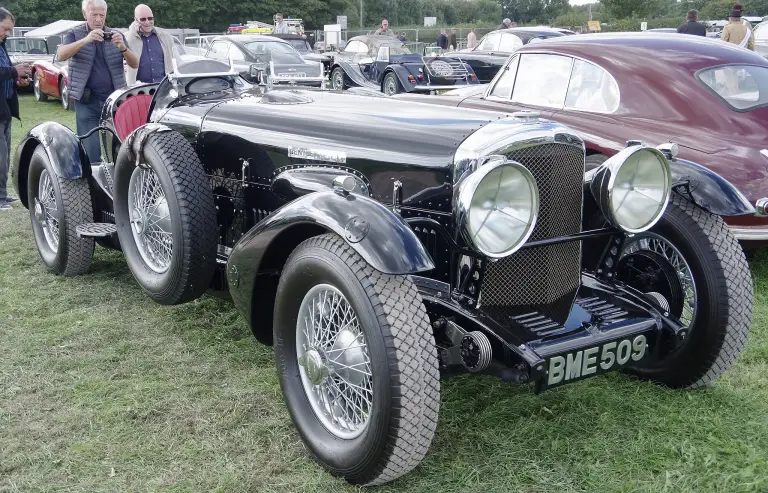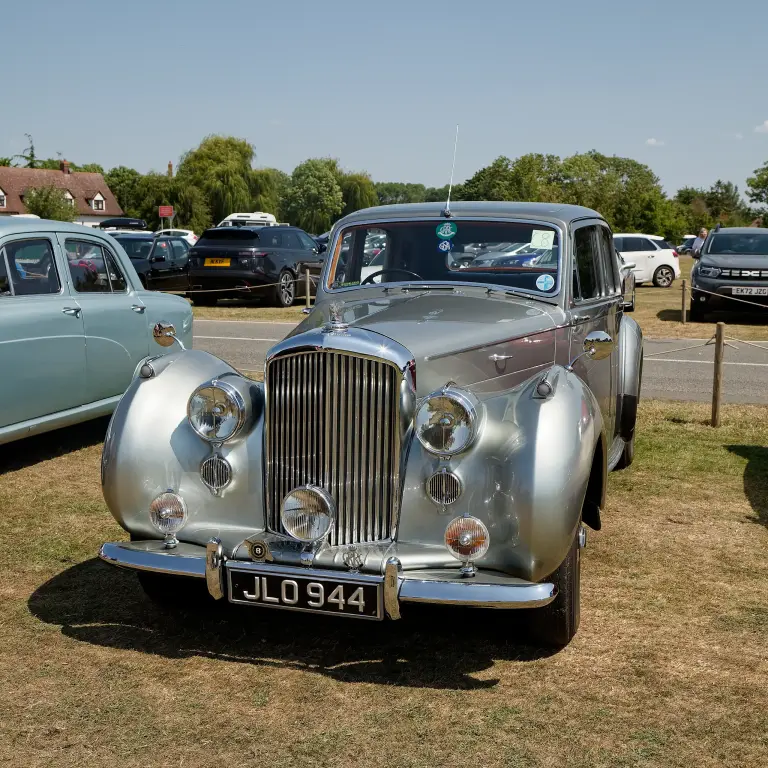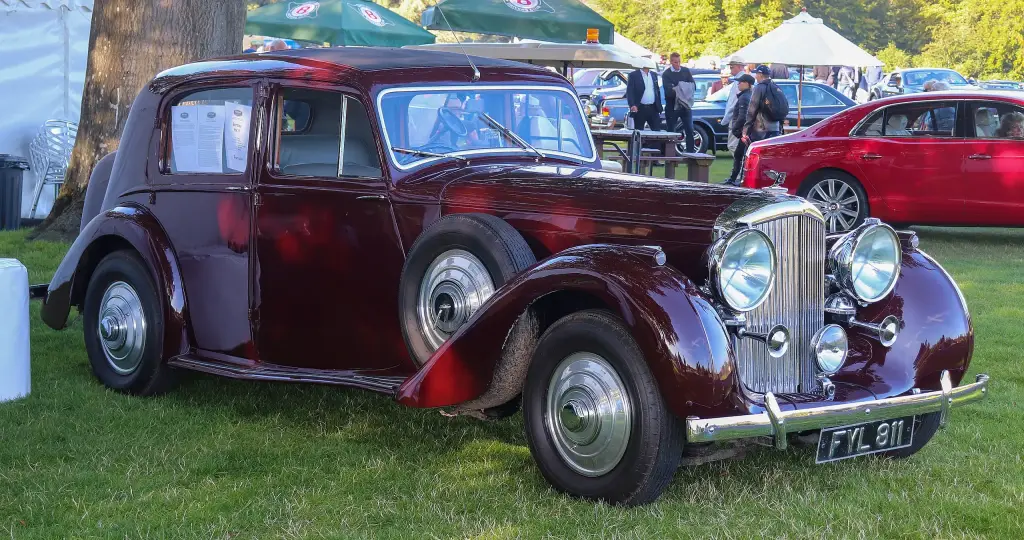
The Bentley Mark V was Rolls-Royce’s second Bentley model and proved to be the last Derby Bentley. It was intended for announcement at the Earl’s Court Motor Show in late October 1939, but war was declared on 3 September 1939 and Bentley ceased production of civilian items a few days later.
Bentley Mark V at a glance
| Maker | Bentley Motors, Derby |
|---|---|
| Announced | planned for October 1939 |
| Engine | 4,257 cc straight-six |
| Bore and stroke | 88.9 mm × 114.3 mm |
| Front suspension | independent, coil springs and wishbones |
| Brakes | Girling with Rolls-Royce mechanical servo |
| Gearbox | four-speed with synchromesh on all but first and reverse |
| Chassis | deep side rails, sold as a bare chassis |
| Chassis built | thirty-five |
| Cars completed | seventeen, of which seven remain |
| Corniche prototype | 1 car, chassis 14-BV |
This page is based on English Wikipedia only, so the facts were not cross-checked against a second source.
History of the Bentley Mark V
The Mark V was developed as the replacement for the Bentley 4¼ Litre, and it had much in common with its predecessor. The chassis was a new design with very deep side rails to reduce flexing and to cope with the changed loads of a totally redesigned independent front suspension in place of the beam axle. This was the first Bentley to dispense with a leaf-sprung front beam axle, following Rolls-Royce’s lead from 1938: low-rate open coil springs sat within pairs of triangulated wishbones, with the upper wishbones acting on piston-type hydraulic dampers and a strong anti-roll bar linking the assemblies on each side.
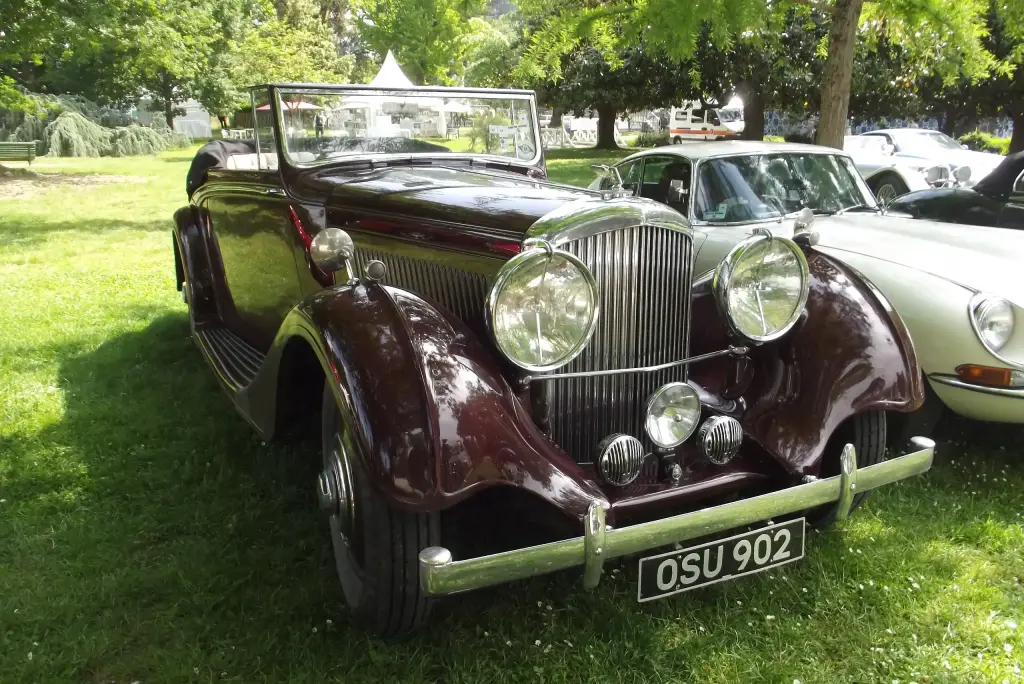
The engine was essentially the same 4,257 cc six as the 4¼ Litre, with an 88.9 mm bore and a 114.3 mm stroke, but with fewer timing gears. Without a beam axle the engine could be mounted further forward, and particular care was taken to minimise noise and vibration reaching the passengers. The gearbox now had synchromesh on all ratios except first and reverse, where previously only third and fourth were synchronised. The gear lever was moved backwards, closer to the driver, and the clutch used an improved design, while a new divided transmission shaft eased vibration. Brakes were by Girling with Rolls-Royce mechanical servo assistance, and 57 per cent of the effort now went to the front.
Production and the Corniche
The Mark V was sold only as a bare chassis, to be fitted with a body from the owner’s chosen coachbuilder. Thirty-five Mark V chassis were built, numbered from B-2-AW to B-70-AW with even numbers only, and eighteen of them were scrapped. Seventeen cars were completed, of which seven remain.
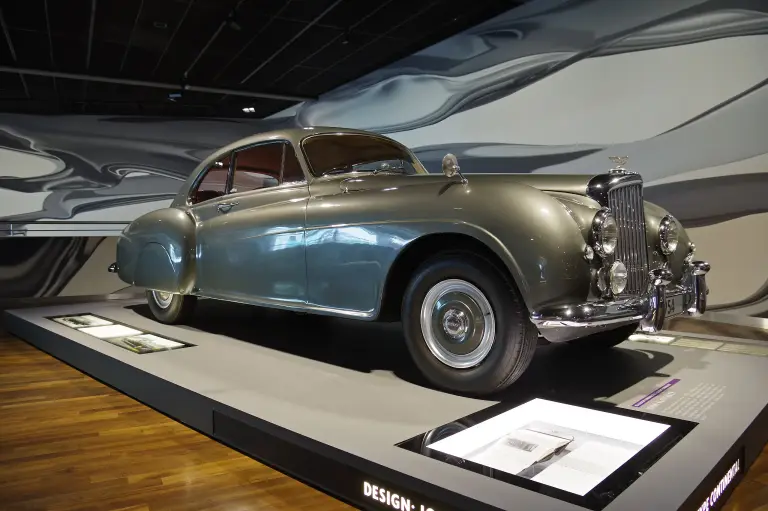
A lightweight and aerodynamic Corniche model was planned on the Mark V chassis, with a body designed by Georges Paulin and built by Vanvooren of Paris. The outbreak of war halted development, and the car was seriously damaged when it rolled over in France and is believed to have been destroyed by bombing on the quayside at Dieppe, though the chassis may have returned to Derby. One Corniche Mark V was completed on chassis 14-BV, built with lighter gauge steel to save weight, and a copy of the car is being recreated by the Rolls-Royce Heritage Trust in Derby. The idea of a fast, aerodynamic Bentley returned more than a decade later as the Bentley Continental of 1952.
Why Mark V
Some consider Marks I, II and III to have been Rolls-Royce development vehicles, which would make Mark IV the first Derby 3½-litre and 4¼-litre Bentley. Mark V follows naturally from that numbering, but the Mark VI became the last of the line. After the war, production moved to Crewe.
Design and features
- Independent front suspension: the first Bentley without a leaf-sprung front beam axle.
- Quieter driveline: synchromesh on all gears but first and reverse, and a divided transmission shaft.
- Girling servo brakes: 57 per cent of braking effort on the front wheels.
- Coachbuilt body: delivered as a bare chassis for the buyer’s chosen coachbuilder.
Bentley Mark V versions
- Mark V chassis: 35 built, 17 cars completed, seven surviving.
- Corniche Mark V: one car on chassis 14-BV, with lighter steel and Paulin-designed coachwork.
- 1939 Corniche prototype: the Vanvooren-built aerodynamic car destroyed in France.
The Mark V replaced the 3½ Litre and 4¼ Litre and was followed after the war by the Mark VI. More cars are in the Bentley collection.
Sources
- Bentley Mark V, English Wikipedia: chassis, engine, gearbox, brakes, production, Corniche