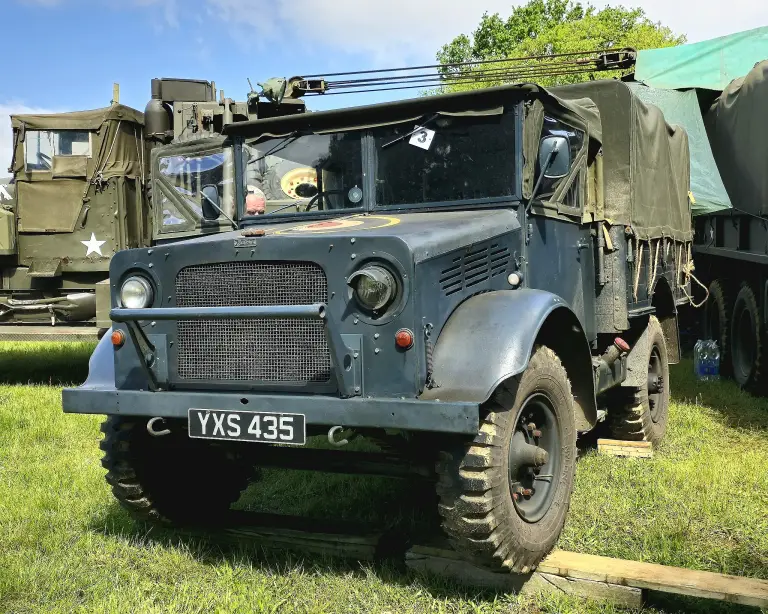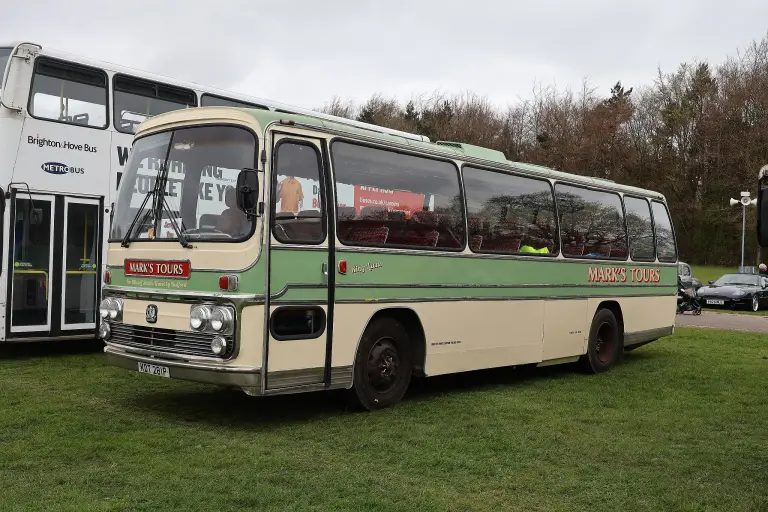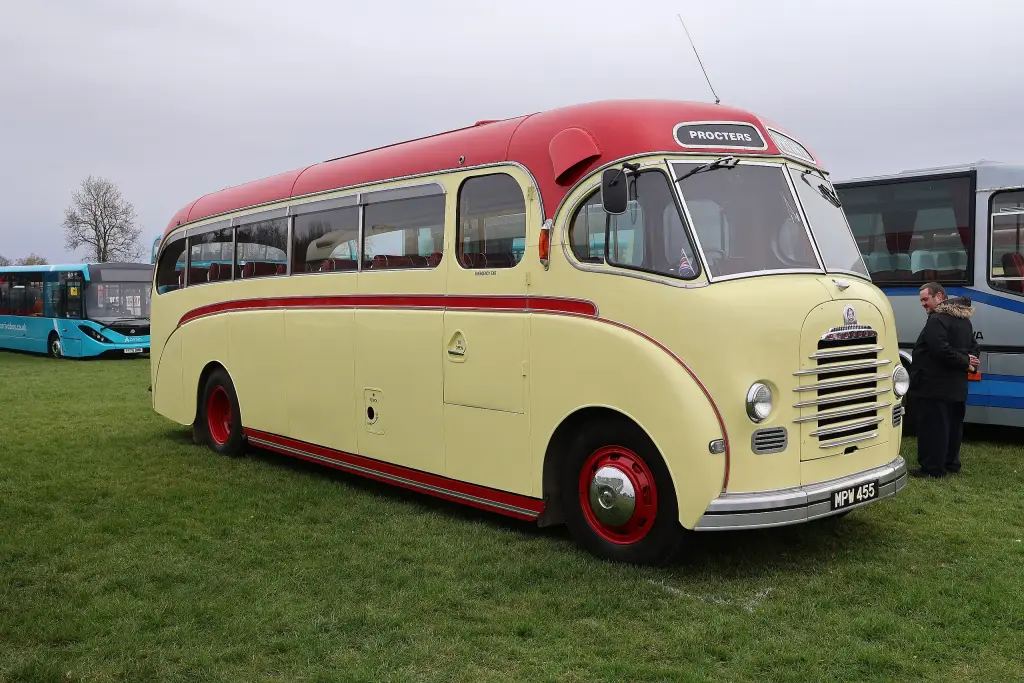
The Bedford SB was a front-engined bus chassis manufactured by Bedford in England. It was launched at the 1950 Commercial Motor Show as the replacement for the Bedford OB, and production continued for 36 years until December 1986.
Bedford SB at a glance
| Maker | Bedford |
|---|---|
| Production | 1950-1986 |
| Type | front-engined bus chassis |
| Launched | 1950 Commercial Motor Show |
| Layout | forward control, Bedford’s first |
| Gearbox | four-speed synchromesh, five-speed later |
| Wheelbase | 17 ft 2 in (5.23 m); 18 ft (5.49 m) from 1955 |
| Engines | Bedford petrol; Perkins R6 from 1953; Bedford diesel and Leyland O.350 from 1957; Leyland O.370 from 1963 |
| Bodybuilders | Duple, Marshall, Plaxton, Harrington, Willowbrook |
| Built by 1980 | over 54,000, of which 38,000 for export |
| Model codes | SB3 petrol = NFM, SB5 diesel = NJM |
This page is based on English Wikipedia only, so the facts were not cross-checked against a second source.
History of the Bedford SB
A forward-control chassis
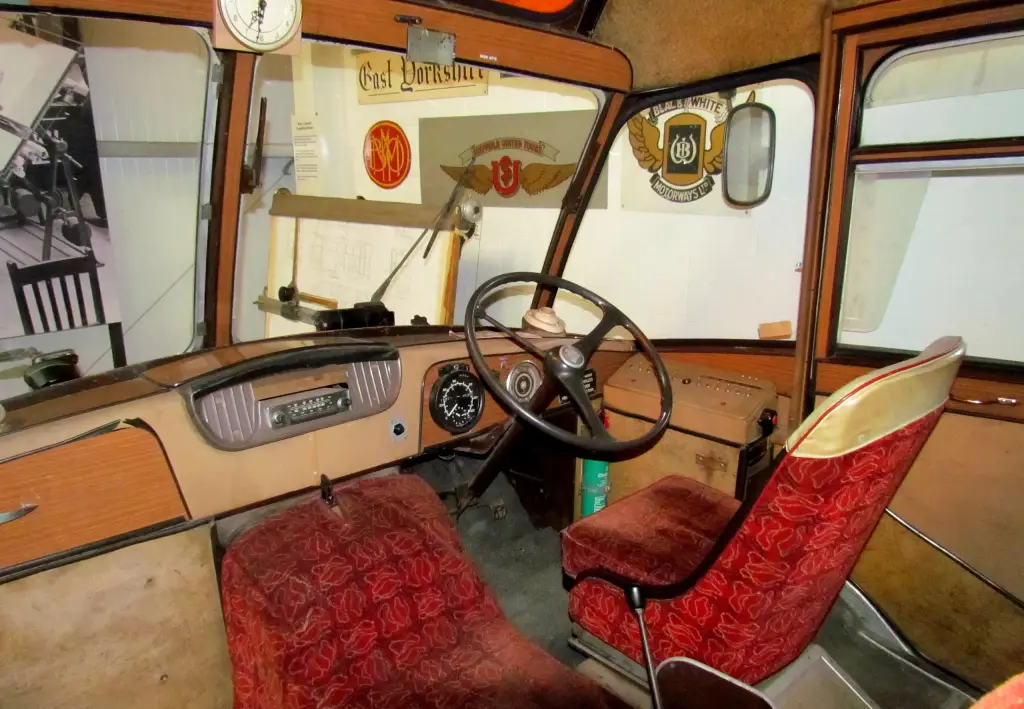
The SB was launched at the 1950 Commercial Motor Show as the replacement for the Bedford OB. It was the first Bedford vehicle to have a forward-control design, with the driver’s seat located at the right of the engine and the front axle underneath. It used a four-speed synchromesh gearbox, with five-speed gearboxes offered later.
Initially the SB was available only with a Bedford petrol engine. From 1953 a Perkins R6 was an option, with a Bedford diesel and the Leyland O.350 joining the range in 1957, and the Leyland O.370 from 1963. Wheelbase length was originally 17 ft 2 in, but from 1955 an 18 ft option was also offered. Bodywork came from a wide range of builders, including Duple, Marshall, Plaxton, Harrington and Willowbrook. The chassis was primarily fitted with one door, although some examples had two.
Model codes and production
From 1968 the SB series used computer classification codes from Bedford’s parent company General Motors, with the petrol-engined SB3 variant becoming NFM and the diesel-engined SB5 becoming NJM, although they were rarely referred to under these codes. The SB was built for the UK market and for export. By 1980 over 54,000 had been produced, 38,000 of them for overseas operators, and production ceased after 36 years in December 1986.
Military and overseas use
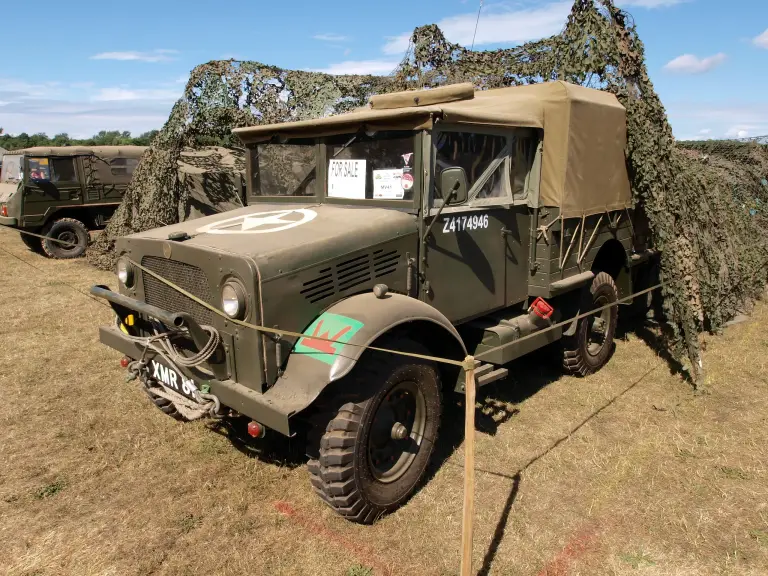
The Army, RAF and Royal Navy, plus several other government departments, took large numbers of SB buses. The Armed Forces version was more austere than civilian versions and could be converted to ambulances in times of emergency. The New Zealand Railways Road Services were the largest operator, purchasing over 1,200, primarily with New Zealand Motor Bodies bodywork and some fitted with Caterpillar C7 engines and Allison transmissions.
Design and features
- First Bedford forward control: the driver sat to the right of the engine with the front axle underneath, a layout new to Bedford buses.
- Bodybuilder choice: Duple, Marshall, Plaxton, Harrington and Willowbrook all supplied bodies.
- Petrol or diesel: Bedford petrol at first, then Perkins, Bedford and Leyland diesels from 1953 to 1963.
- Long wheelbase option: 17 ft 2 in originally, with an 18 ft chassis from 1955.
- Military ambulance conversion: the austere Armed Forces version could be converted for emergency ambulance work.
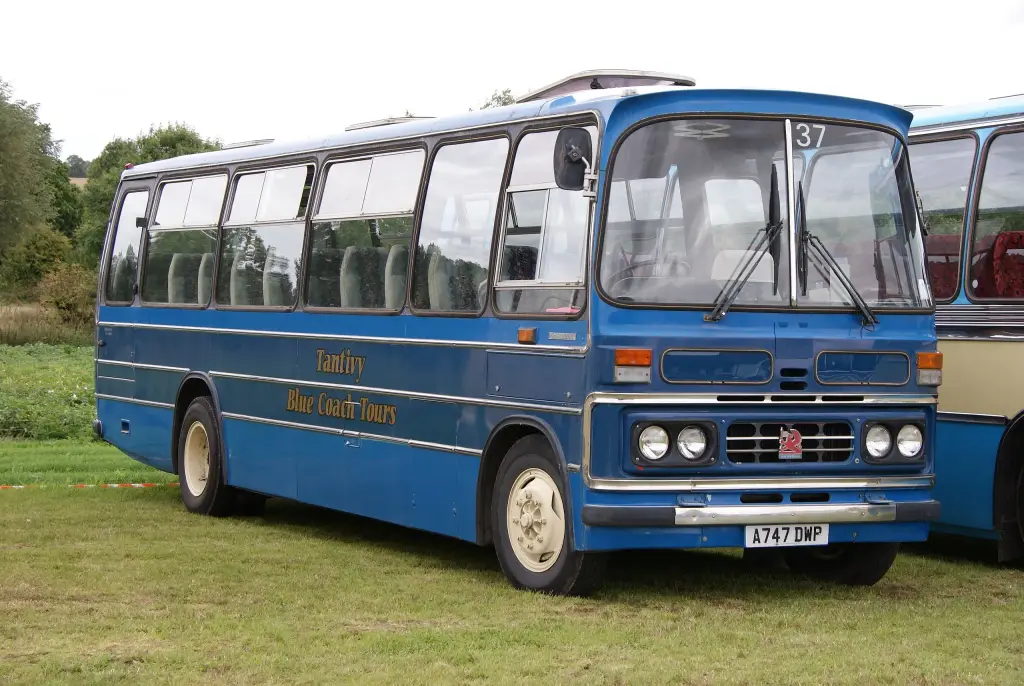
Bedford SB versions
- Bedford SB3: the petrol-engined variant, coded NFM from 1968.
- Bedford SB5: the diesel-engined variant, coded NJM from 1968.
- Duple-bodied SB: one of the many coach and bus bodies fitted to the chassis.
- Armed Forces SB: an austere version for the Army, RAF and Royal Navy, convertible to ambulances.
- New Zealand Railways SB: over 1,200 buses, mostly with New Zealand Motor Bodies bodywork.
The SB replaced the Bedford OB and used a chassis derived from the Bedford S type. More are in the Bedford collection.
Video: Sidelines 1959 bedford SB, WLO 685
Video by Richard Haughey on YouTube.
Sources
- Bedford SB, English Wikipedia: history, engines, bodies, production, operators