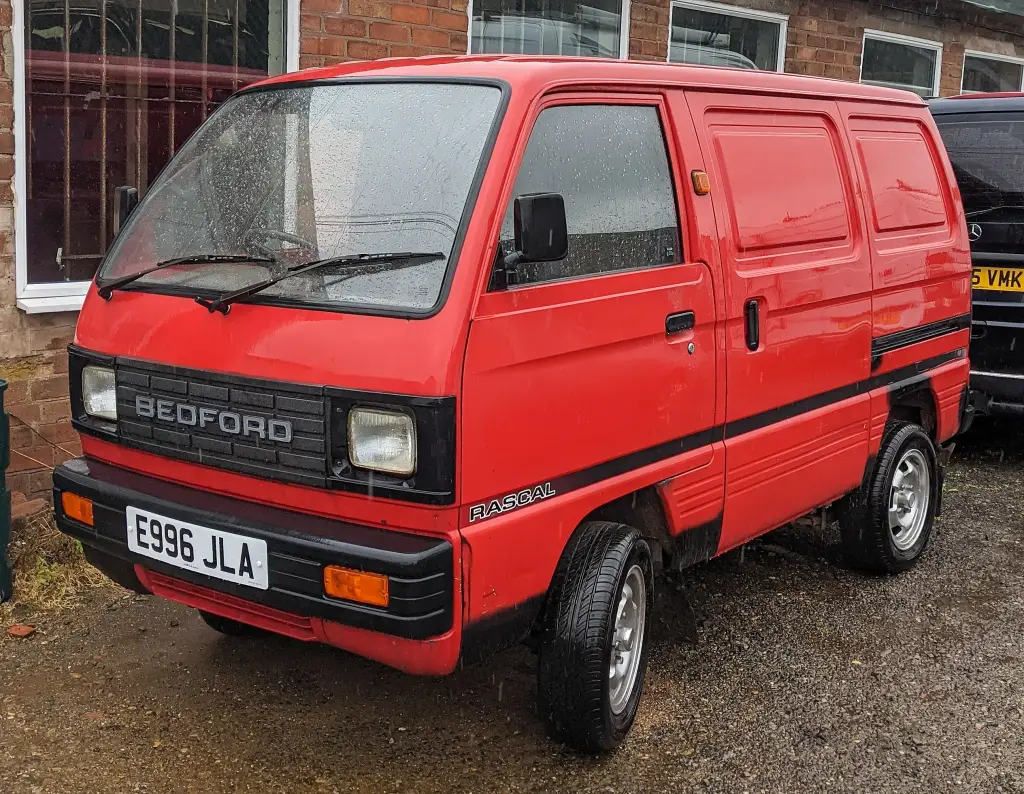
The Bedford Rascal, later the Vauxhall Rascal, was a kei truck and microvan developed as a joint venture between General Motors and Suzuki. It was sold under GM’s British Bedford marque as well as in Suzuki form, and was built at the IBC Vehicles plant in Luton.
Bedford Rascal at a glance
| Maker | Bedford, later Vauxhall |
|---|---|
| Also sold as | Suzuki Super Carry, GME Rascal |
| Production | 1986-1994 |
| Built at | IBC Vehicles, Luton |
| Class | kei truck and microvan |
| Engines | 797 cc F8A; 970 cc F10A |
| Power | 37 or 45 PS |
| Payload | 550 kg van, 575 kg pickup |
| Bodies | van, pickup and camper |
| Rebadged | Vauxhall Rascal in 1990 |
| Production moved | to Japan in 1993, built until 1999 |
This page is based on English Wikipedia only. Only the Bedford Rascal material from the Suzuki Carry article is used; the rest of that article describes the Suzuki versions.
History of the Bedford Rascal
A GM and Suzuki joint venture
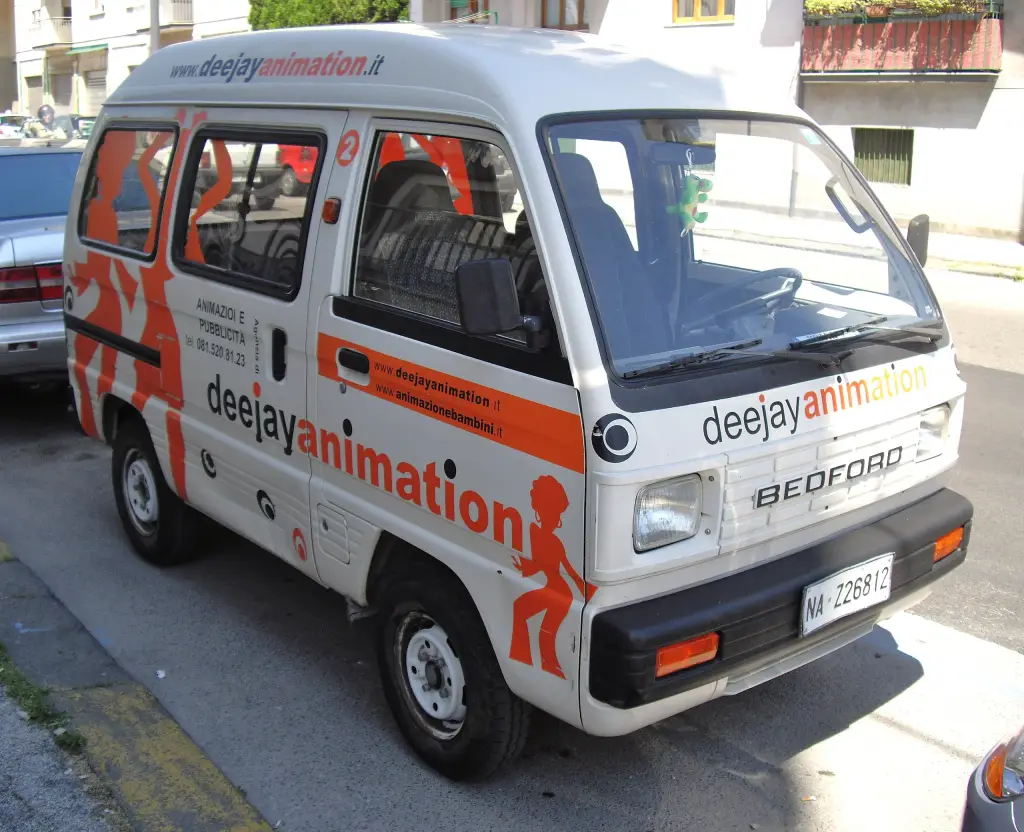
The Bedford Rascal, also built as the Suzuki Super Carry, was developed as a joint venture between the American automaker General Motors and the Japanese automaker Suzuki. It was sold under GM’s British Bedford marque as well as in Suzuki form. Other names were used in a few international markets, such as GME for those continental European markets where Suzukis were generally not marketed and where the Bedford and Vauxhall brands were largely unknown.
The van was produced at the IBC Vehicles plant in Luton, England, adjacent to the main Vauxhall factory. Alongside the Bedford, the Suzuki-branded twin was manufactured for the European market, where Bedford was a less established brand. In much of Europe this generation of the Suzuki Carry was also sold as the Bedford, Vauxhall or GME Rascal, built at the GM plant in Luton to circumvent JAMA’s voluntary export restrictions.
Design and range
Sold from 1986 to 1994, the Rascal was a small and economical van intended for many purposes. Its strengths were its diminutive size and maximum payload weight: 550 kg for the van and 575 kg for the pickup. The principal visible difference between the Bedford and Suzuki versions is the front trim: the Super Carry has two separate plastic headlamp surrounds, while the Rascal has a single full-width one with Bedford moulded in the middle.
Post-1985 European-market Carrys used the 797 cc four-cylinder F8A engine familiar from the ST90 Carry, while Super Carrys were equipped with the F10A 970 cc four. Power outputs were 37 and 45 PS, with top speeds of 110 and 115 km/h. Heftier bumpers meant the overall length was 10 cm longer, for a total of 3,295 mm, and production of export models began in July 1985. The SK408 was discontinued in October 1989.
Timeline
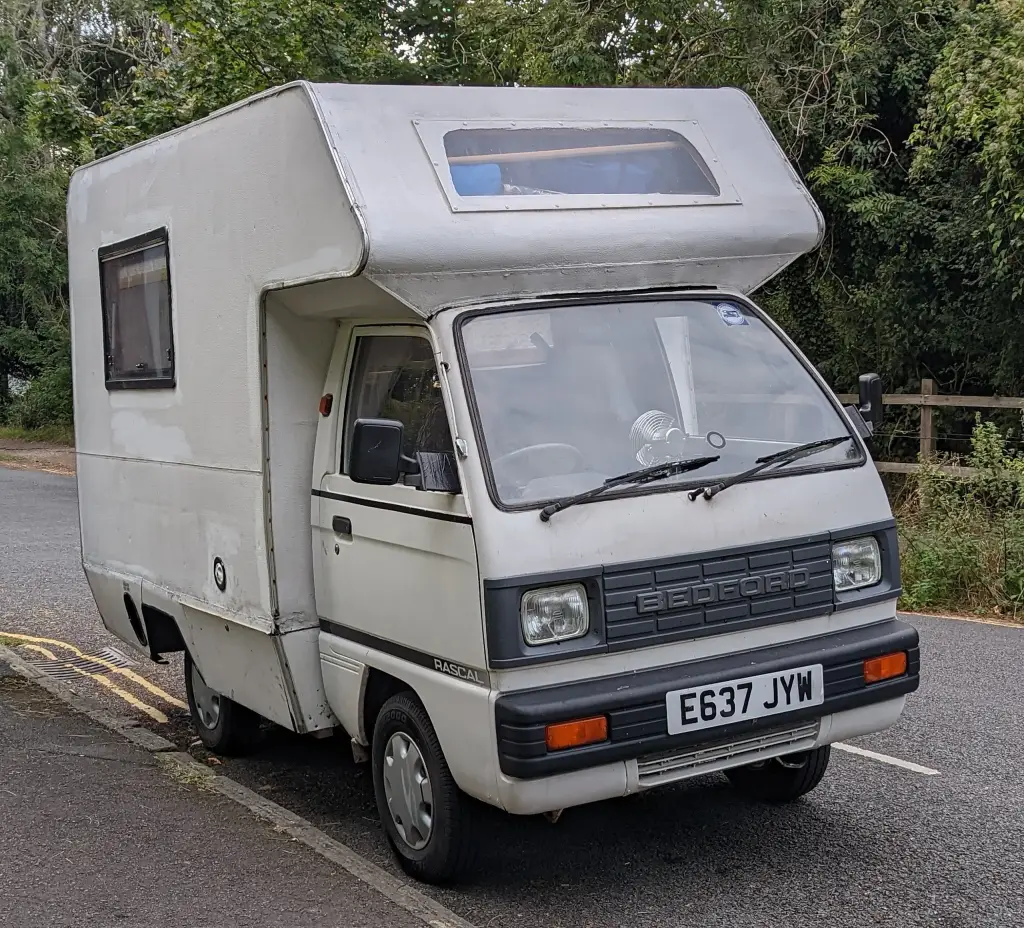
The Rascal was launched in 1986. In 1990 it was rebadged as the Vauxhall Rascal as the Bedford marque was being retired. In 1993 production moved to Japan, where the vehicle continued to be made until 1999. Rascals were mainly sold as vans, but pickup and camper versions were also made.
Design and features
- Compact size: a kei-class microvan and pickup, small and economical for city work.
- Useful payload: 550 kg for the van and 575 kg for the pickup.
- Two engines: the 797 cc F8A with 37 PS or the 970 cc F10A with 45 PS.
- Bedford front trim: a single full-width headlamp surround with Bedford moulded in the middle, unlike the two-piece Suzuki item.
- Built at Luton: production at the IBC Vehicles plant, next to the main Vauxhall factory.
Bedford Rascal versions
- Bedford Rascal van: the main body style.
- Bedford Rascal pickup: a load-bed version with a 575 kg payload.
- Bedford Rascal camper: a small camper conversion.
- Vauxhall Rascal: the 1990 rebadge after the Bedford name was retired.
- Suzuki Super Carry: the Suzuki-badged twin built alongside it.
- GME Rascal: the name used in some continental European markets.
Other Luton-built Bedford light commercials include the Bedford Midi and the Bedford HA. More are in the Bedford collection.
Video: bedford rascal part 2
Video by sarahvan3 on YouTube.
Sources
- Suzuki Carry, English Wikipedia: Bedford Rascal section, engines, payload, timeline