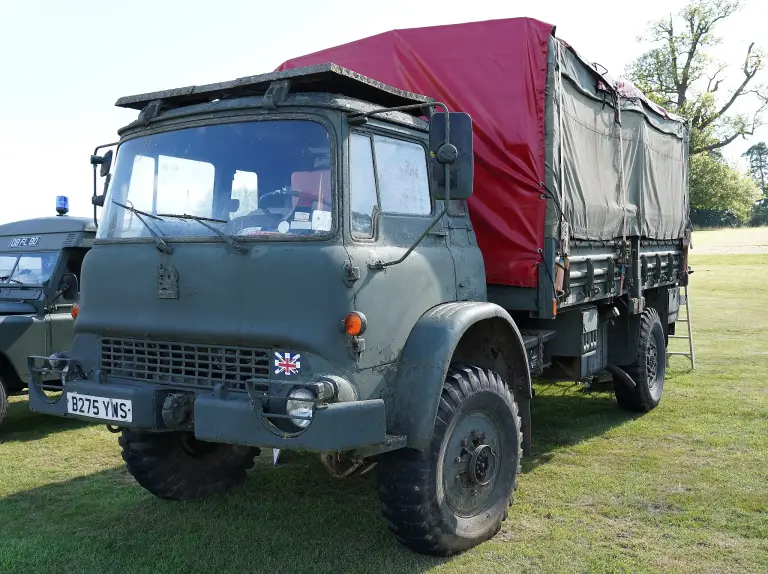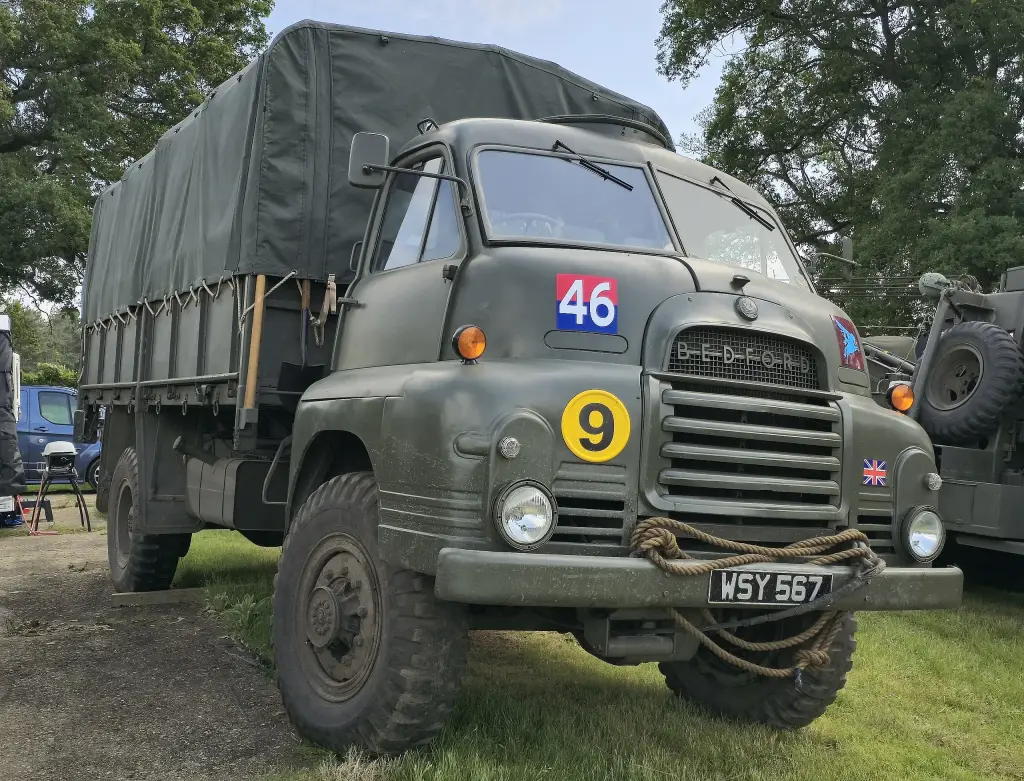
The Bedford S is a heavy lorry produced in Great Britain between 1950 and 1959. Launched at the Commercial Vehicle Show in 1950, it was the largest Bedford lorry available at the time and became known as the Big Bedford.
Bedford S type at a glance
| Maker | Bedford |
|---|---|
| Production | 1950-1959 |
| Type | heavy lorry |
| Nickname | Big Bedford |
| Gross vehicle weight | 7 long tons (7,100 kg) |
| Wheelbases | 86 in (2,180 mm), 116 in (2,950 mm), 156 in (3,960 mm) |
| Petrol engine | 4.92-litre six-cylinder, 110 bhp at 3,200 rpm |
| Diesel engines | Perkins R6 5.56 litres from 1953; Leyland 5.76-litre diesel; Bedford diesel from 1957 |
| Diesel output | 90-104 bhp |
| Gearbox | four-speed manual, synchromesh on the top three gears |
| Final drive | hypoid gears in the rear axle |
| Launched | Commercial Vehicle Show, 1950 |
This page is based on English Wikipedia only, so the facts were not cross-checked against a second source.
History of the Bedford S type
The largest Bedford of its time
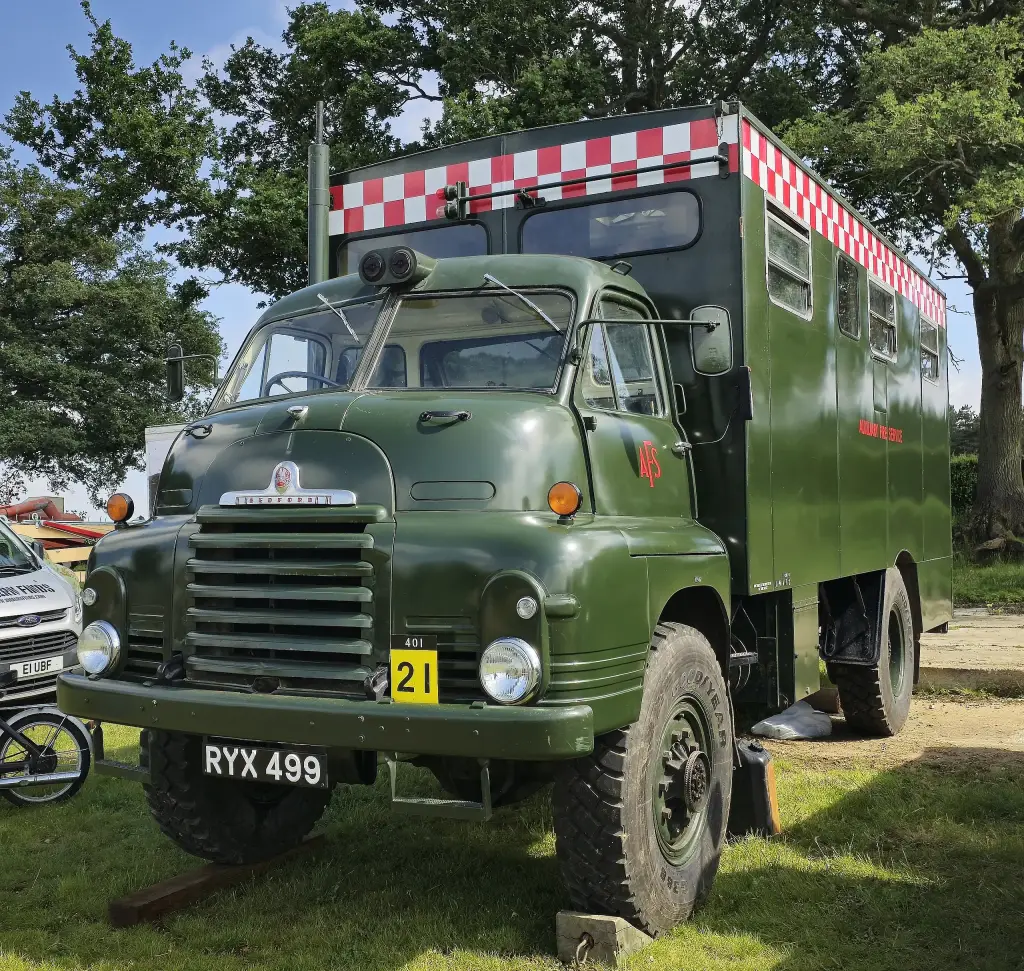
The S was launched at the Commercial Vehicle Show in 1950. Known as the Big Bedford, it was the largest Bedford lorry available at the time, with a gross vehicle weight of 7 long tons (7,100 kg). It was a conventional lorry and was available in three wheelbases: 86 in, 116 in and 156 in. At introduction it was fitted with a 4.92-litre six-cylinder Bedford petrol engine producing 110 bhp at 3,200 rpm. Drive went through a four-speed manual gearbox with synchromesh on the top three gears, and the final drive in the rear axle used hypoid gears.
Engines
Originally the S was available only with the 110 bhp petrol engine, and a diesel was added in 1953. The 5.56-litre Perkins R6 diesel was made an option in 1953, soon joined by the 5.76-litre Leyland O.350 and by Bedford’s own diesel in 1957. These diesel engines were rated at between 90 and 104 bhp.
Work and derivatives
The lorry proved popular among haulers and general traders, and its chassis was used for fire engines. In 1966 it was used for the first liquid egg tanker. The S was used extensively by haulers and general trades through the 1950s and 1960s, and it was the basis for the Bedford RL all-wheel-drive transport that served in large numbers with the British Army. The Bedford SB bus also used a chassis derived from the S.
Design and features
- Big Bedford: the largest lorry in the Bedford range when it was launched in 1950, with a 7-ton gross vehicle weight.
- Three wheelbases: 86 in, 116 in and 156 in, covering short, medium and long chassis.
- Petrol and diesel: a 110 bhp 4.92-litre petrol six, then Perkins, Leyland and Bedford diesels from 1953 to 1957.
- Hypoid final drive: a four-speed gearbox with synchromesh on the top three gears and a hypoid rear axle.
- Chassis for specialists: fire engines, the first liquid egg tanker and the basis of the Bedford RL and SB.
Bedford S type versions
- S lorry: the standard heavy lorry, in three wheelbases.
- Fire engine chassis: supplied to fire services and bodybuilders.
- Liquid egg tanker: the first such tanker, built in 1966 on an S chassis.
- Bedford RL: the all-wheel-drive military derivative of the S.
- Bedford SB: the bus chassis derived from the S.
The S was replaced by the Bedford TK, and its chassis led to the Bedford RL and the Bedford SB. More are in the Bedford collection.
Video: MHVT Bedford S type Miles.
Video by Johann Tonna on YouTube.
Sources
- Bedford S type, English Wikipedia: history, engines, wheelbases, derivatives