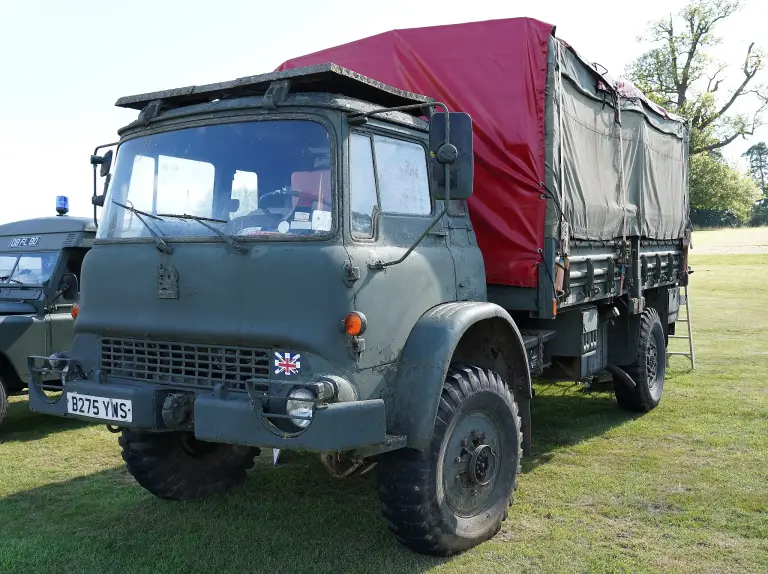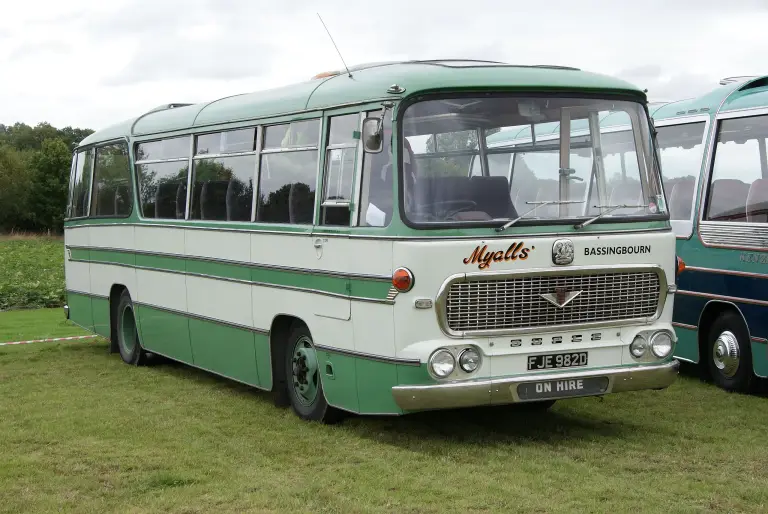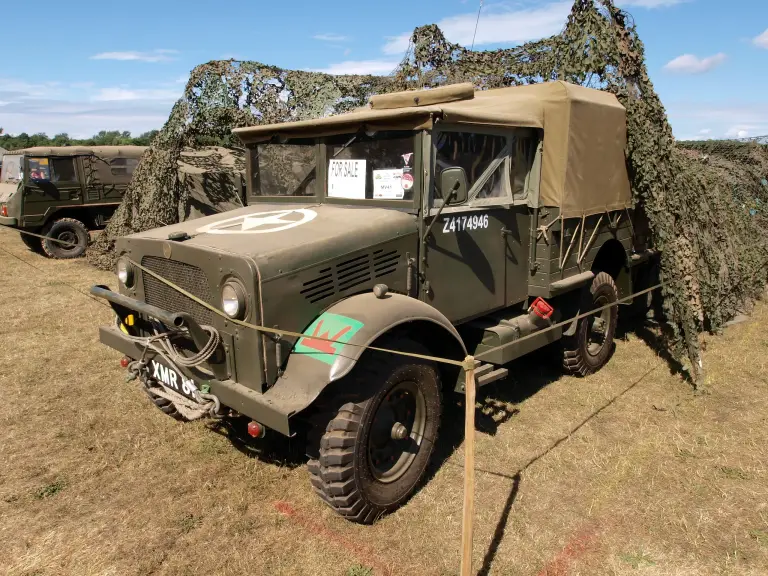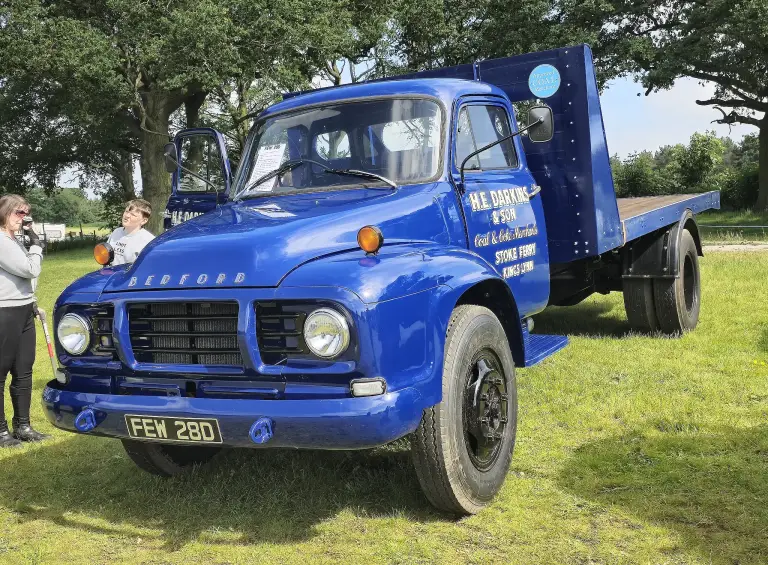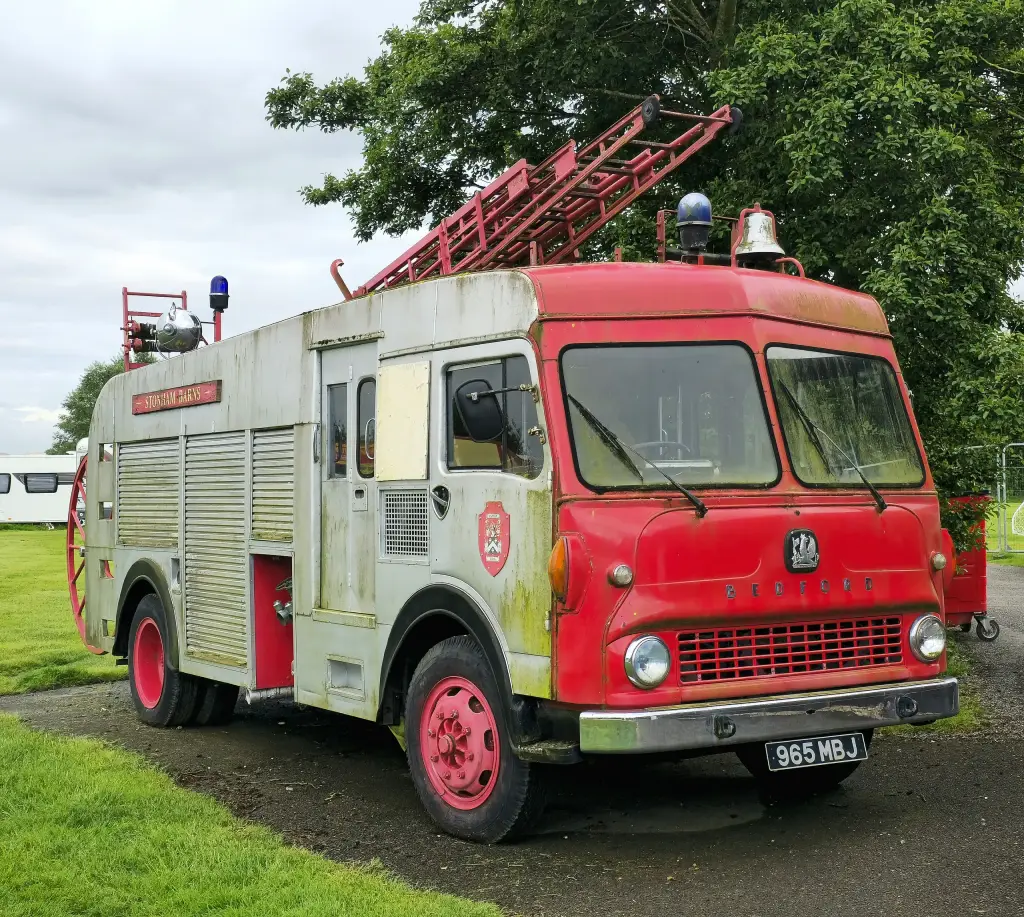
The Bedford TK is a truck manufactured by Bedford. Launched in 1960 to replace the Bedford S type, it became the quintessential light truck in the United Kingdom through most of the 1960s and 1970s, and more than 500,000 were produced.
Bedford TK at a glance
| Maker | Bedford |
|---|---|
| Launched | 1960 |
| Replaced | Bedford S type |
| Production | 1960 into the 1980s; military until 1992 |
| Built | over 500,000 |
| Type | light and medium truck |
| Engines | inline four and six-cylinder petrol and diesel from Bedford, Leyland and Perkins |
| Body options | fire engines, military, horse carriers, tippers, flatbeds |
| Chassis | rigid or light tractor unit with Scammell coupling |
| Successor | Bedford TL |
| Military version | Bedford MK, later MJ |
History of the Bedford TK
A replacement for the S type
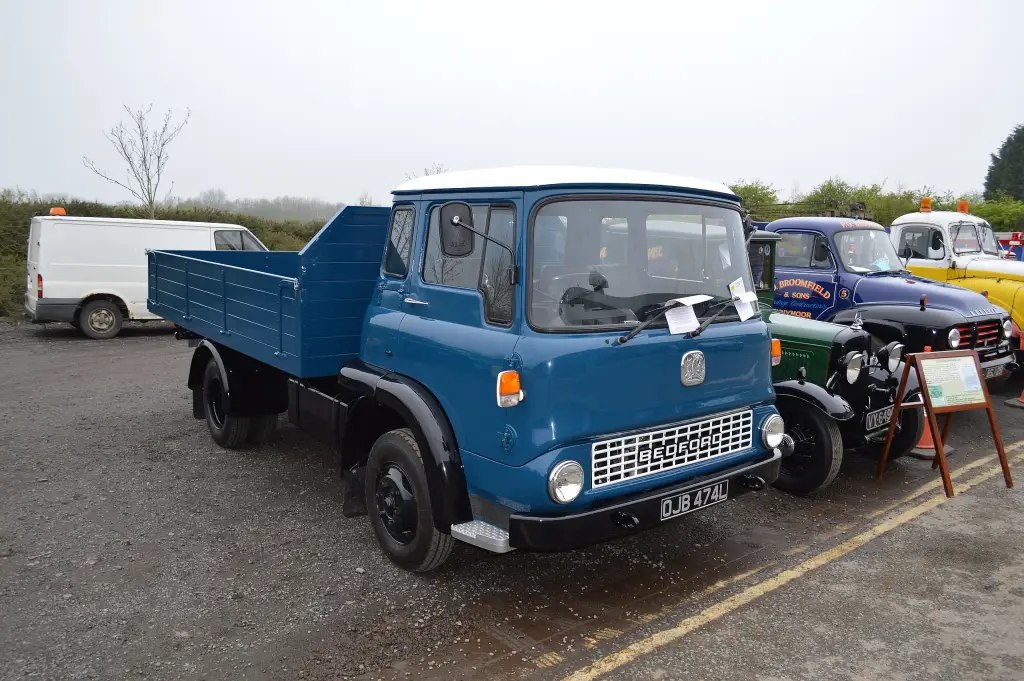
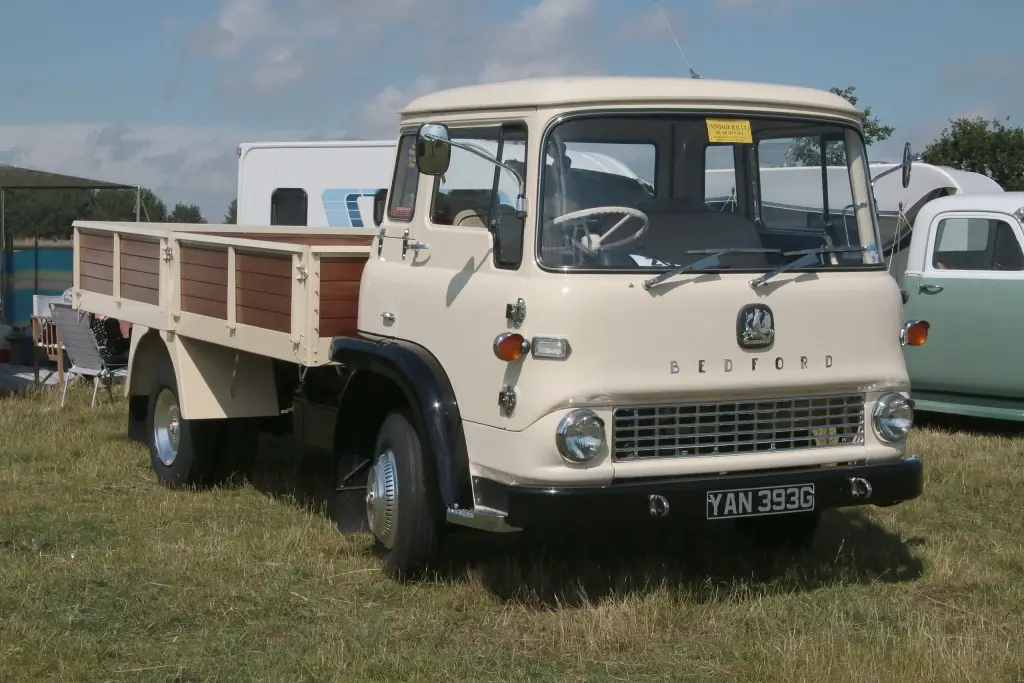
The TK range replaced the Bedford S type in 1960 and served as the basis for a variety of derivatives, including fire engines, military vehicles, horse carriers, tippers, flatbed trucks and other specialist utilities. A General Post Office, later British Telecom, version used for installing telegraph poles was known as the Pole King. The TK was available with inline four- and six-cylinder petrol and diesel engines from Bedford, Leyland and Perkins, and it was the quintessential light truck in the United Kingdom through most of the 1960s and 1970s, competing with the similar Ford D series. It came in rigid form and also as a light tractor unit, normally using the Scammell coupling form of semi-trailer attachment.
Engines and production
In 1981 Bedford introduced turbocharging to the Red Series 3.6-litre and 5.4-litre diesel engines, which then produced 72 bhp and 102 bhp respectively. TKs were assembled for many years by General Motors New Zealand at its Petone truck plant, where the model was very popular and competed with the locally assembled Ford D series. It was succeeded there by the TM series, and GMNZ later switched to a range of Bedford-by-Isuzu models assembled from kits shipped from Japan. Over 500,000 TK trucks were produced, and they were also assembled by Holden in Australia.
The MK and the end of production
A military 4×4 version, the Bedford MK, later MJ, was also produced. It was introduced in 1970 to replace the Bedford RL and was very successful, with over 50,000 built in many variants. From April 1981 Bedford changed the designation from MK to MJ as the K multi-fuel engine was superseded by the J turbocharged diesel. After Bedford’s Dunstable factory was sold in 1987 to AWD, the TK restarted production for military use only until 1992, when AWD was placed in receivership. The TK was scheduled to be replaced by the Bedford TL in 1981, but manufacturing continued as a cheaper alternative.
Design and features
- Many derivatives: fire engines, military trucks, horse carriers, tippers, flatbeds and other specialist utilities.
- Pole King: a General Post Office version used for installing telegraph poles.
- Engine choice: Bedford, Leyland and Perkins petrol and diesel four- and six-cylinder units.
- Rigid or tractor: available as a rigid lorry or a light tractor unit with Scammell coupling.
- Military MK: the 4×4 version built in over 50,000 examples for the British Armed Forces.
Bedford TK versions
- TK rigid lorry: the standard cargo and specialist chassis.
- Pole King: the Post Office telegraph-pole installer.
- Fire engine: a common TK conversion.
- Light tractor unit: with Scammell semi-trailer coupling.
- Bedford MK/MJ: the 4×4 military variant.
- New Zealand-assembled TK: built by General Motors New Zealand at Petone.
The TK replaced the Bedford S type and was later joined by the Bedford TL; its military version was the Bedford MK. More are in the Bedford collection.
Sources
- Bedford TK, English Wikipedia: history, engines, derivatives, production
- Bedford TK, German Wikipedia: bodies, wheelbases, Opel Bedford Blitz